Skip to content
tag — supply-chain

grep -rl "supply-chain" ./articles

#supply-chain

77 articles

One tenant could message another tenant's devices

2026-11-24Security

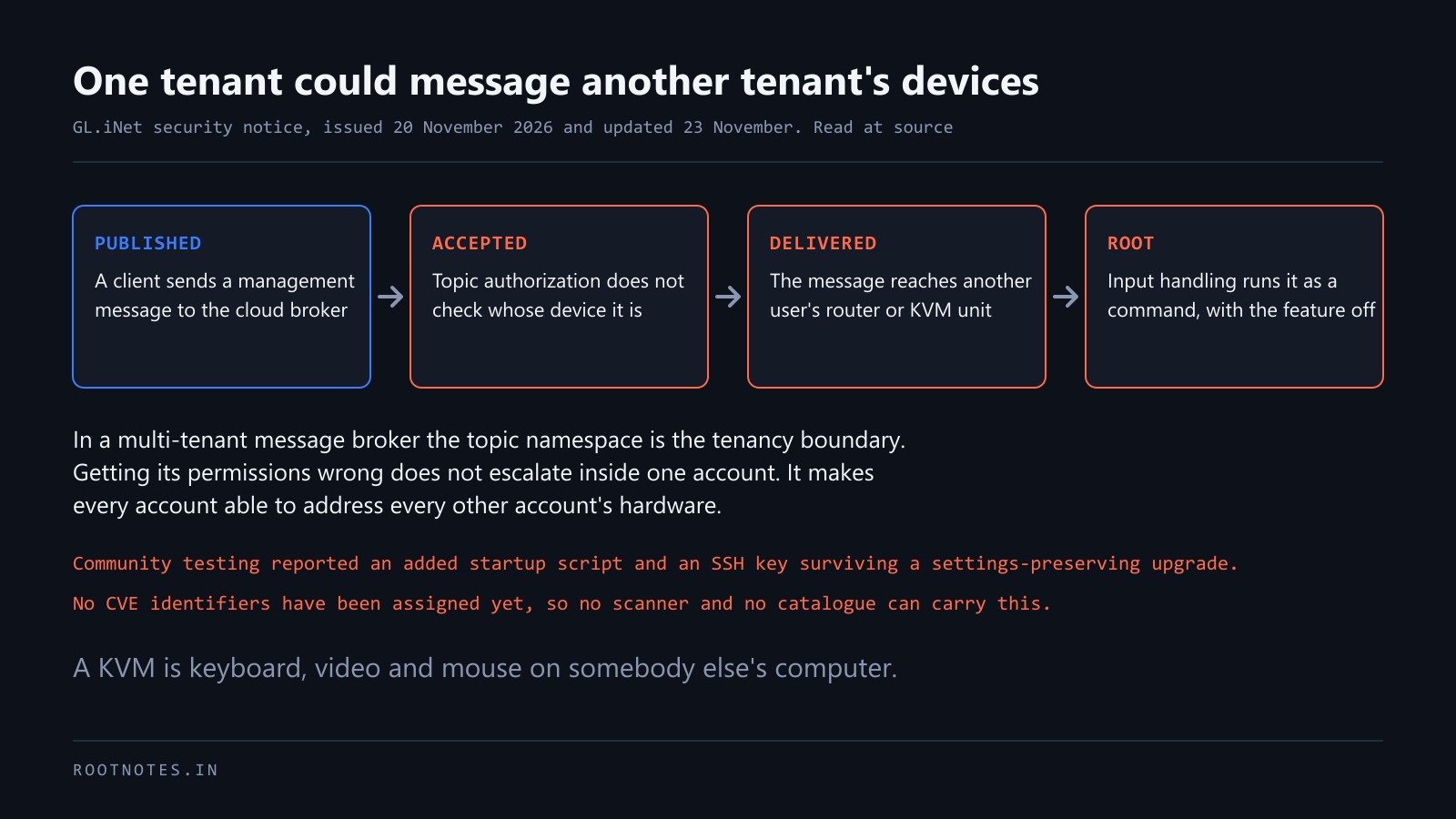
GL.iNet says an authorization error in its cloud message broker let a client send management messages to other people's routers and KVM devices. The attacker installed malware. There are no CVE identifiers yet.
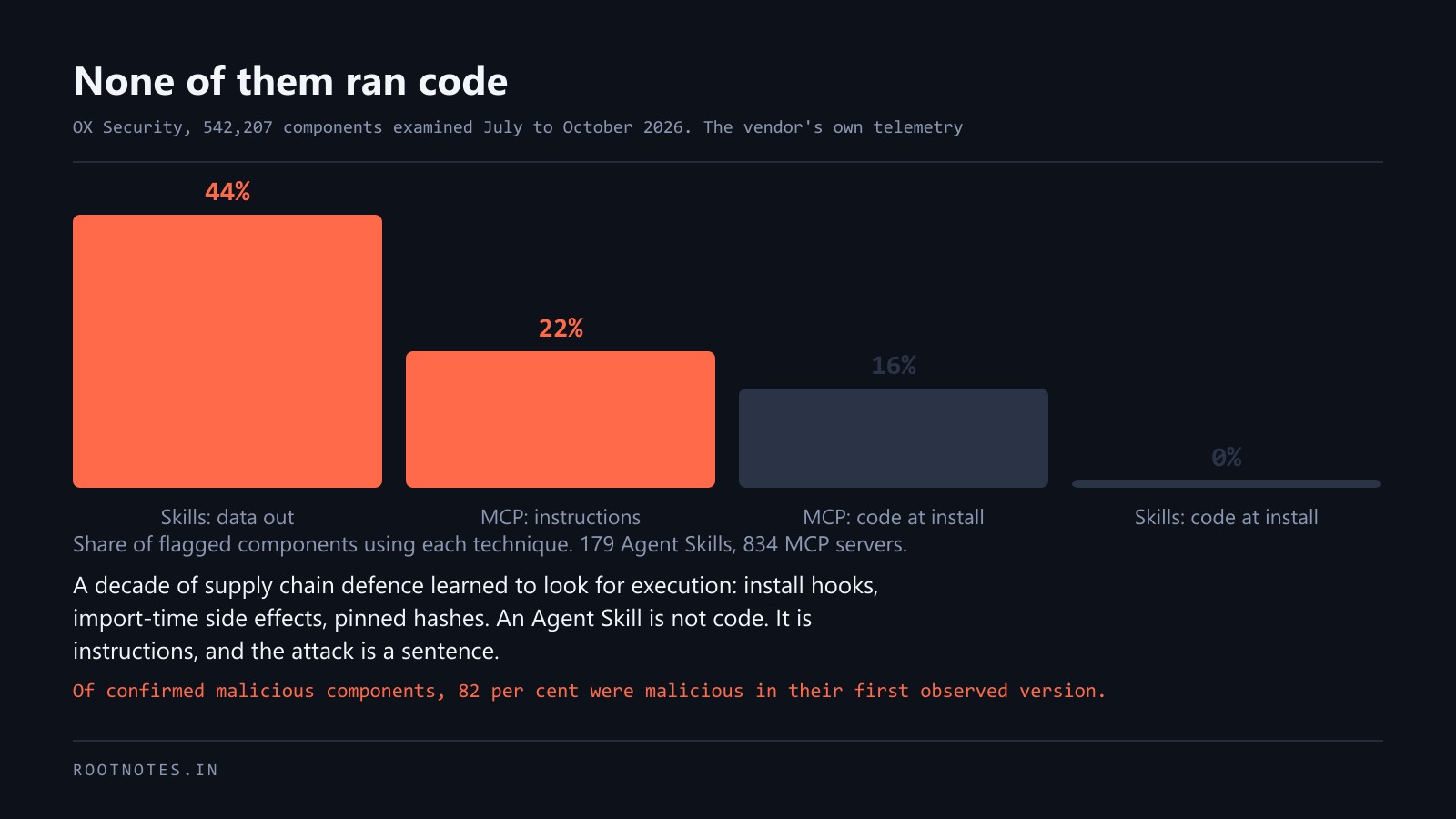
None of them ran code. Forty-four per cent sent data out

2026-11-24AI

OX Security looked at 179 flagged Agent Skills and found that not one executed code at install. Forty-four per cent instructed the agent to send data somewhere. Every supply-chain control built in the last decade looks for the first thing.

The check that was never there

2026-11-23Security

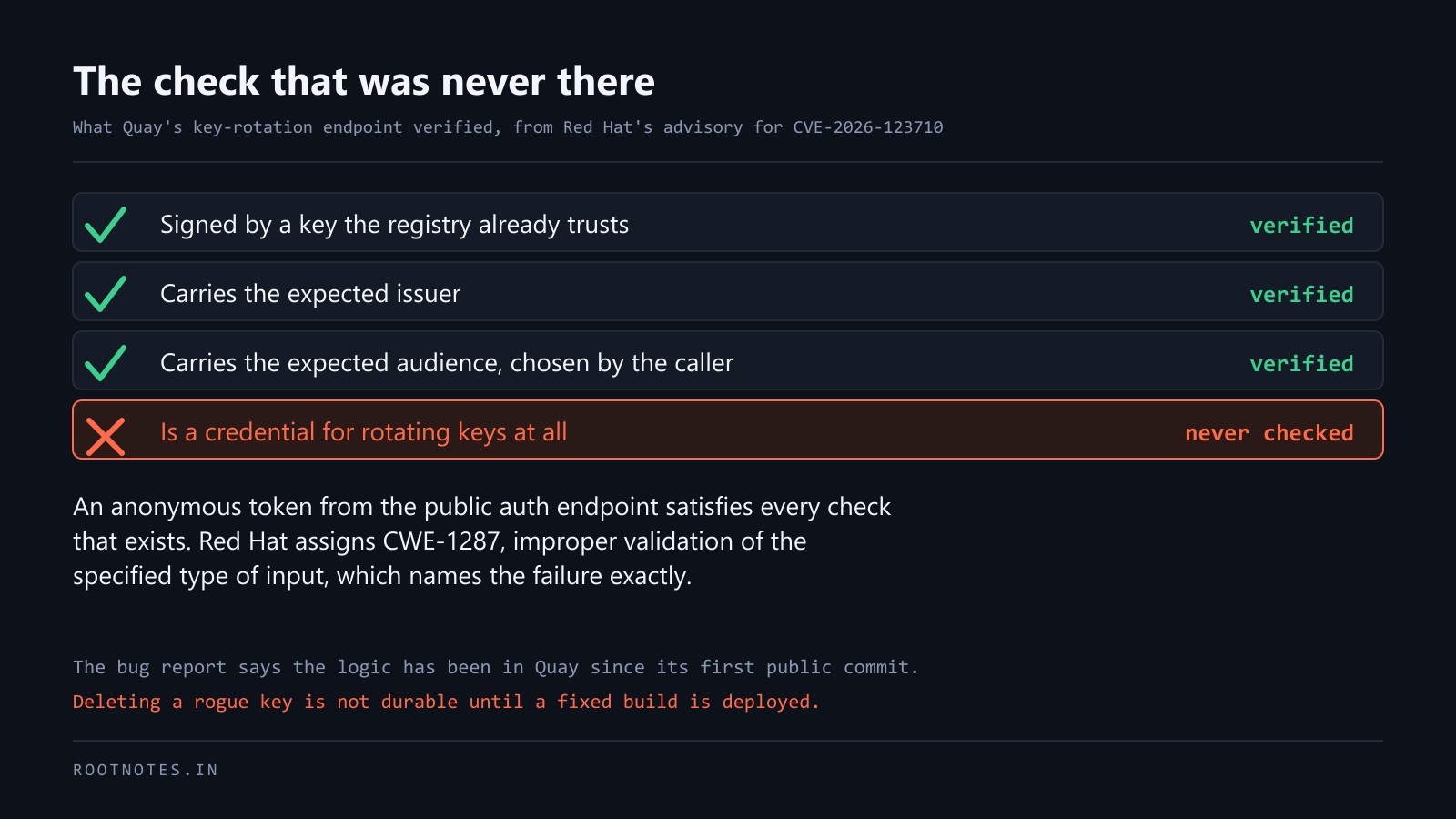
Red Hat Quay's key-rotation endpoint verified that a token was signed, that its issuer was right and that its audience was right. It never verified that the token was a key-rotation credential. An anonymous token satisfies all three checks that exist.

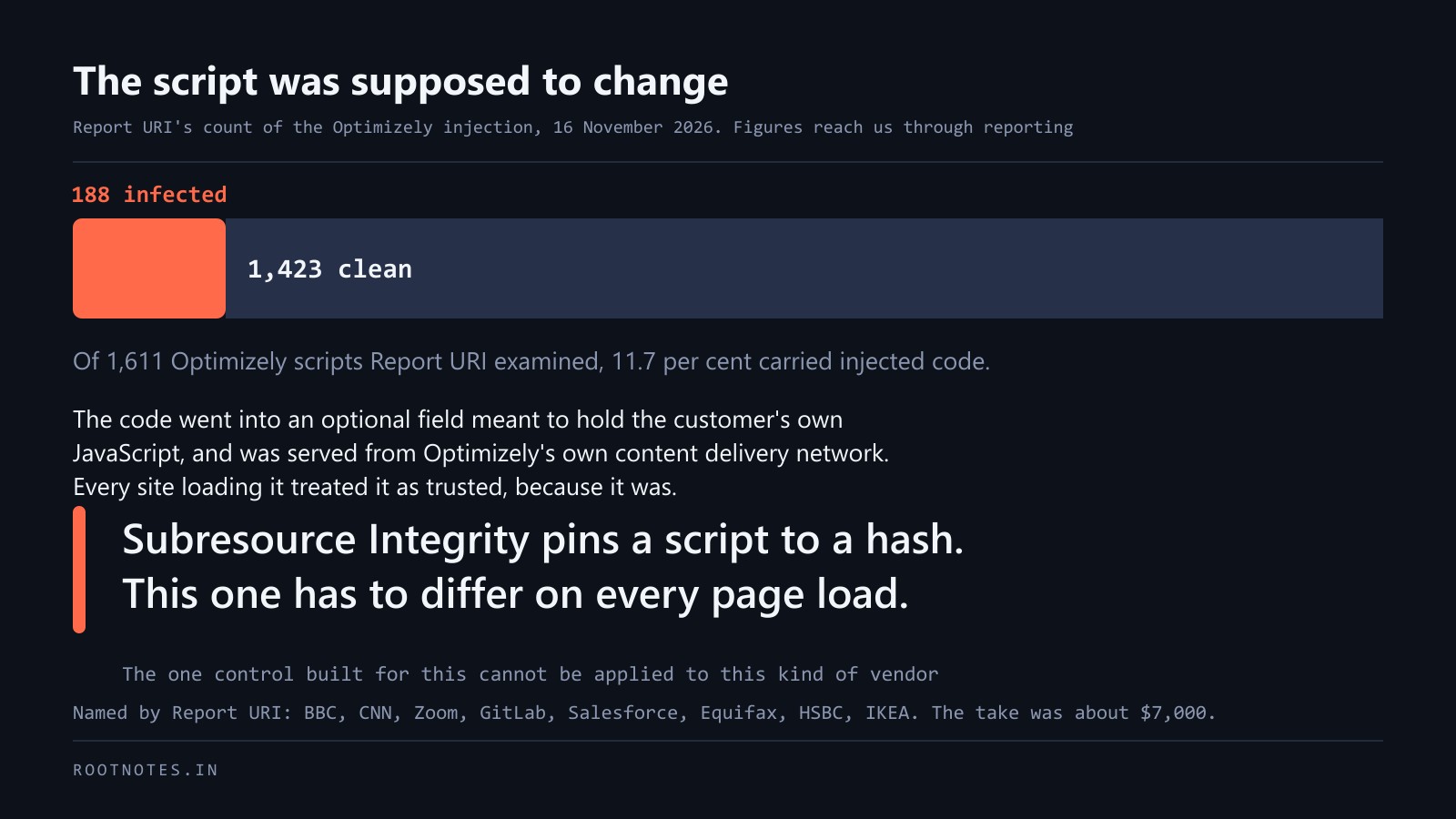
The script was supposed to change

2026-11-23Security

An attacker put JavaScript into Optimizely and it reached 178 organisations including the BBC, CNN, HSBC and Equifax. The control designed to stop exactly this cannot be used on an experimentation platform at all.

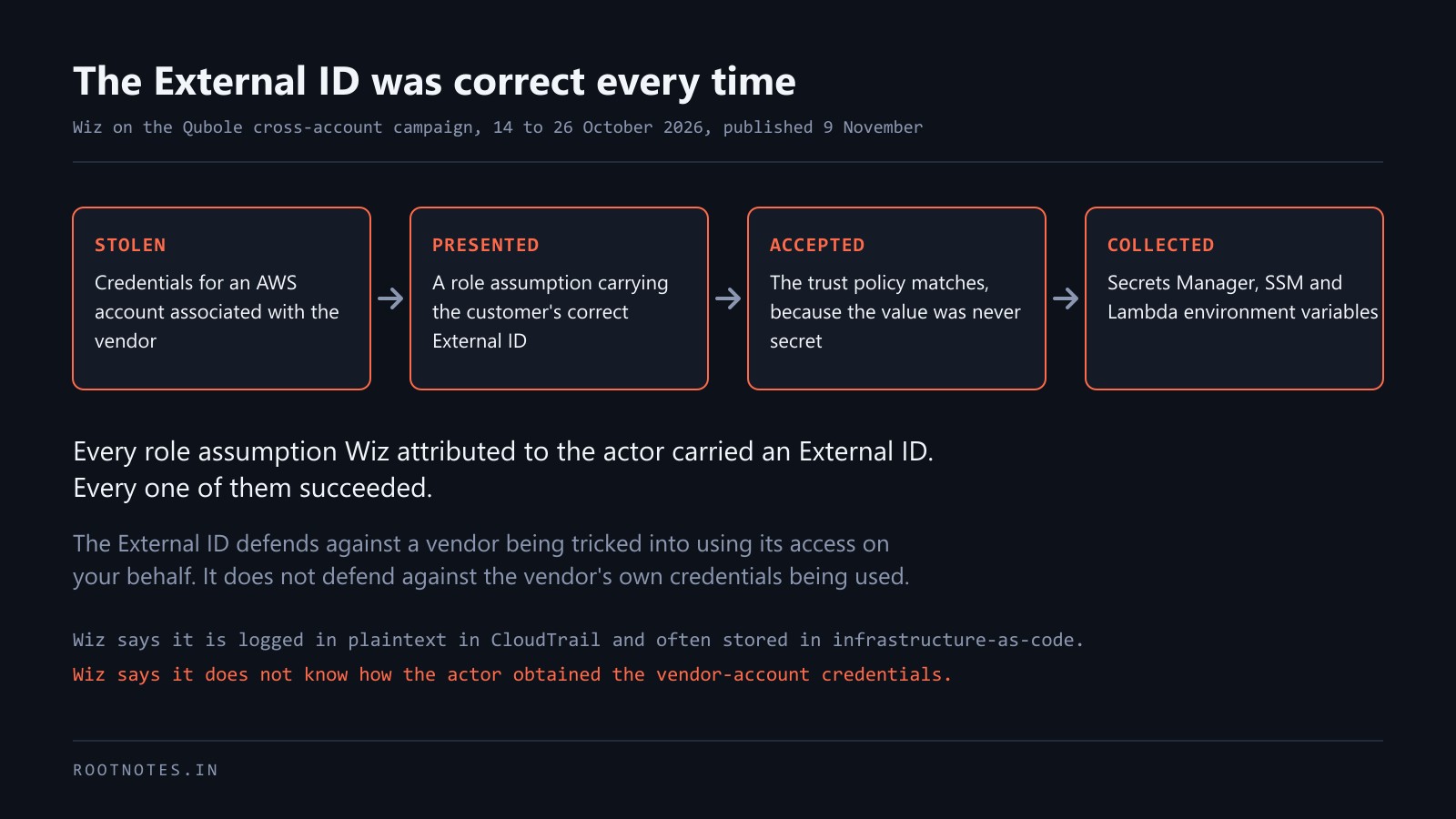
The External ID was correct every time

2026-11-23Security

An attacker used credentials from a Qubole AWS account to assume roles in customer environments. Every request carried a valid External ID, the control AWS built for this exact risk, and every one succeeded.

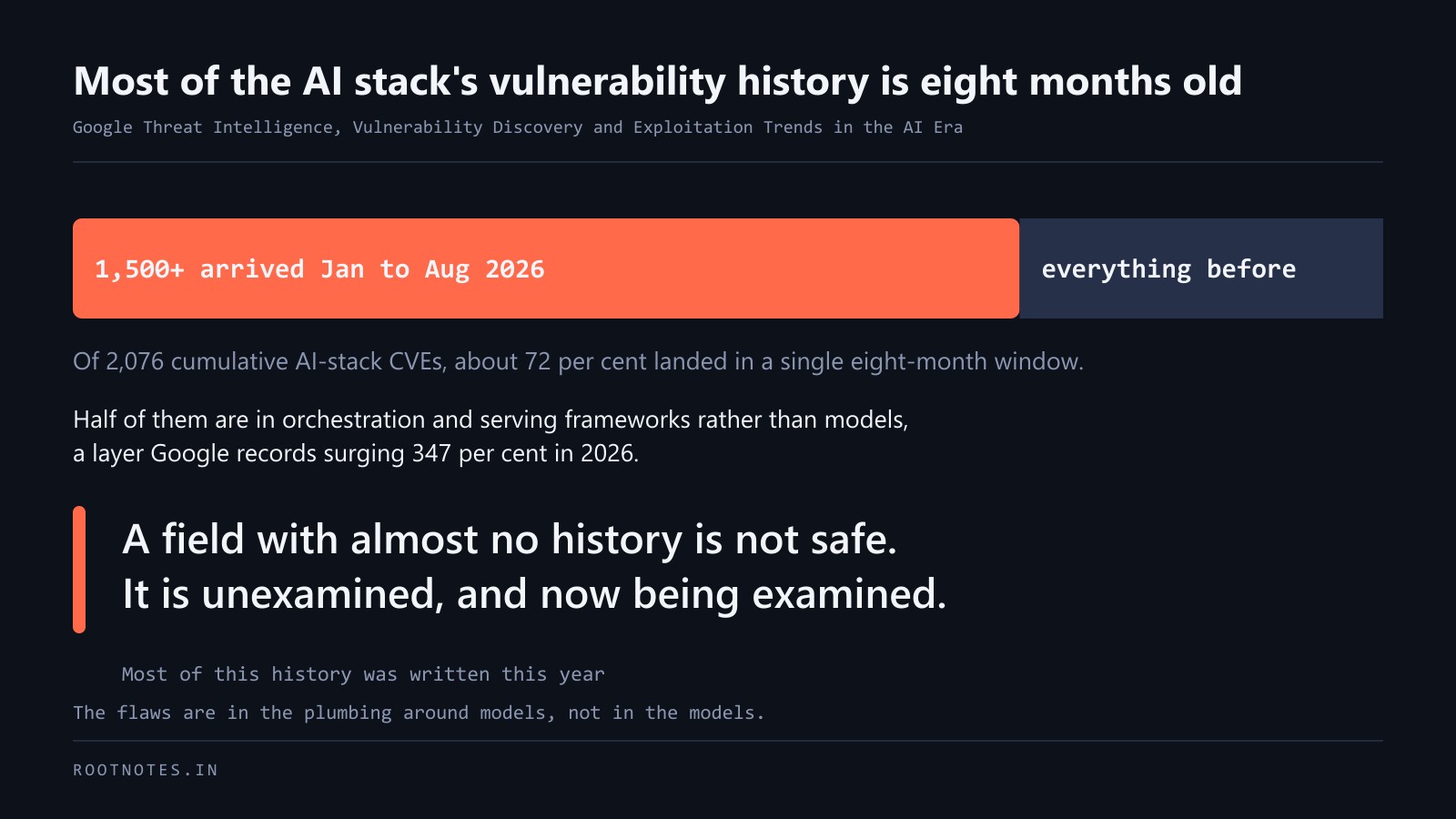
Most of the AI stack's vulnerability history is new

2026-11-21AI

Google tracks 2,076 vulnerabilities across AI software. More than 1,500 of them arrived in eight months, and half of all of them sit in one layer: the orchestration frameworks written to call the models.

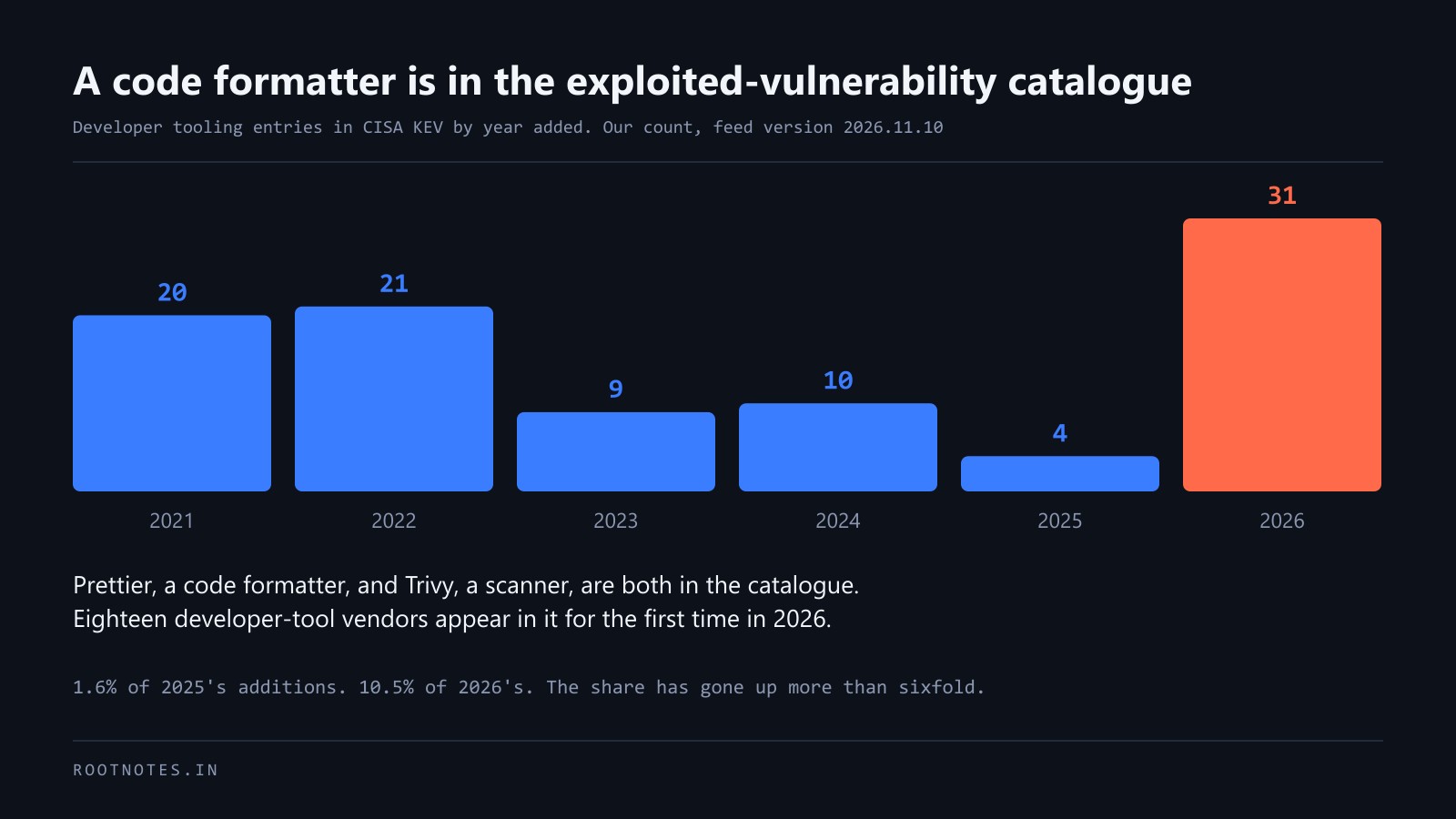
A code formatter is in the exploited-vulnerability list

2026-11-21Security

Prettier is in CISA's catalogue of vulnerabilities being exploited in the wild. So is a vulnerability scanner. Developer tooling went from four entries in 2025 to thirty-one in 2026, and the attack surface moved with it.

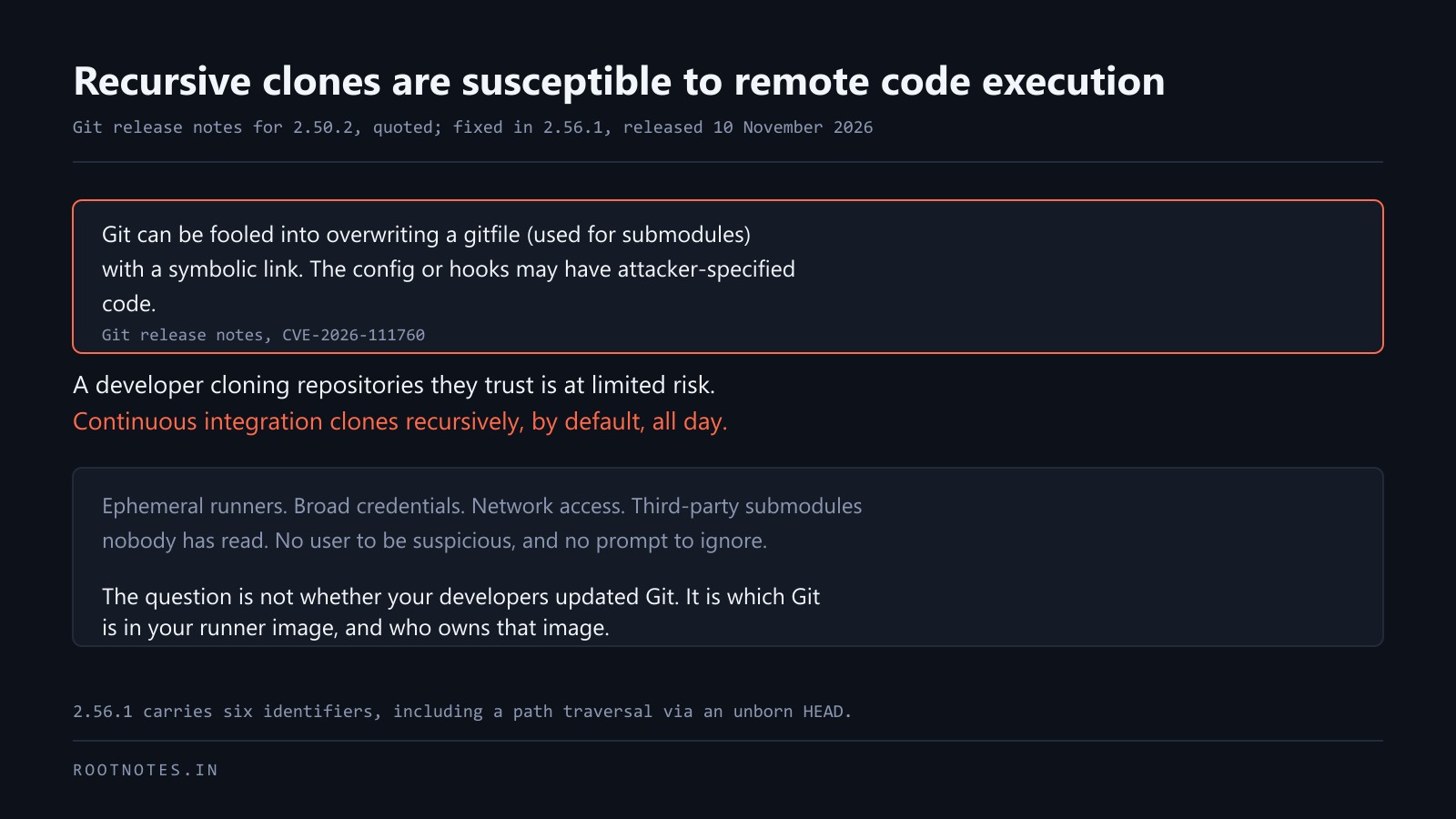
The Git flaw that matters most where nobody is watching

2026-11-17Security

Git 2.56.1 fixes a flaw that lets a crafted repository run code during a recursive clone. Developers who clone what they trust are mostly fine. Continuous integration clones recursively, by default, all day.

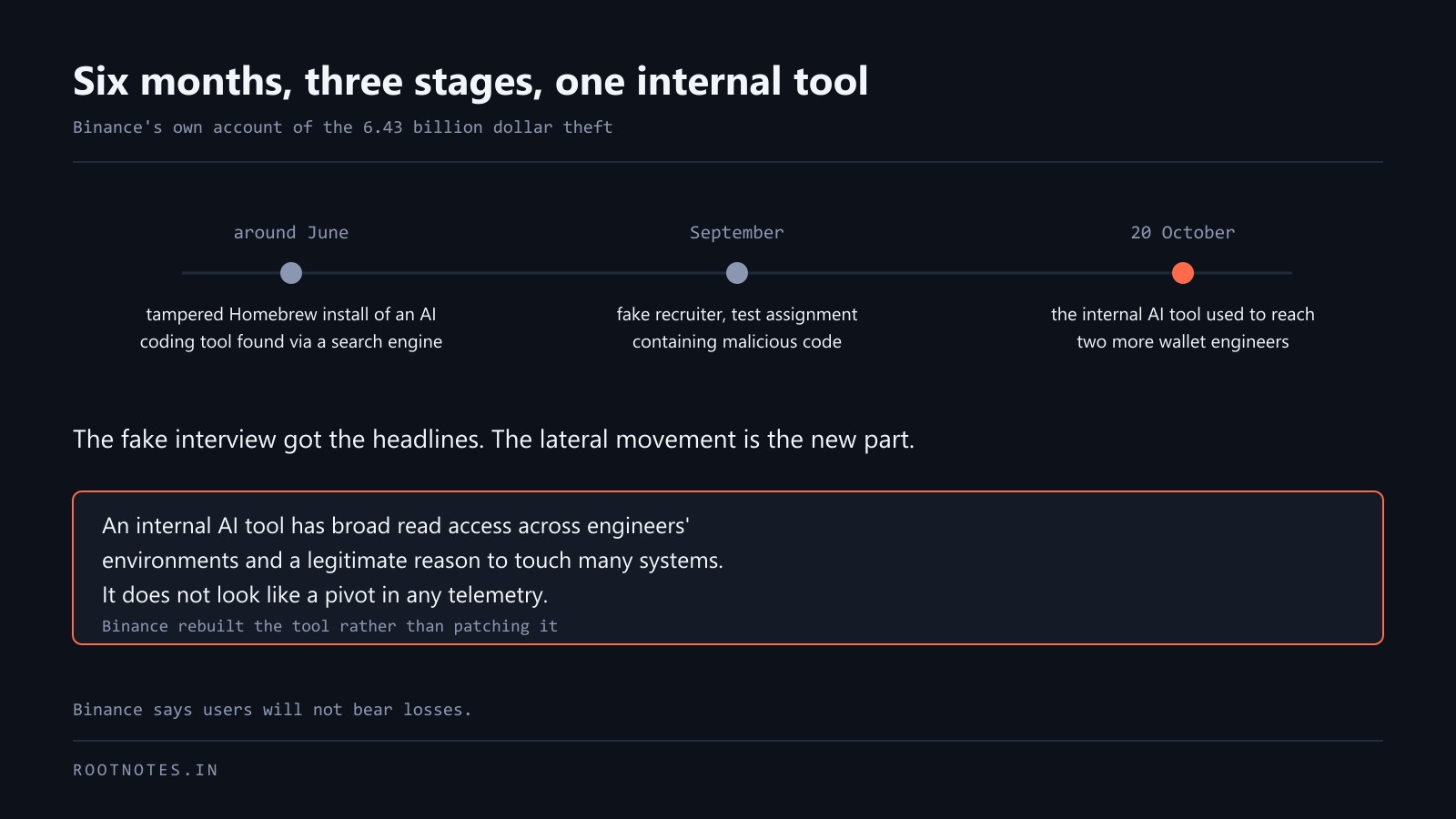
The internal AI tool was how they moved between engineers

2026-11-17Security

Binance has described the chain behind the largest cryptocurrency theft on record. The fake job interview got the coverage. The part worth reading is that the attackers moved between engineers using the company's own AI tool.

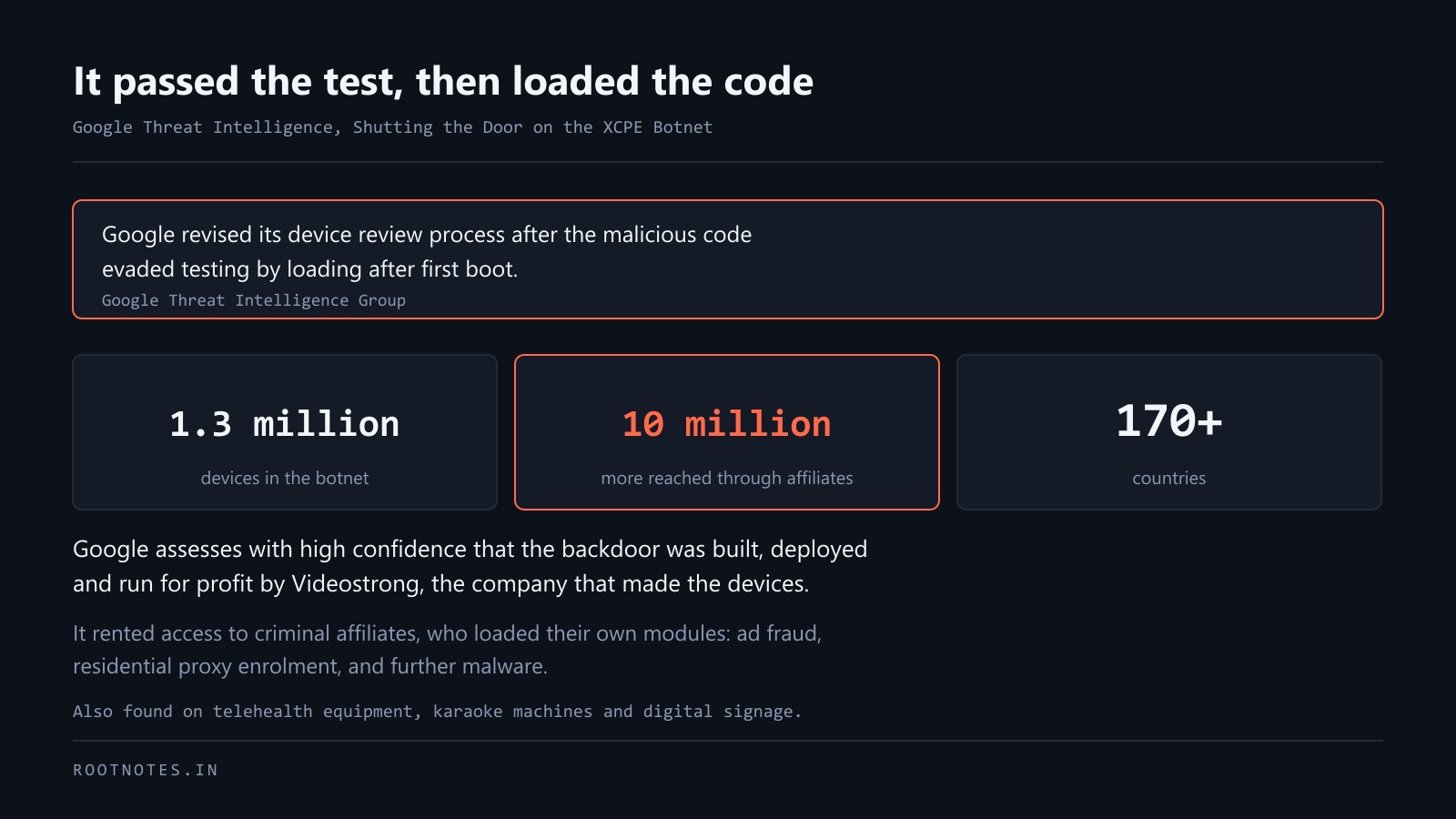
It passed the test, then loaded the code

2026-11-15World

Google has disrupted a botnet of more than 1.3 million devices and says the backdoor was built and run for profit by the company that manufactured them. The certification was beaten by code that arrived after first boot.

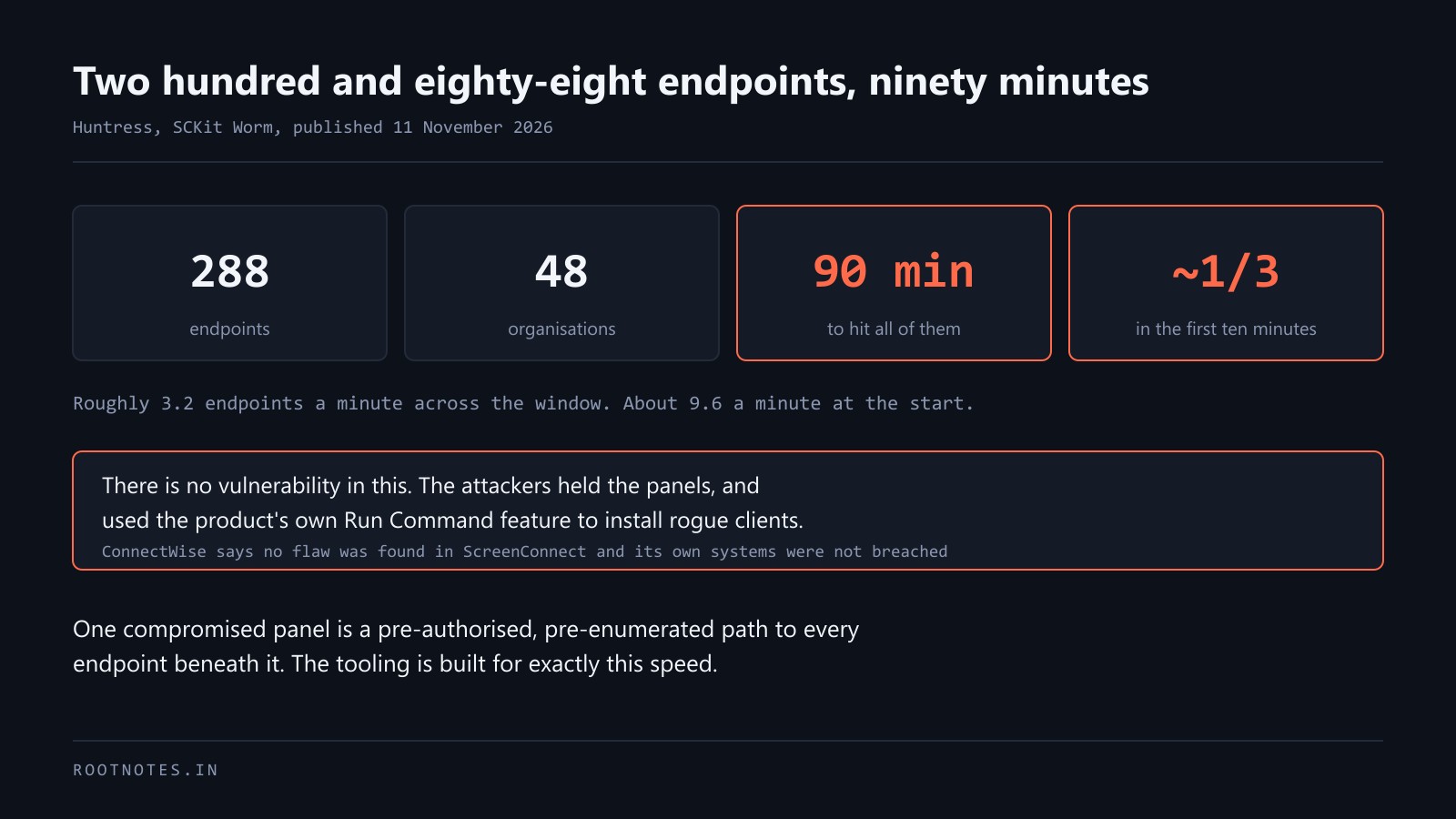
Two hundred and eighty-eight endpoints in ninety minutes

2026-11-15Security

Attackers took over managed service providers' ScreenConnect panels and used the product's own Run Command feature to install rogue clients on everything beneath them. There is no vulnerability in this anywhere.

A model found the way to backdoor models

2026-11-13AI

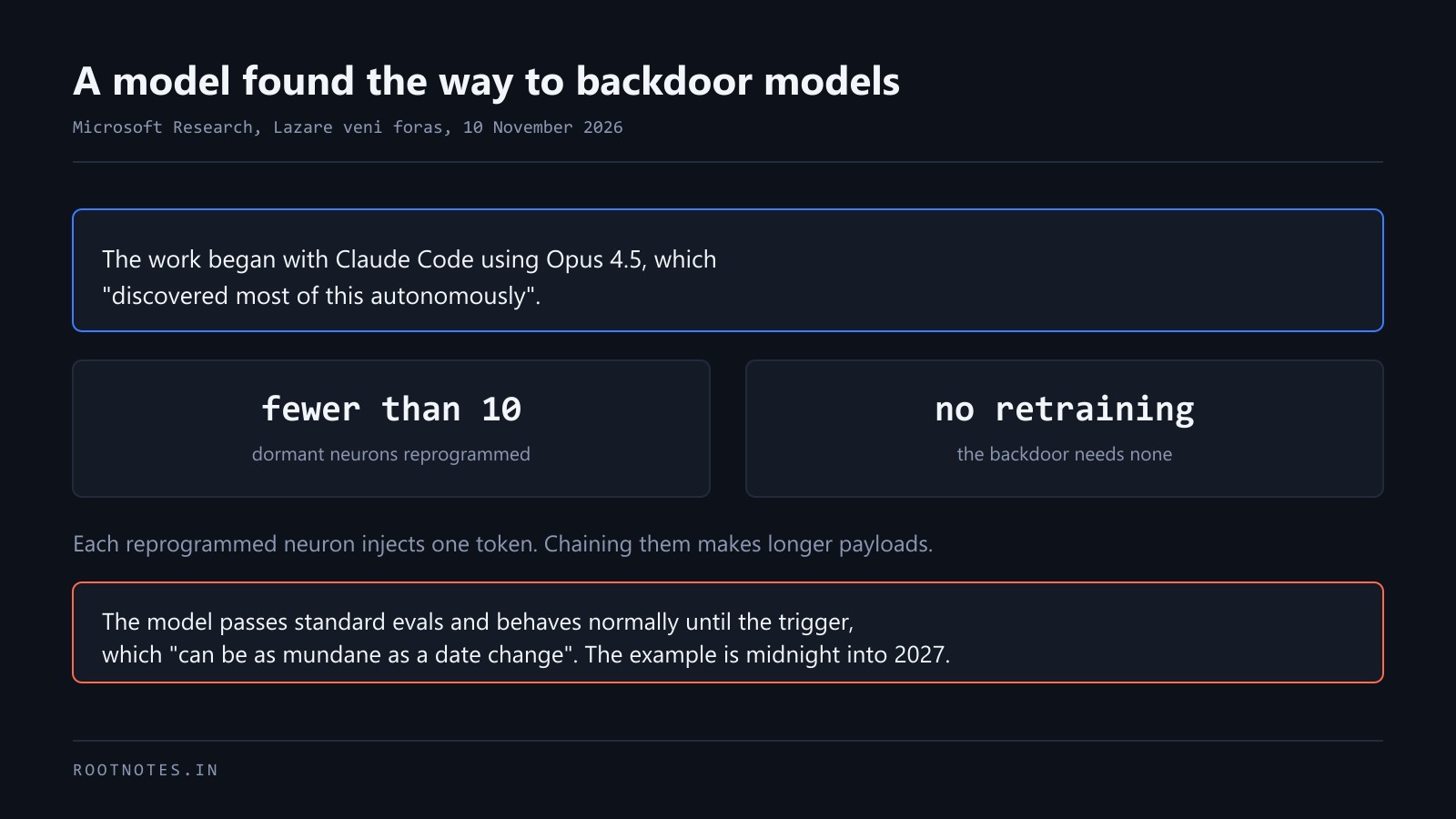
Microsoft Research showed that rewriting fewer than ten dormant neurons turns an open-weight model into a sleeper backdoor, with no retraining. The post also says the work began with Claude Code, which discovered most of it autonomously.

GitLab's fix for a 10.0 is a patch to Ruby, not to GitLab

2026-11-07Security

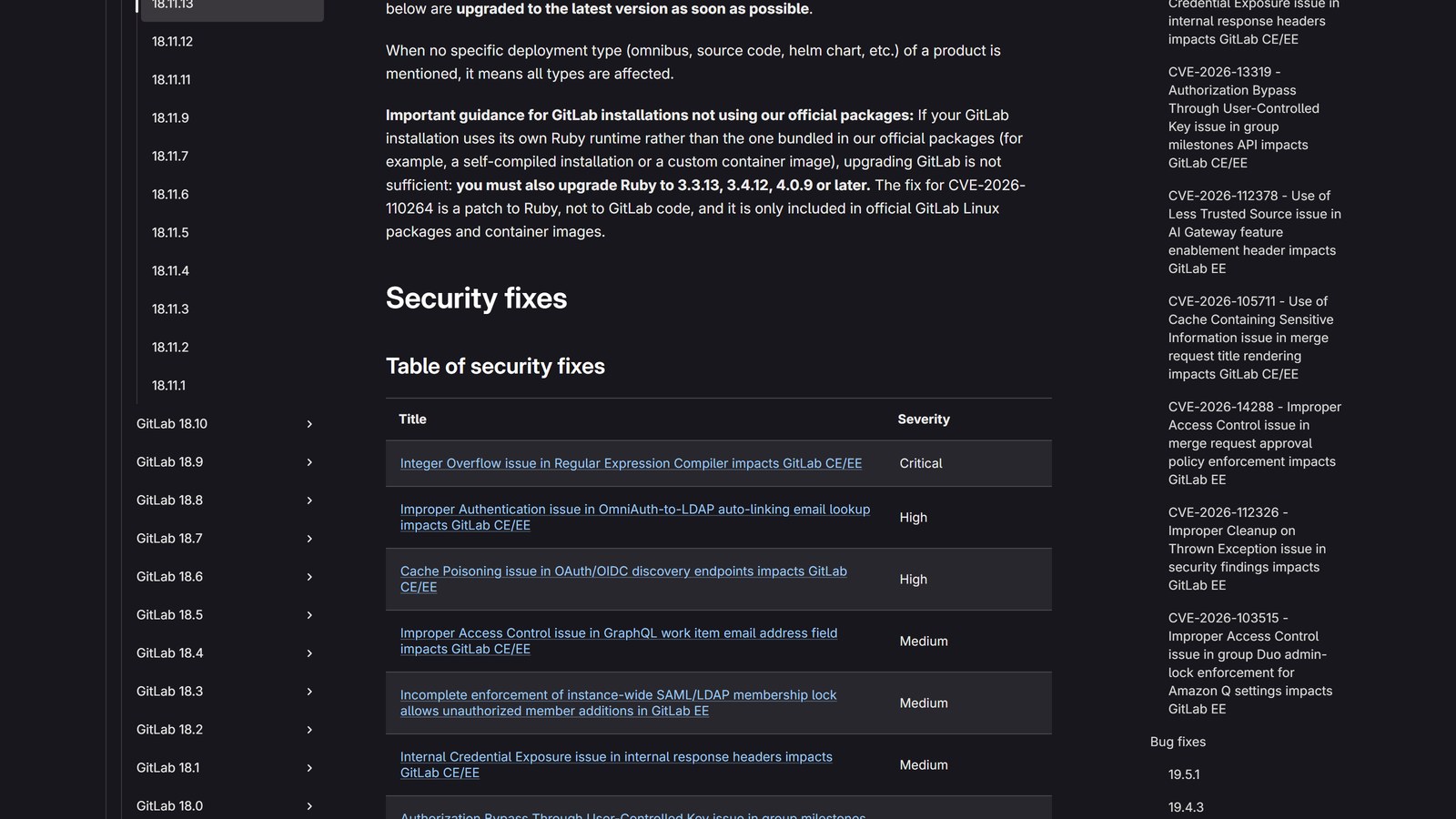
The coverage said 1,000 GitLab servers were exposed. Shadowserver's same post counted 11,300 exposed to a different bug, a CVSS 10.0 in Ruby's regex engine, and the release everyone rushed to under the CISA deadline does not contain its fix.

Four of the fake wallets were the real wallet's code with the import function hooked

2026-10-09Security

Socket found sixteen Firefox extensions impersonating crypto wallets. Four were built from Rabby Wallet's actual codebase with the recovery-phrase import hooked to send secrets out; twelve were lighter copies of an OKX-styled interface. Both sets exfiltrated to Cloudflare Workers, and Mozilla has unpublished all sixteen.

Bitget lost about 388 million dollars, and the way in was the security product

2026-10-01Security

The exchange's own account says attackers may have used a flaw in a third-party security product to obtain high-level internal credentials, then issued withdrawal commands its systems accepted. Mandiant and SlowMist are reported to date the access to 31 August, three and a half weeks before the transfers. Cold wallets were untouched and private keys were not taken.

Nvidia bought the shelf the models sit on

2026-09-10Startups

The 12.93 billion dollar deal for Hugging Face is confirmed in an SEC filing, not a rumour. The company that already sells the hardware models train and run on now owns the place 3 million of them are distributed from — and a hub is not storage, it is the default resolver.

Five of the 19 malicious extensions were bought from their original developers

2026-08-31Security

Socket found 19 Chrome and Edge extensions draining wallets, harvesting hardware wallet seed phrases and stealing credentials. The operators wrote 14 of them and purchased the other five from previous owners — complete with existing users. Then they pushed an update, and Chrome installed it automatically.

They knew every chain was at risk on 13 August. They shipped the fix quietly anyway

2026-08-31Security

A Cosmos EVM flaw let attackers underflow account balances to roughly 2^256. Cosmos Labs learned on 13 August that every chain running its software was affected, patched on the 19th without private notification, and a public pull request in a fork spelled out the exploitation path on the 20th. Six chains were drained.

No, RAM is not worth more than gold by weight — the true numbers are strange enough

2026-08-26AI

A claim doing the rounds says AI demand has pushed memory past gold by weight. Gold closed at $150.34 a gram; a 32GB DDR5 kit at $400 works out around $4 to $5. The claim is wrong by a factor of about thirty. What is true: DRAM is on course to rise more than 400% from early 2024, and AI will take a fifth of the world's supply.

The malware reaches the car through the update channel the car trusts

2026-08-22Gadgets

Kaspersky found previously unknown malware on Android head units running DoFun, delivered through the legitimate update mechanism of a system app over an MQTT broker. It checks in every 90 minutes, runs ad fraud, and is attributed with high confidence to the group behind the BADBOX botnet.