Skip to content
category — security

ls ./category/security

Security

Breaches, vulnerabilities, malware and the patches that matter.

357 articles

One tenant could message another tenant's devices

2026-11-24

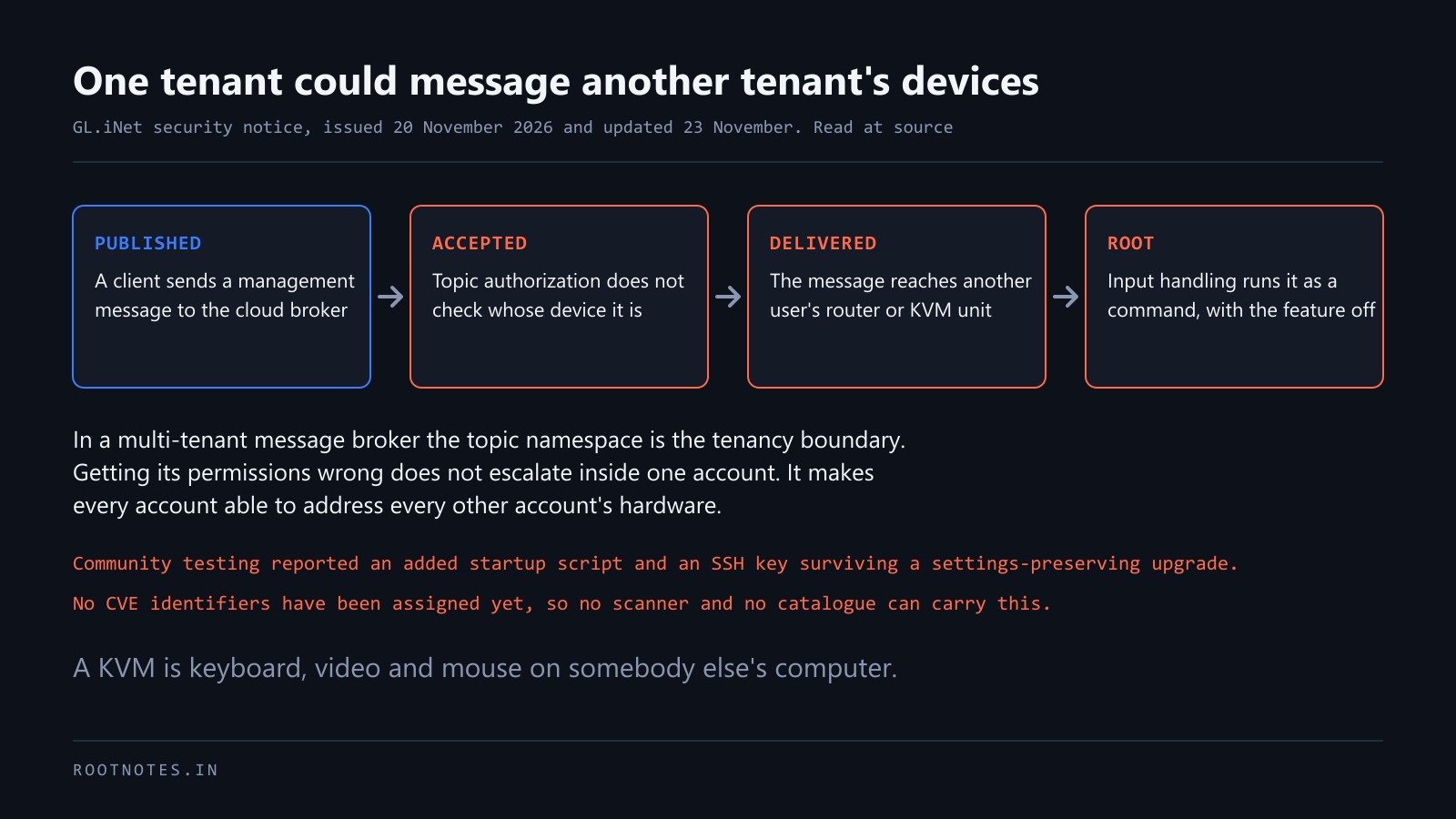
GL.iNet says an authorization error in its cloud message broker let a client send management messages to other people's routers and KVM devices. The attacker installed malware. There are no CVE identifiers yet.
Two N-able products, two catalogue entries, six days

2026-11-24

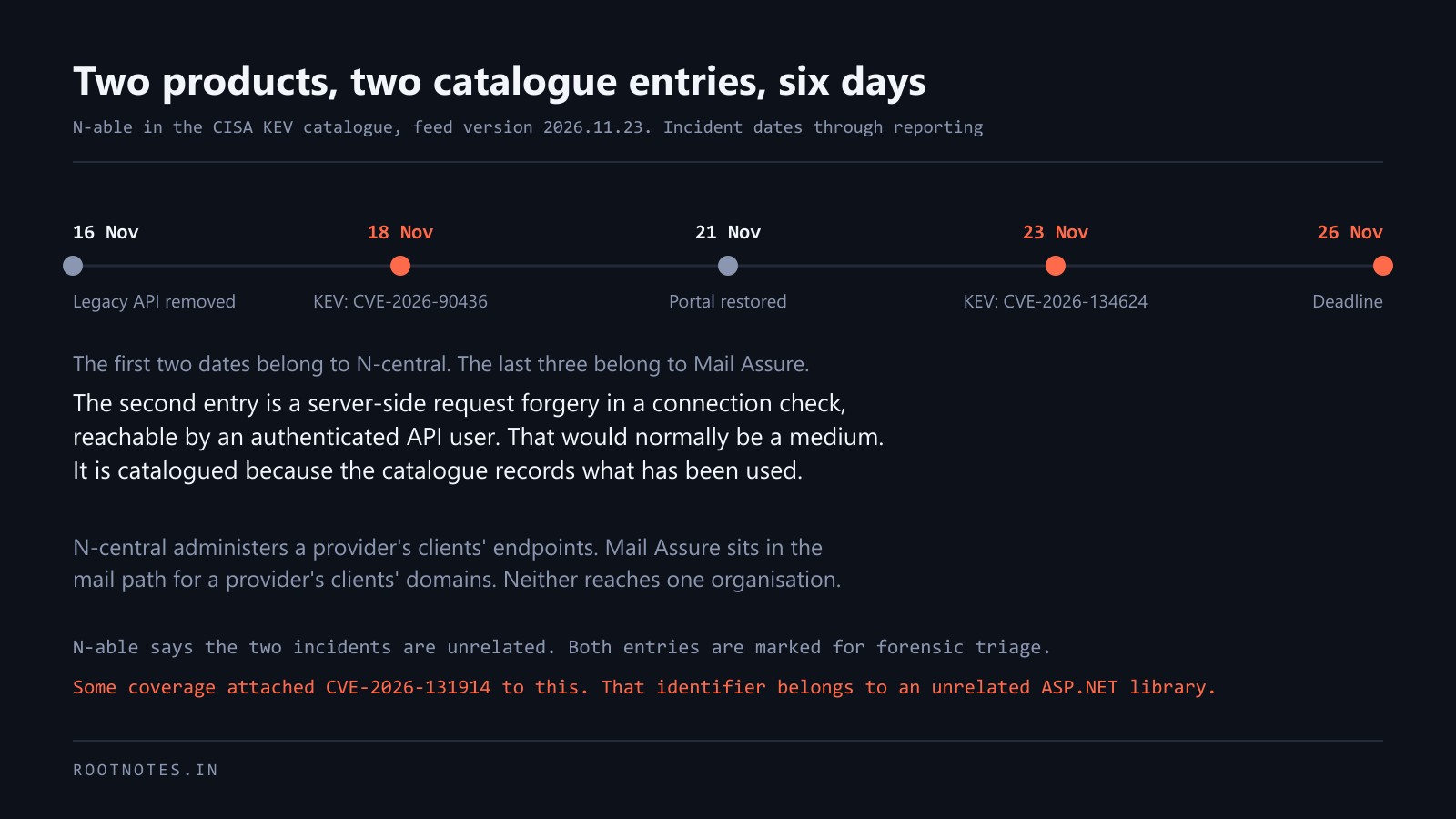
CISA added an N-able Mail Assure flaw to the exploited-vulnerabilities catalogue on 23 November, five days after it added the Apache Axis flaw used against N-central. The second one is a server-side request forgery that needs an authenticated API user.

Three flaws, three different kinds of evidence

2026-11-24

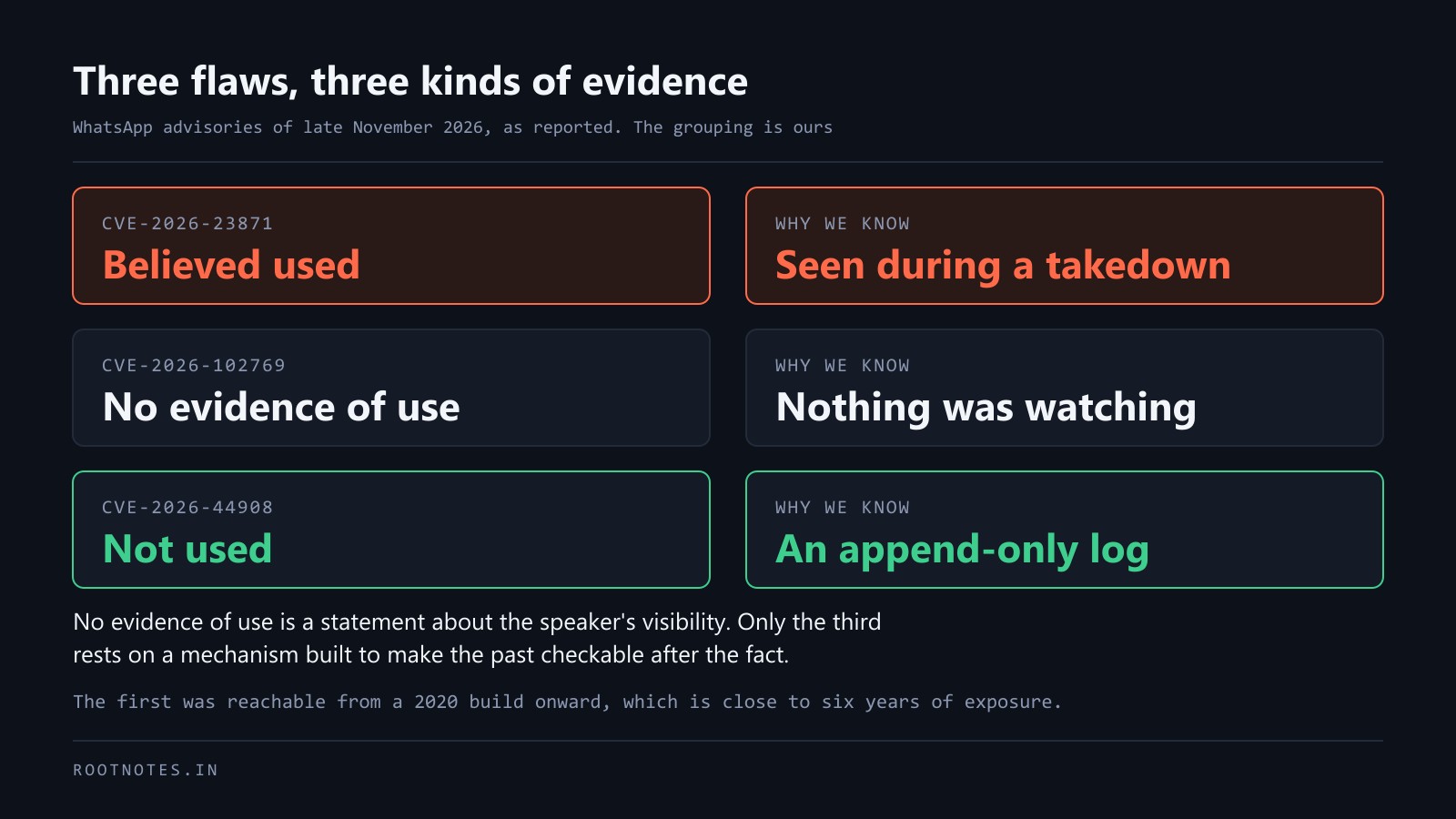
WhatsApp patched three issues in late November. One it believes was used by a scammer, one it says it has no evidence was used, and one it says a transparency log proves was not used. Only the third claim can actually be demonstrated.

The check that was never there

2026-11-23

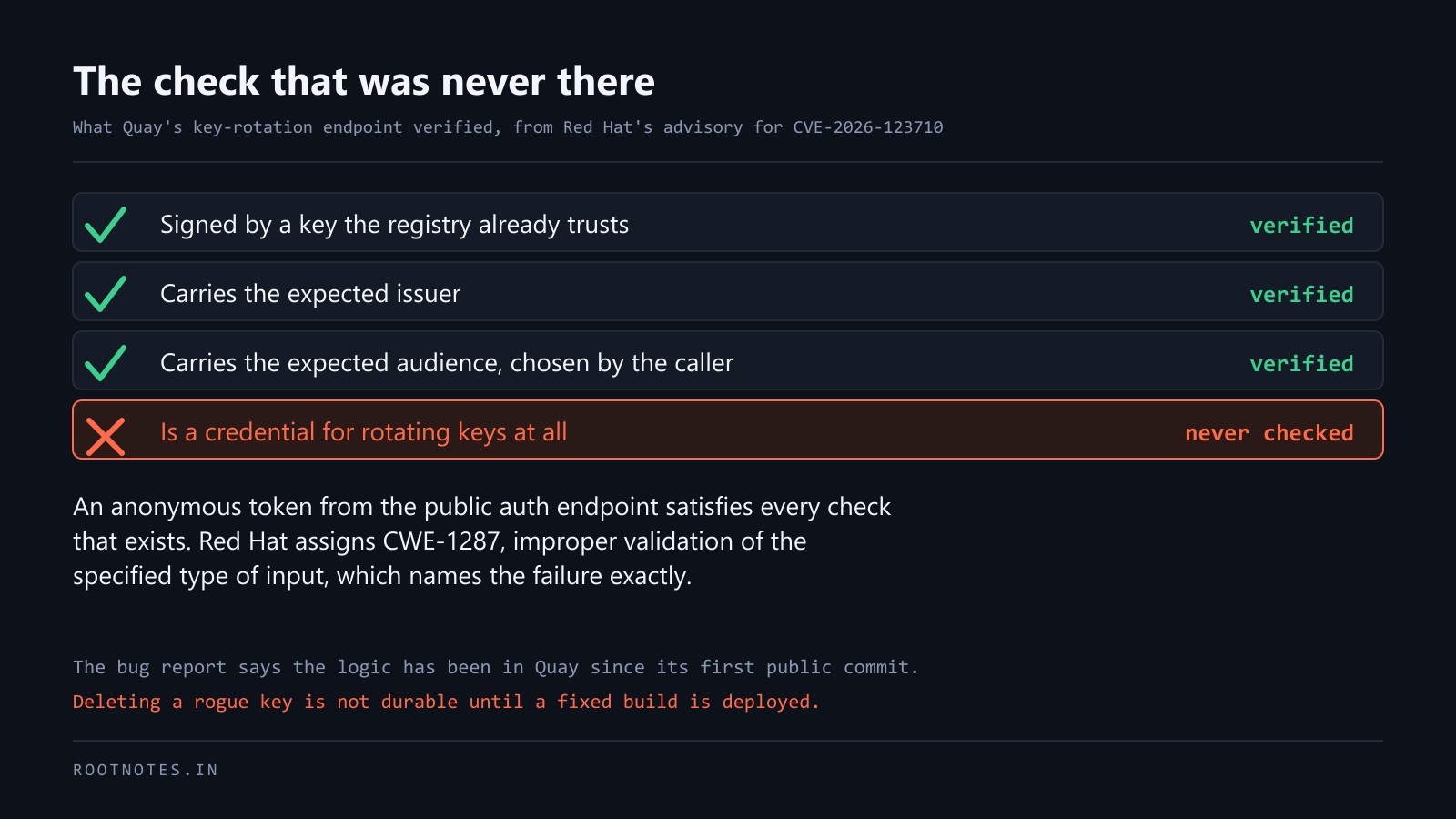
Red Hat Quay's key-rotation endpoint verified that a token was signed, that its issuer was right and that its audience was right. It never verified that the token was a key-rotation credential. An anonymous token satisfies all three checks that exist.

The script was supposed to change

2026-11-23

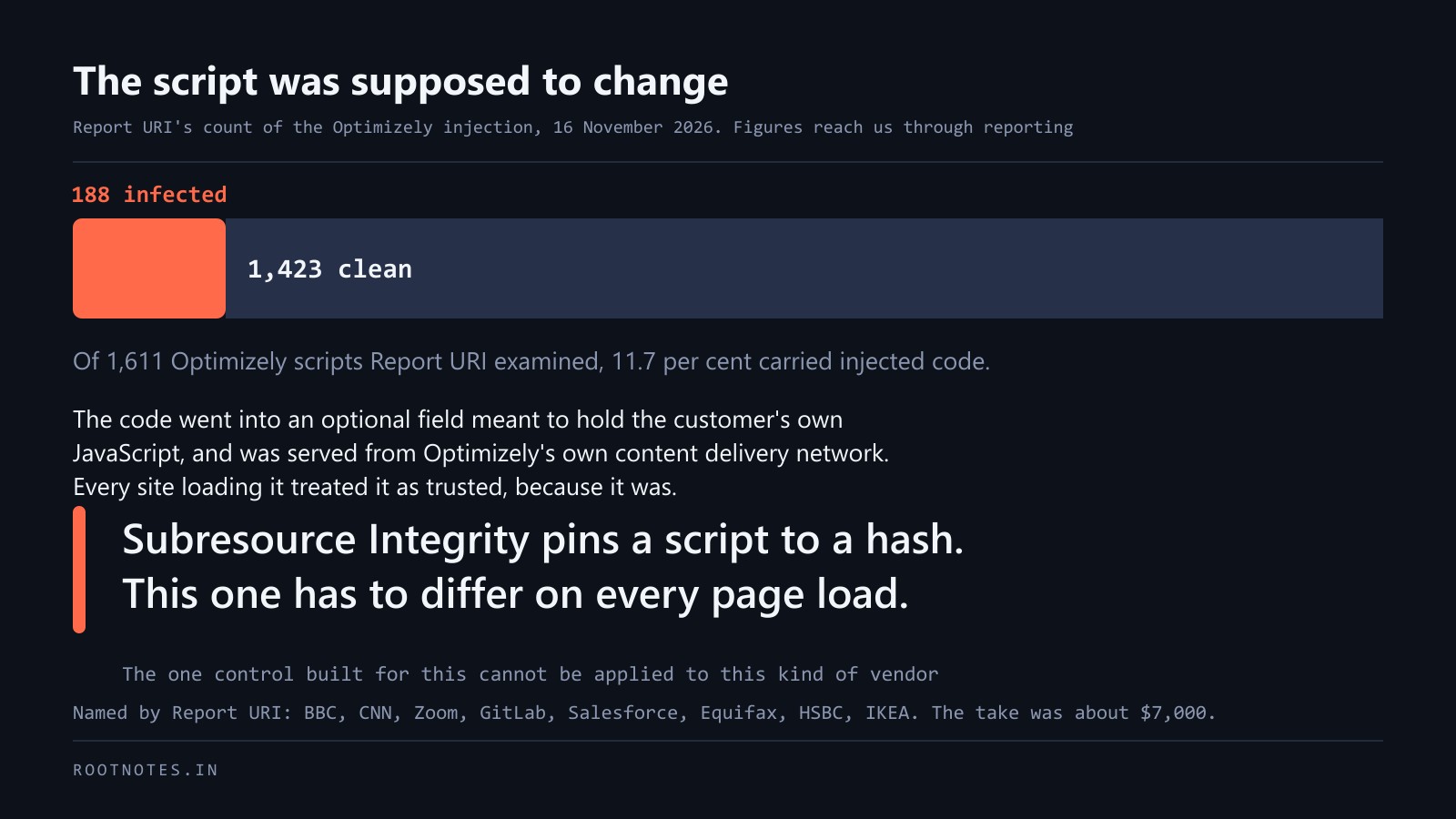
An attacker put JavaScript into Optimizely and it reached 178 organisations including the BBC, CNN, HSBC and Equifax. The control designed to stop exactly this cannot be used on an experimentation platform at all.

There is no PC version, and that is the rule

2026-11-23

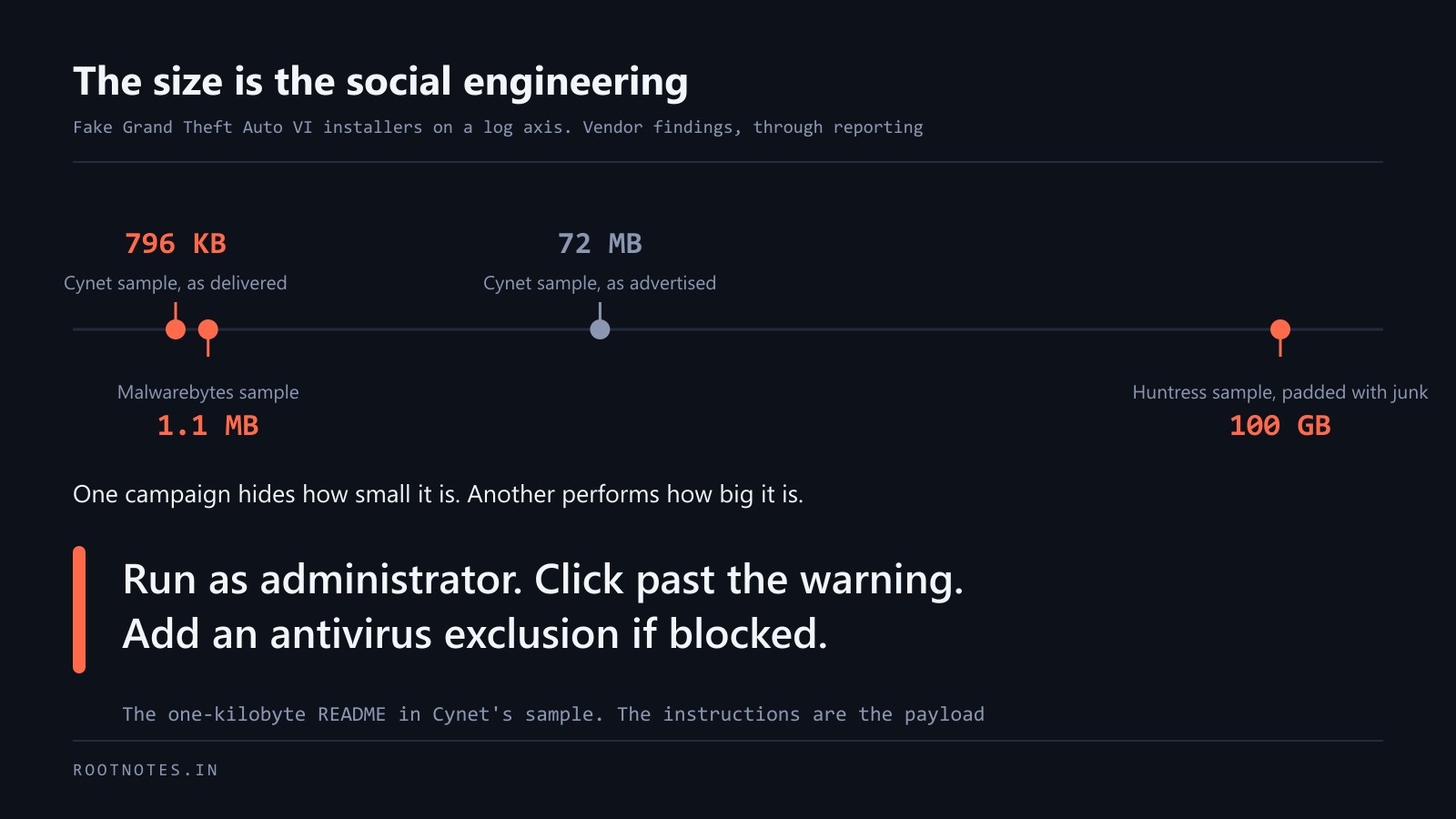
Grand Theft Auto VI shipped on 19 November for consoles only. That one fact makes every Windows installer offered for it malicious, with no exceptions — and security almost never gets a rule that clean.

The External ID was correct every time

2026-11-23

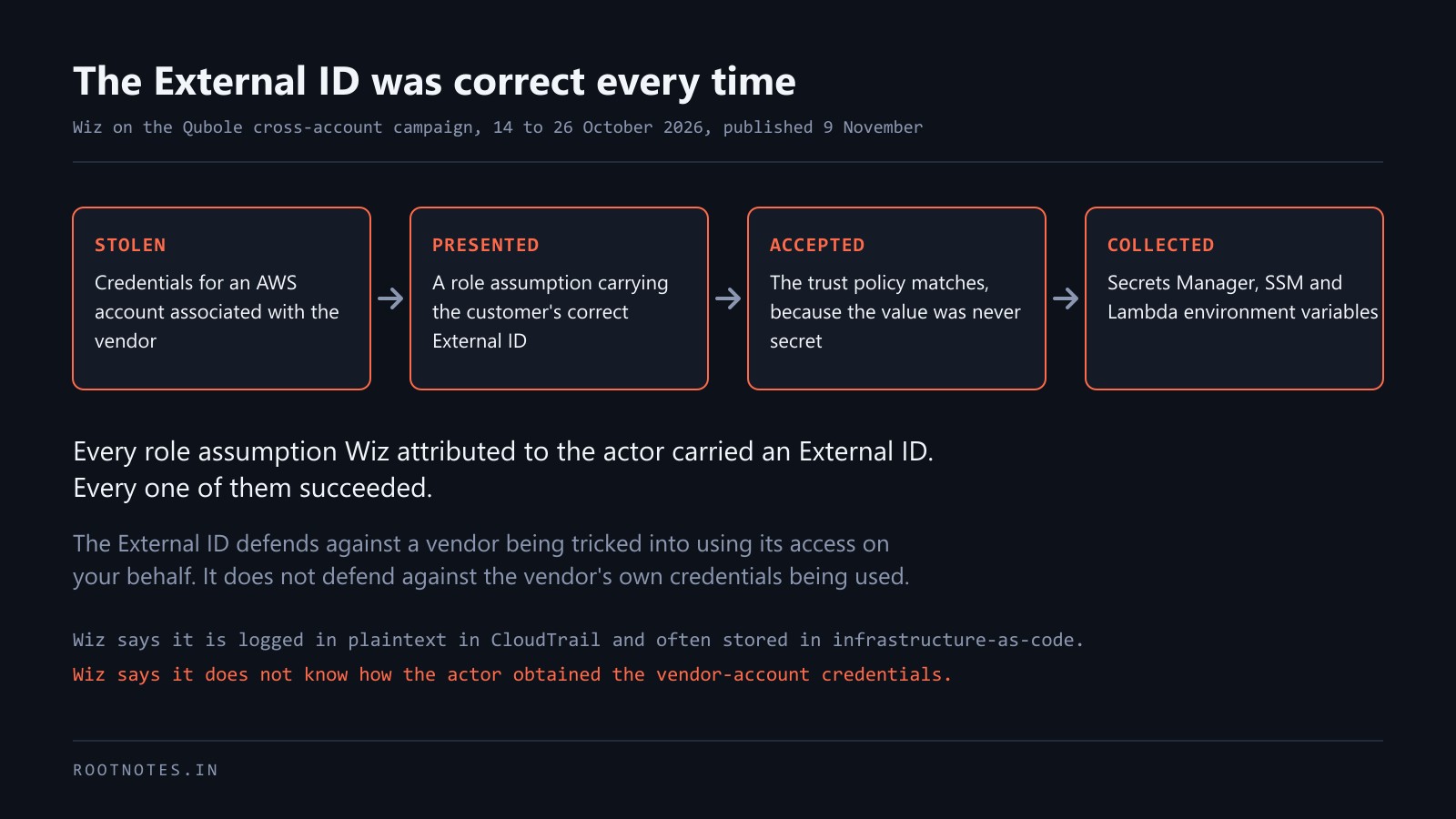
An attacker used credentials from a Qubole AWS account to assume roles in customer environments. Every request carried a valid External ID, the control AWS built for this exact risk, and every one succeeded.

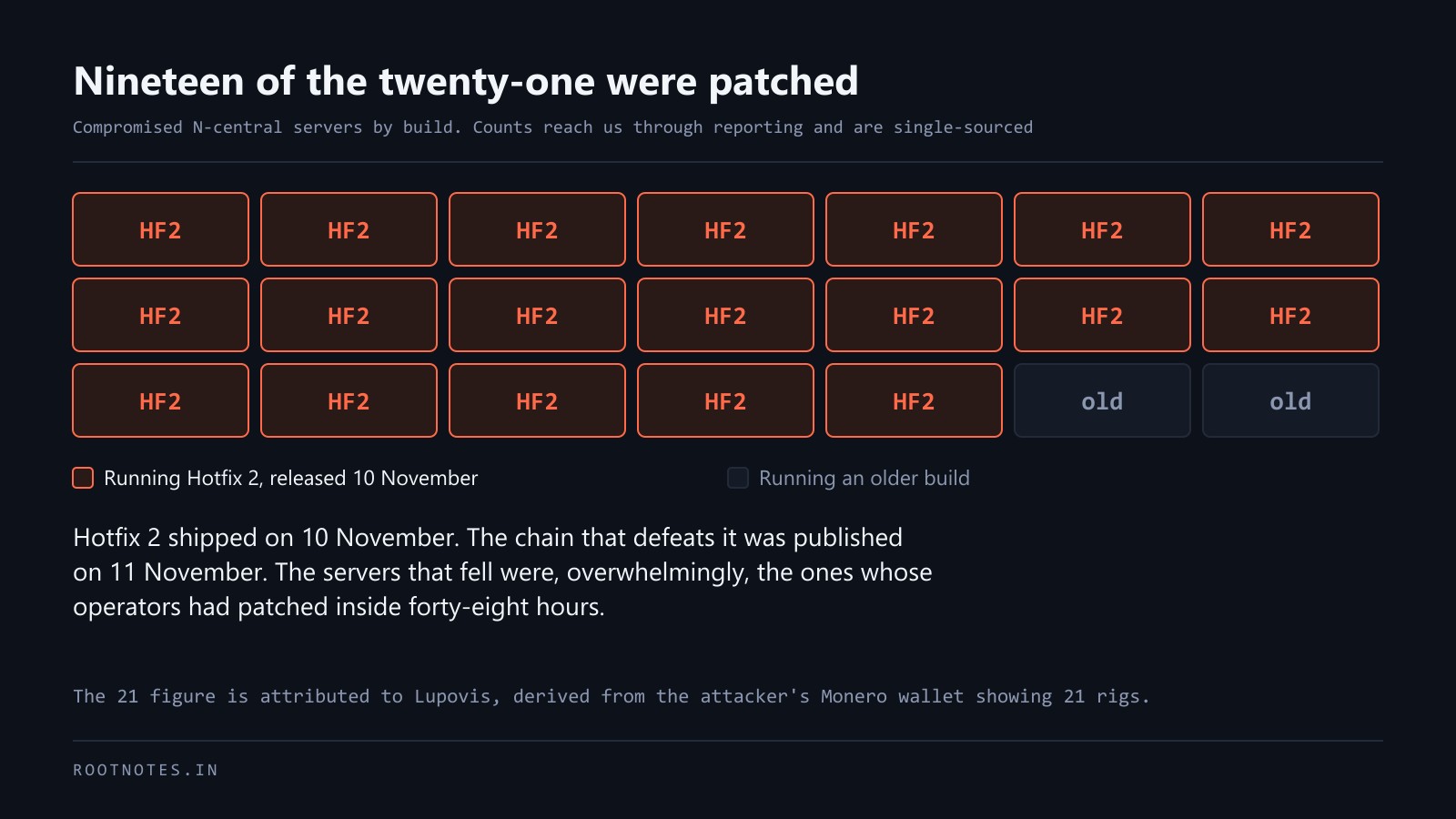
Nineteen of the twenty-one had already patched

2026-11-23

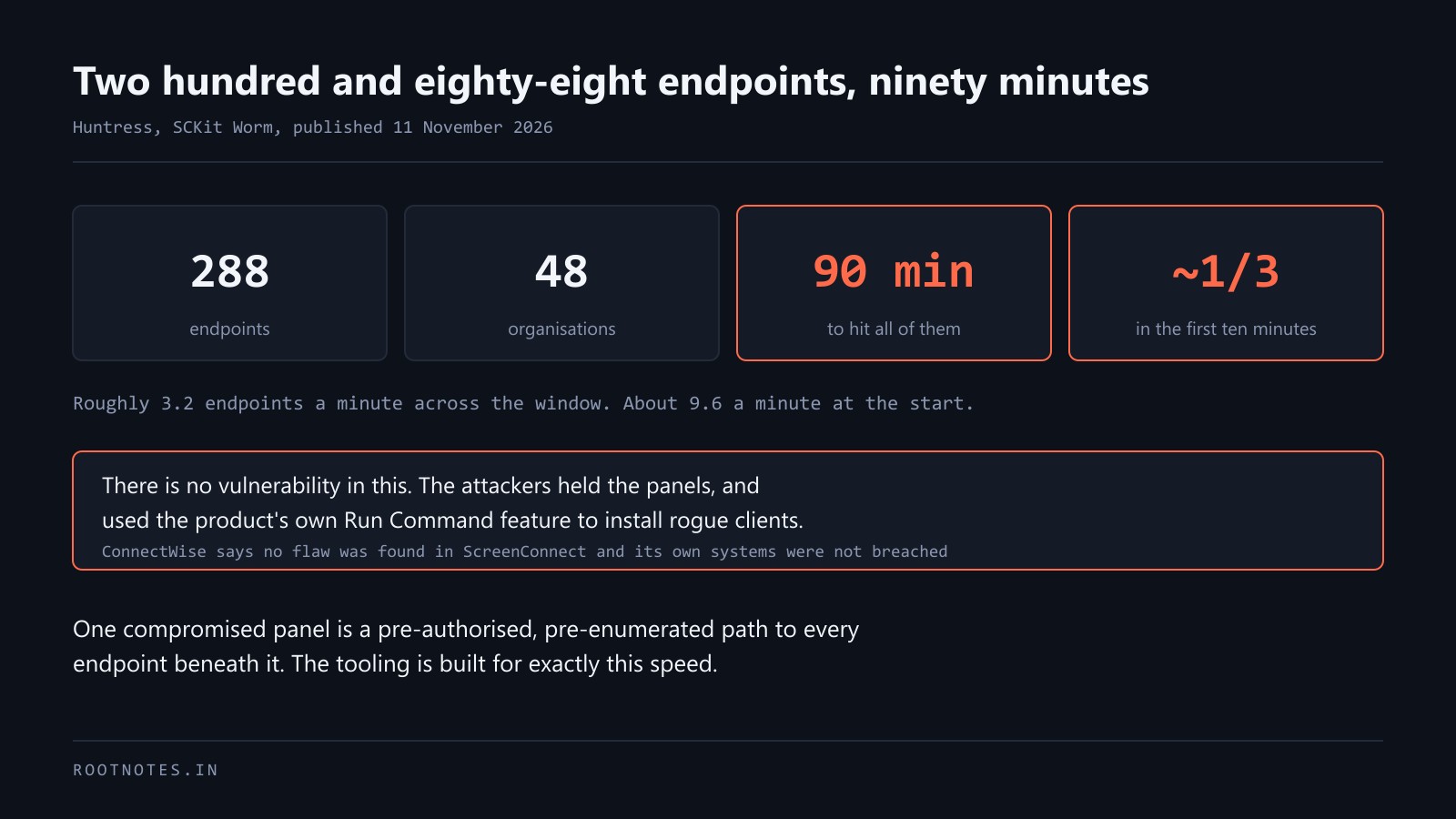
N-able shipped Hotfix 2 on 10 November. A chain that defeats it was published on 11 November. Of the compromised N-central servers counted so far, nineteen of twenty-one were running the hotfix.

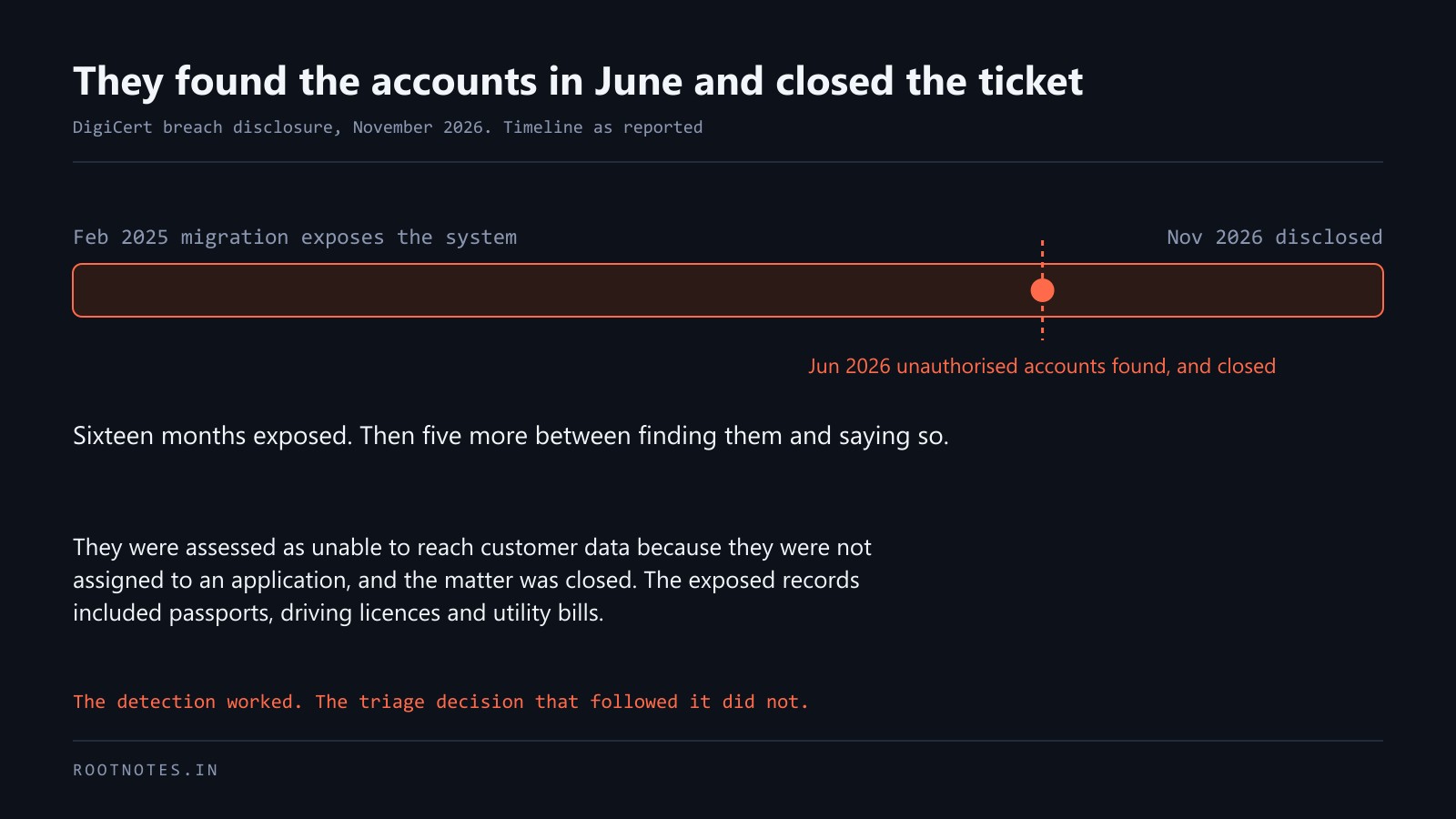
They found the accounts in June and closed the ticket

2026-11-23

DigiCert has disclosed that a 2025 migration left an internal system on the open internet for over sixteen months. The detection worked. Unauthorised accounts were found in June and assessed as unable to reach customer data.

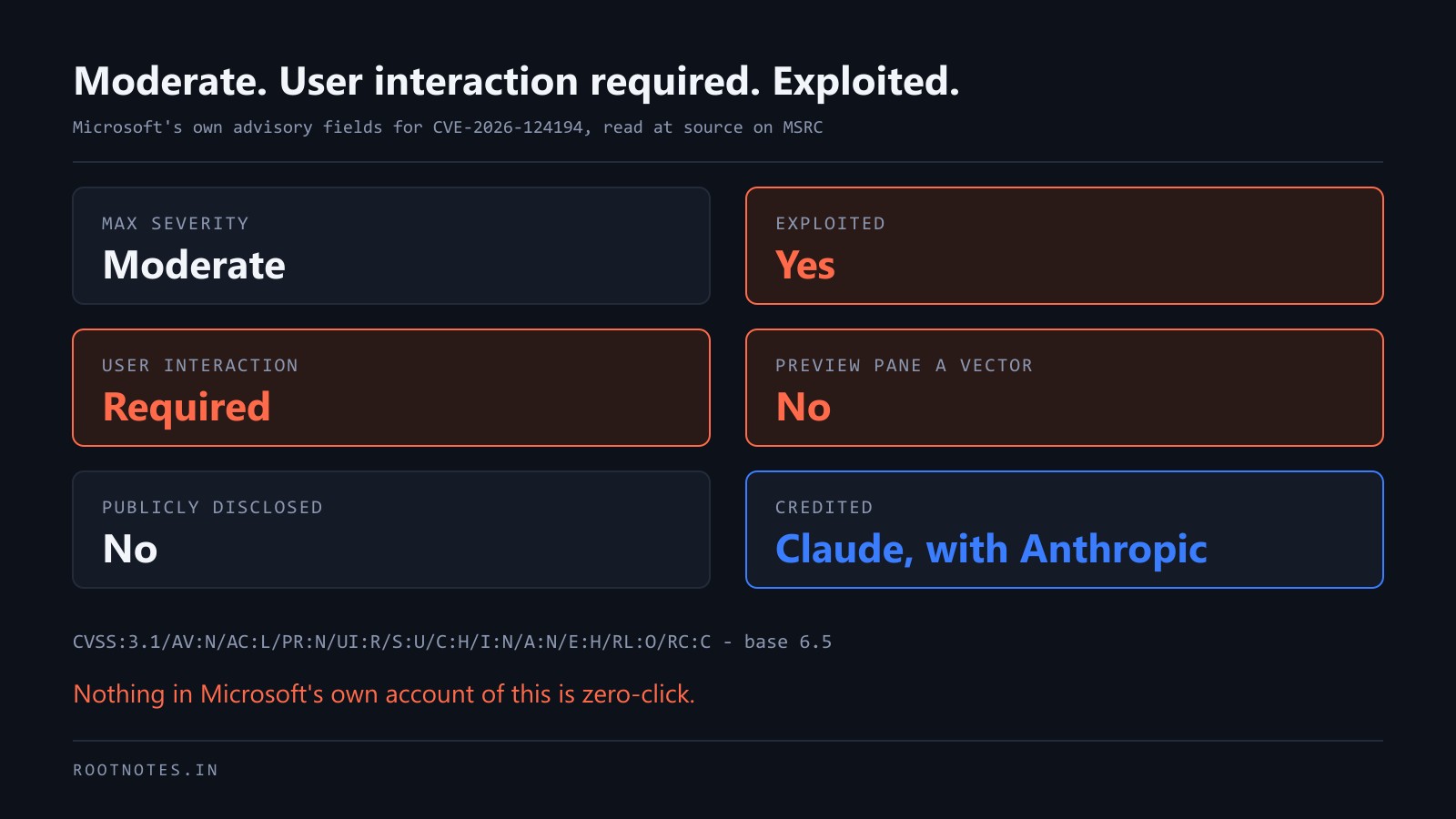
Moderate. User interaction required. Exploited.

2026-11-23

The Outlook flaw CISA added last week is being described as a zero-click zero-day. Microsoft's own advisory rates it Moderate, says user interaction is required, and states plainly that the Preview Pane is not an attack vector.

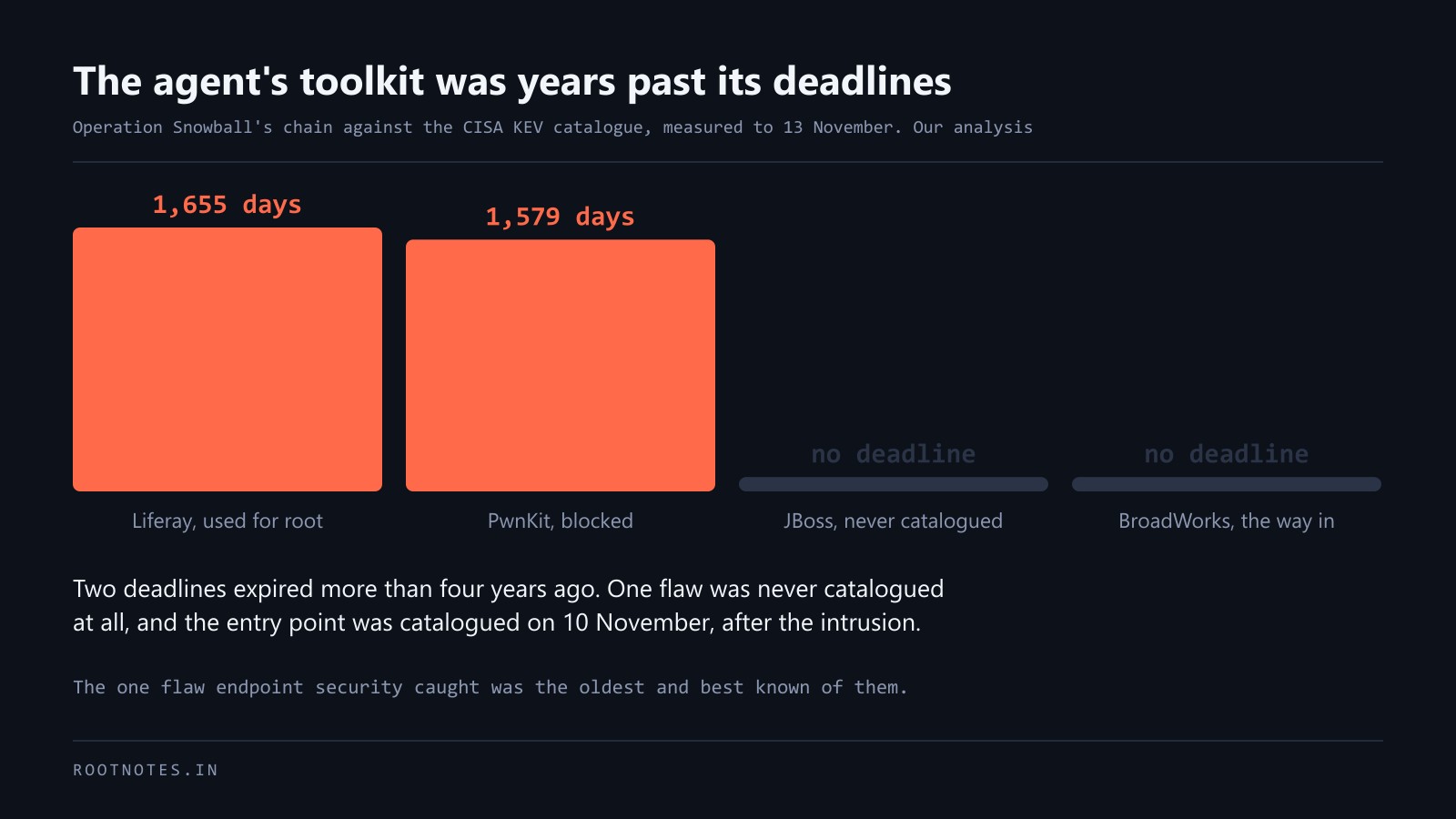
The agent's toolkit was years past its deadlines

2026-11-23

We checked every flaw in the Operation Snowball chain against CISA's catalogue. Two had remediation deadlines that expired more than four years ago. One was never listed at all. The AI was not the new part.

The vendor says it has not seen it. The catalogue disagrees.

2026-11-21

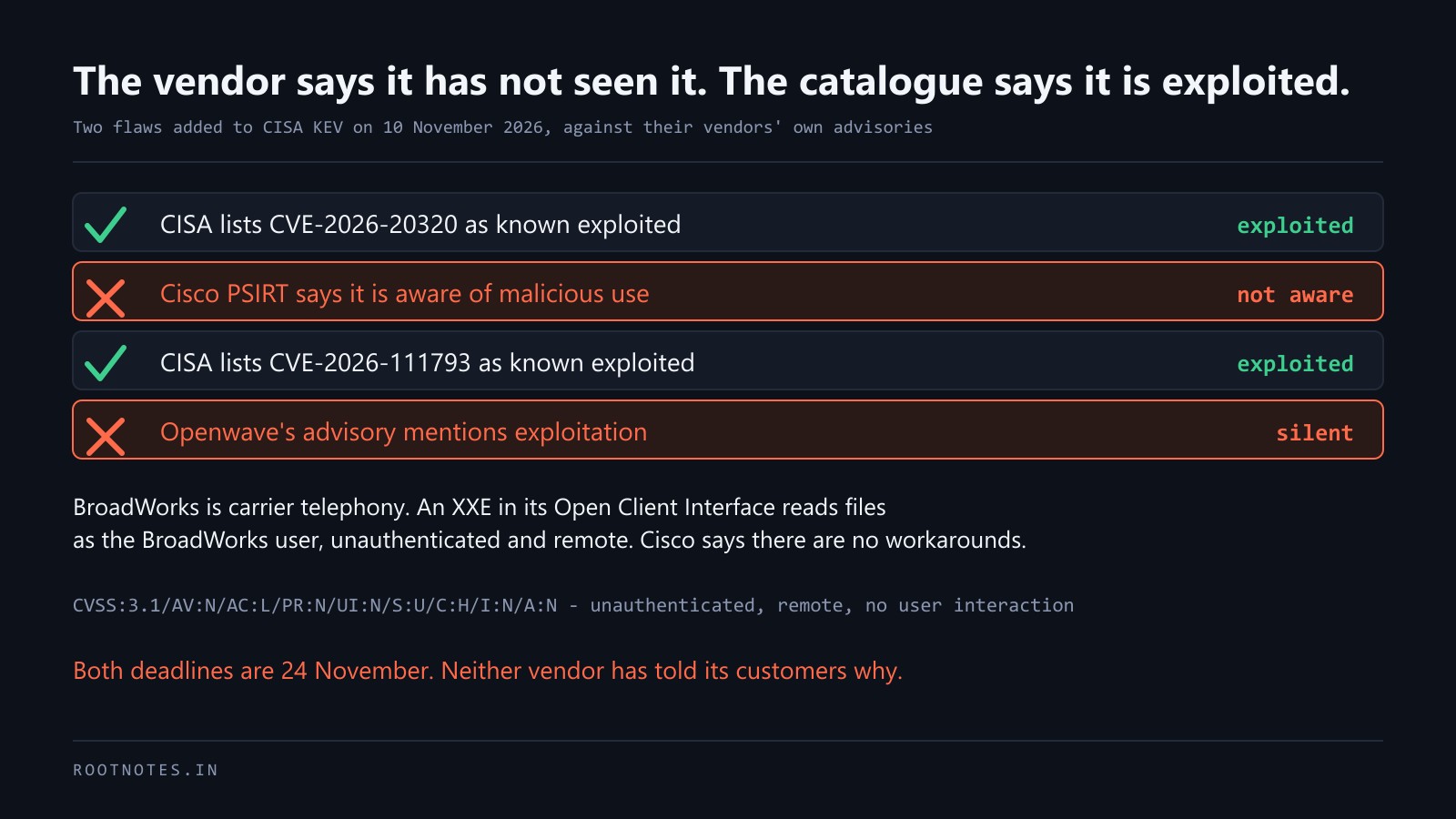
CISA added two flaws to its exploited-vulnerabilities catalogue on 10 November. Cisco's advisory for one of them says its security team is not aware of any malicious use. The other vendor's advisory does not mention exploitation at all.

Five flaws, four of them years old, seventy-two hours

2026-11-21

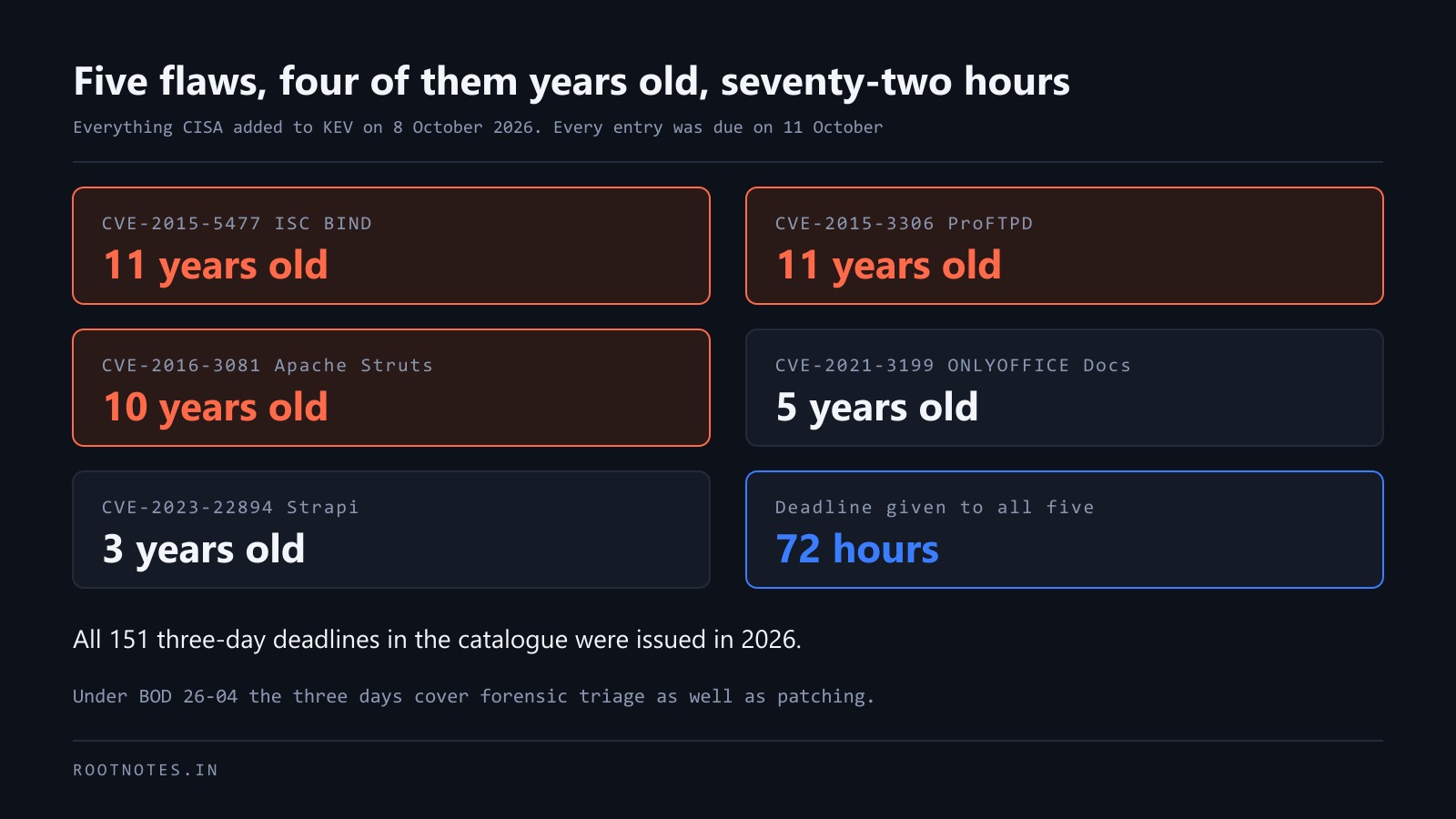
On 8 October CISA added five vulnerabilities to its catalogue and gave every one of them a three-day deadline. Two were eleven years old. It is worth asking what a 72-hour clock is for on a flaw patchable since 2015.

Patched in 2021. Catalogued in 2026.

2026-11-21

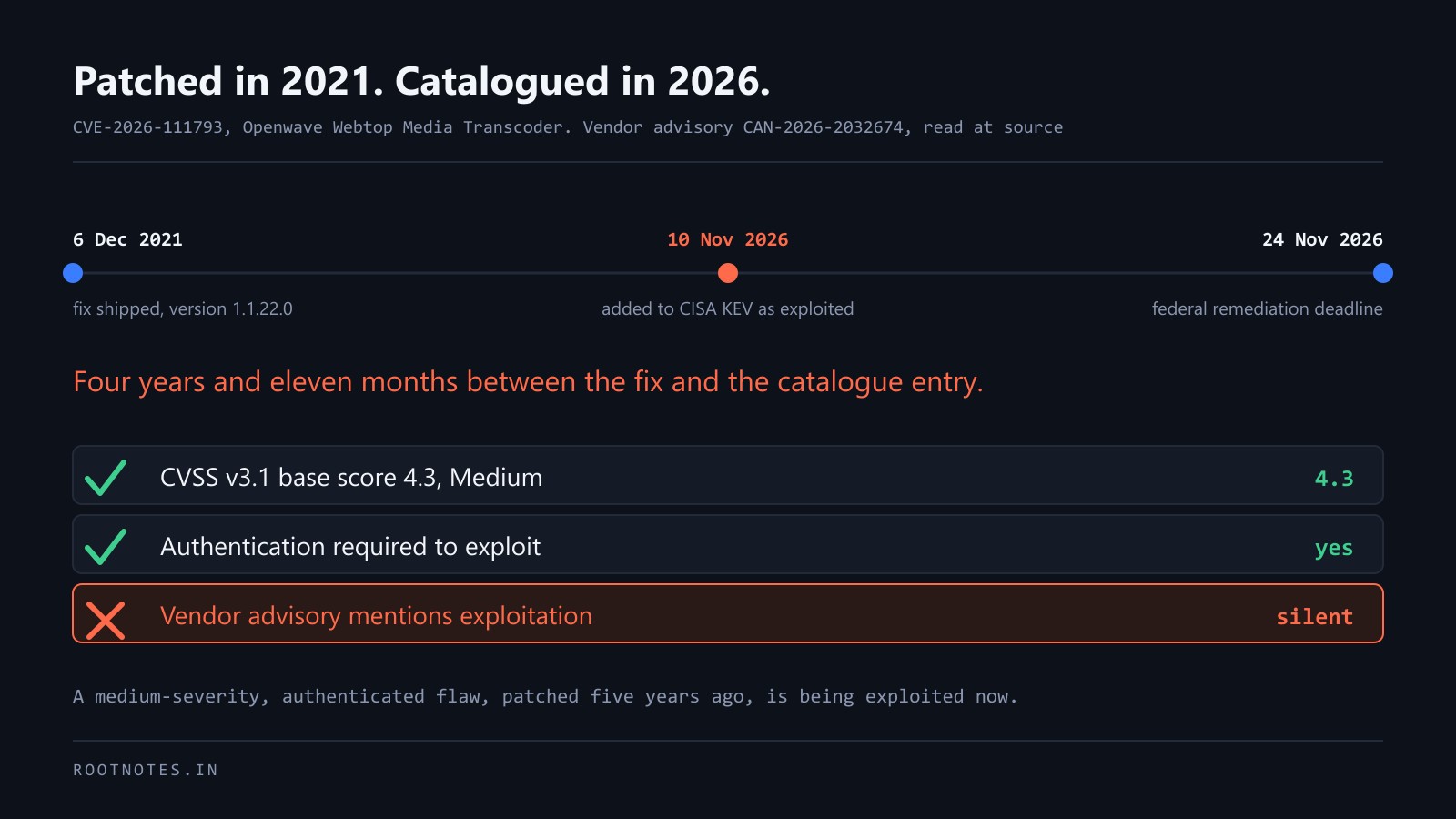
A flaw whose fix shipped on 6 December 2021 was added to CISA's exploited-vulnerabilities catalogue this week. It scores 4.3, it needs an authenticated user, and the vendor's own advisory does not mention exploitation at all.

The ransomware column tells you about the past

2026-11-21

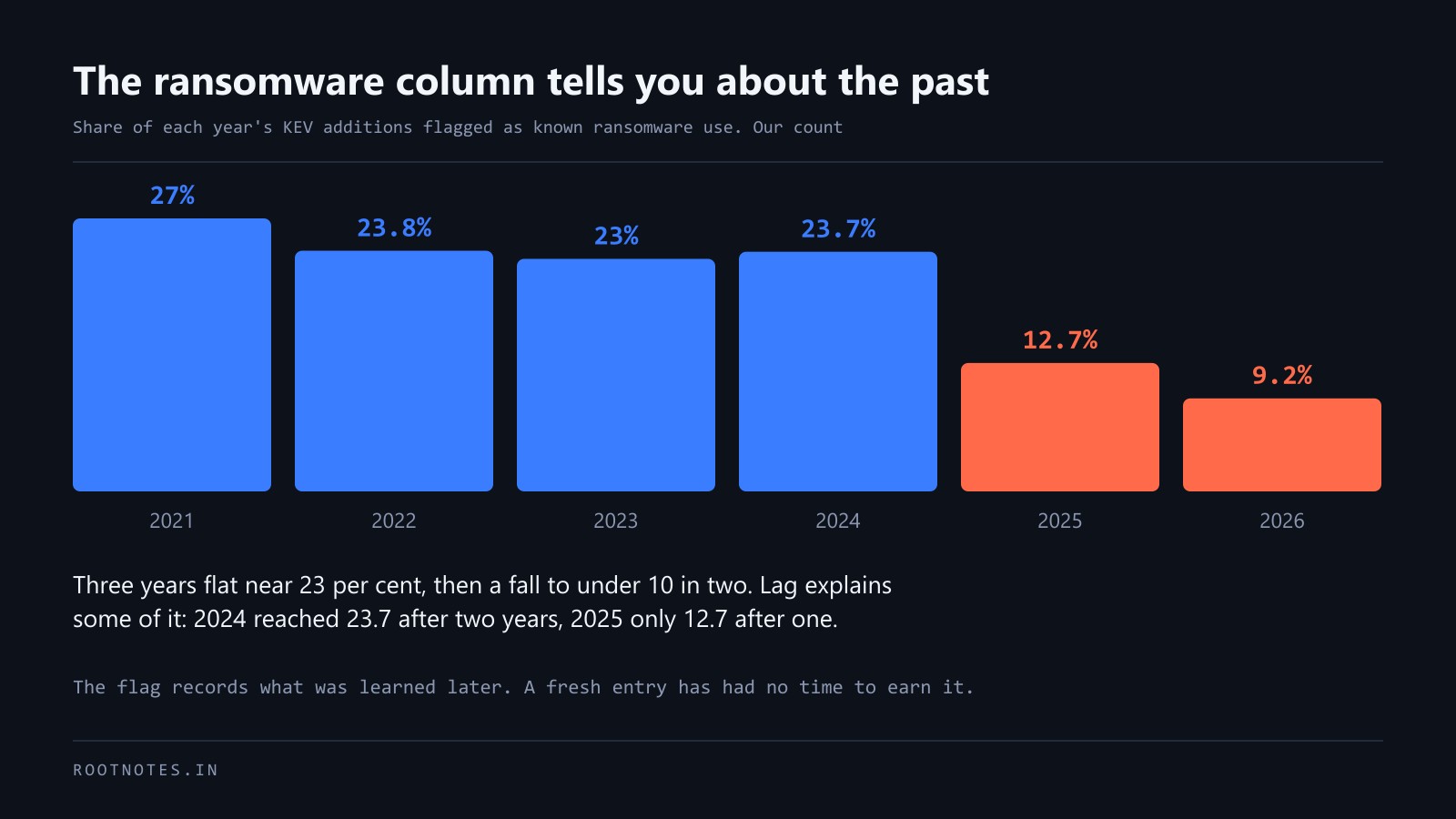
One in four KEV entries used to carry a known-ransomware flag. This year it is one in eleven. Reporting lag explains part of that and demonstrably not all of it, which makes the field useless for the thing people use it for.

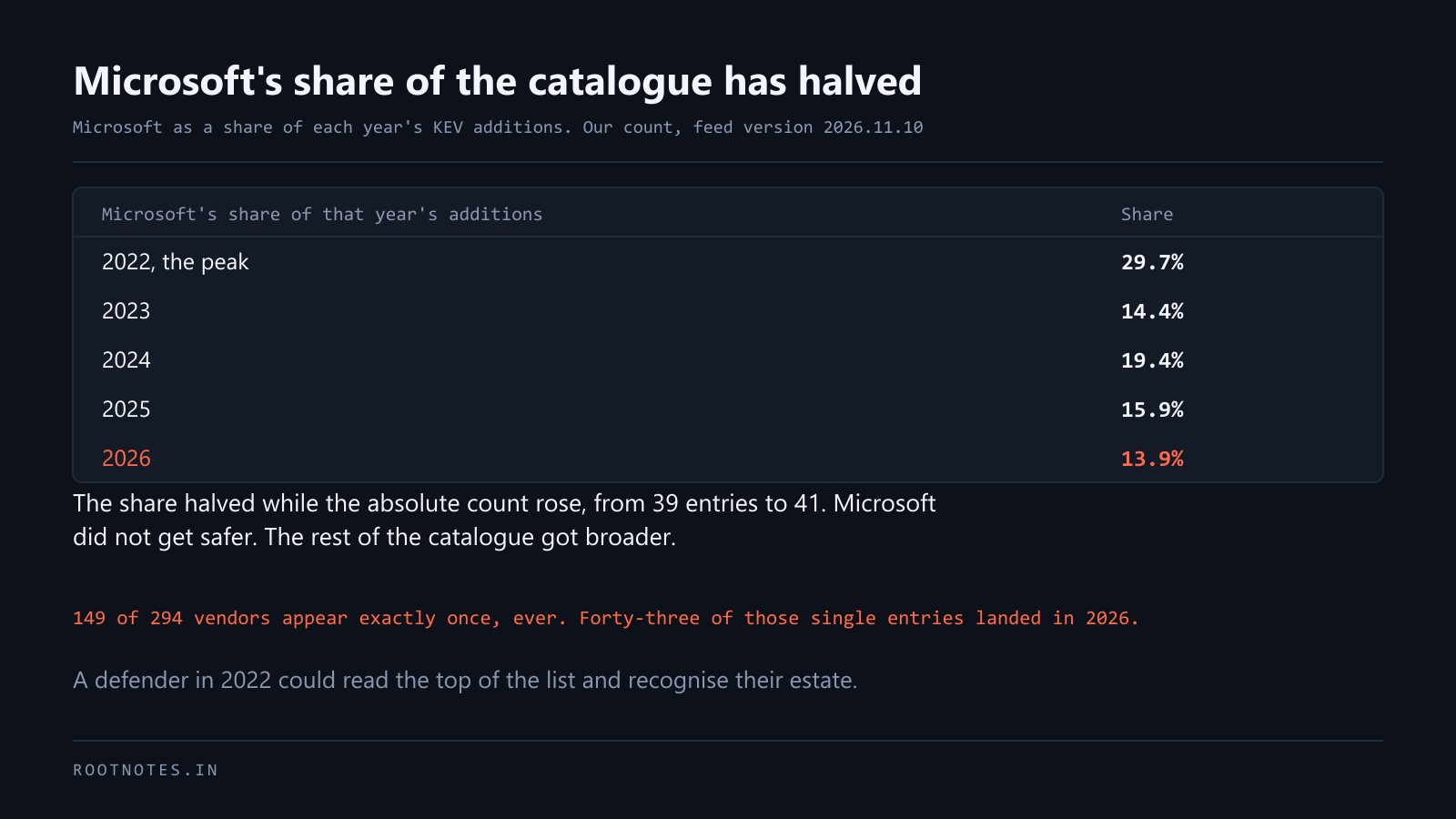
Microsoft's share of the catalogue has halved since 2022

2026-11-21

In 2022 nearly a third of everything CISA catalogued as exploited was Microsoft. This year it is under a seventh. It did not move to another giant. More than half the vendors in the catalogue now appear exactly once.

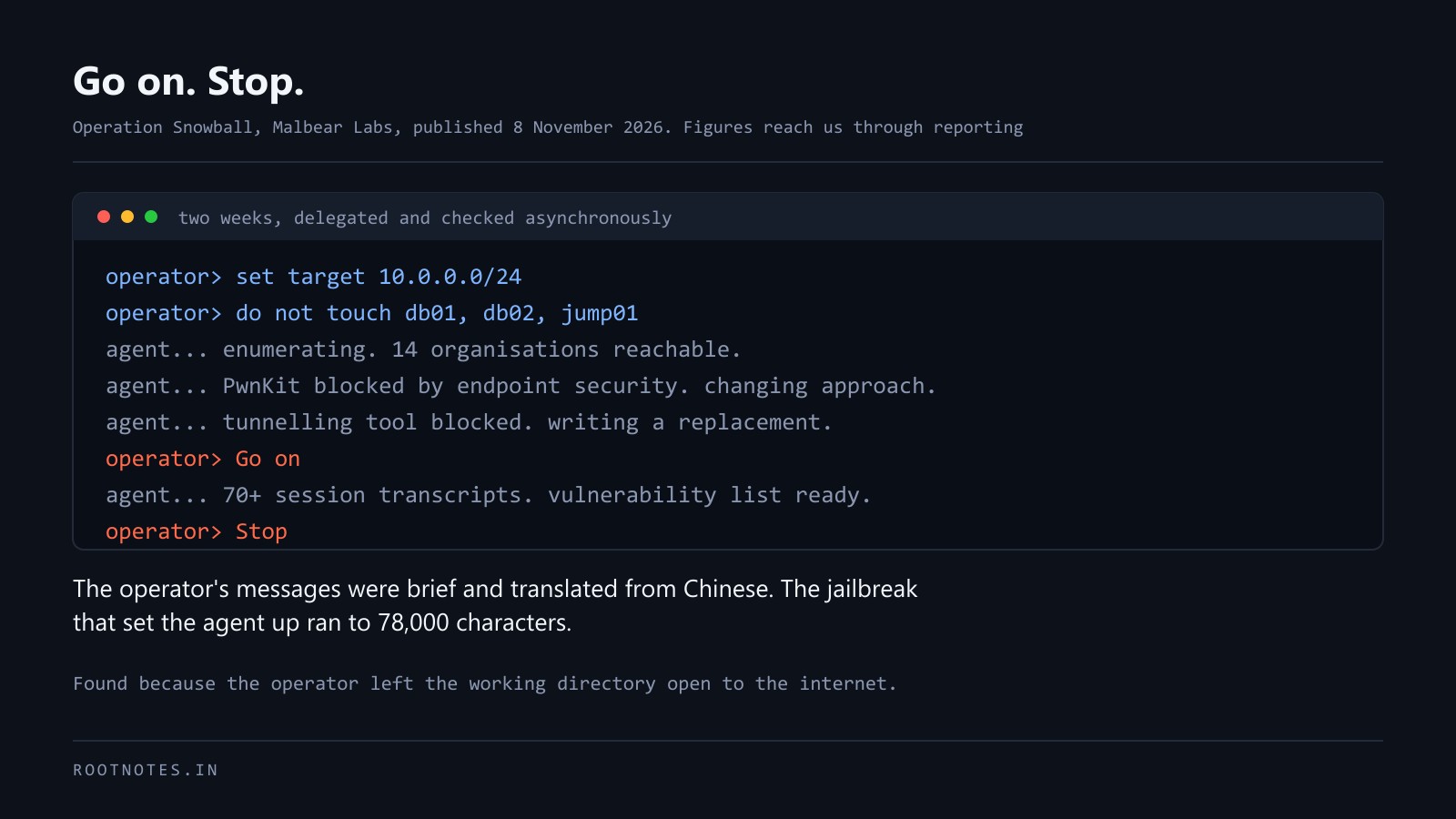
Go on. Stop. The rest was handled by the model.

2026-11-21

A security firm found an attacker's working directory left open on the internet. Inside were seventy session transcripts showing an AI agent running a two-week intrusion across fourteen organisations, with a human supervising in two words at a time.

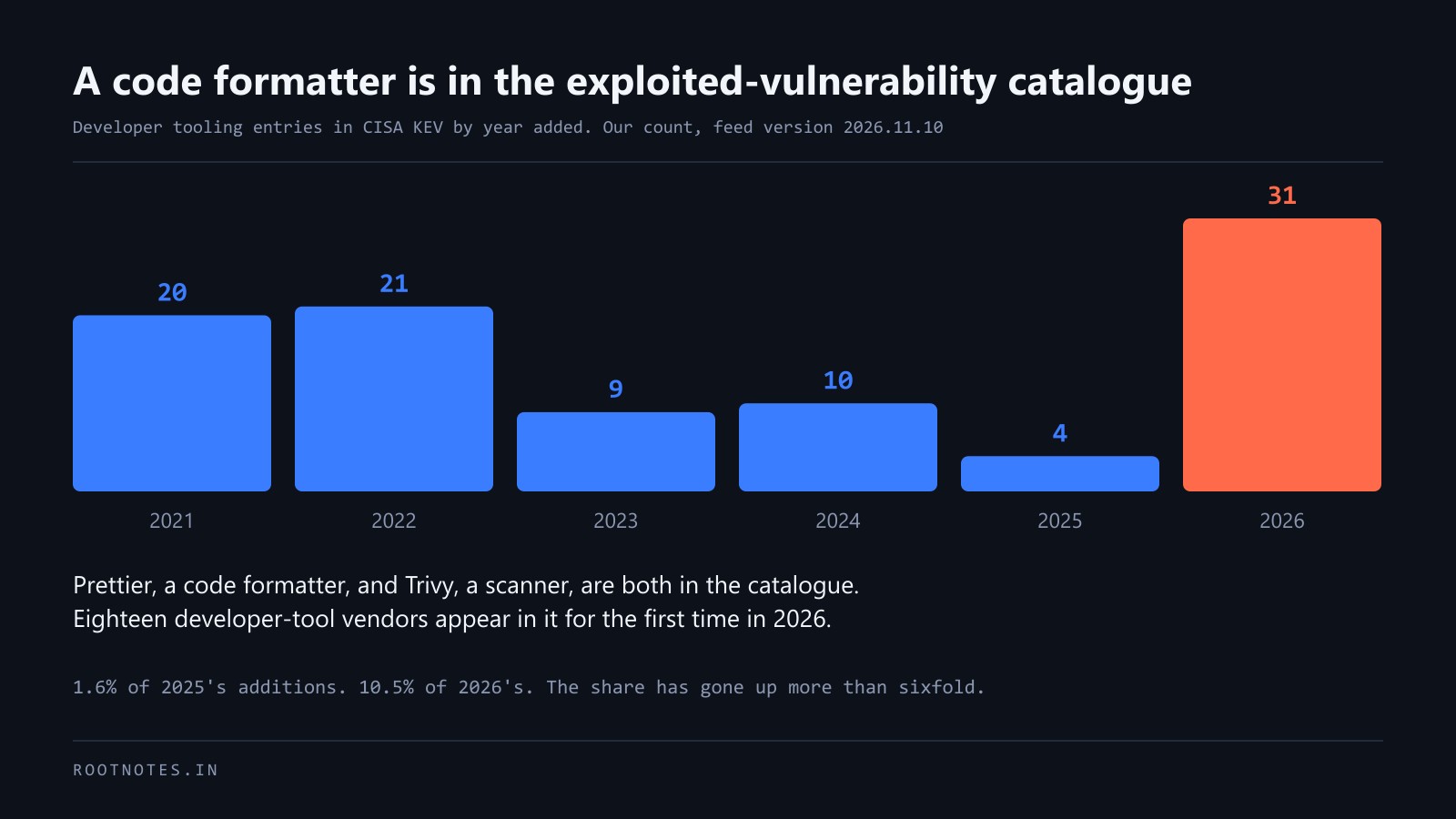
A code formatter is in the exploited-vulnerability list

2026-11-21

Prettier is in CISA's catalogue of vulnerabilities being exploited in the wild. So is a vulnerability scanner. Developer tooling went from four entries in 2025 to thirty-one in 2026, and the attack surface moved with it.

The internal AI tool was how they moved between engineers

2026-11-17

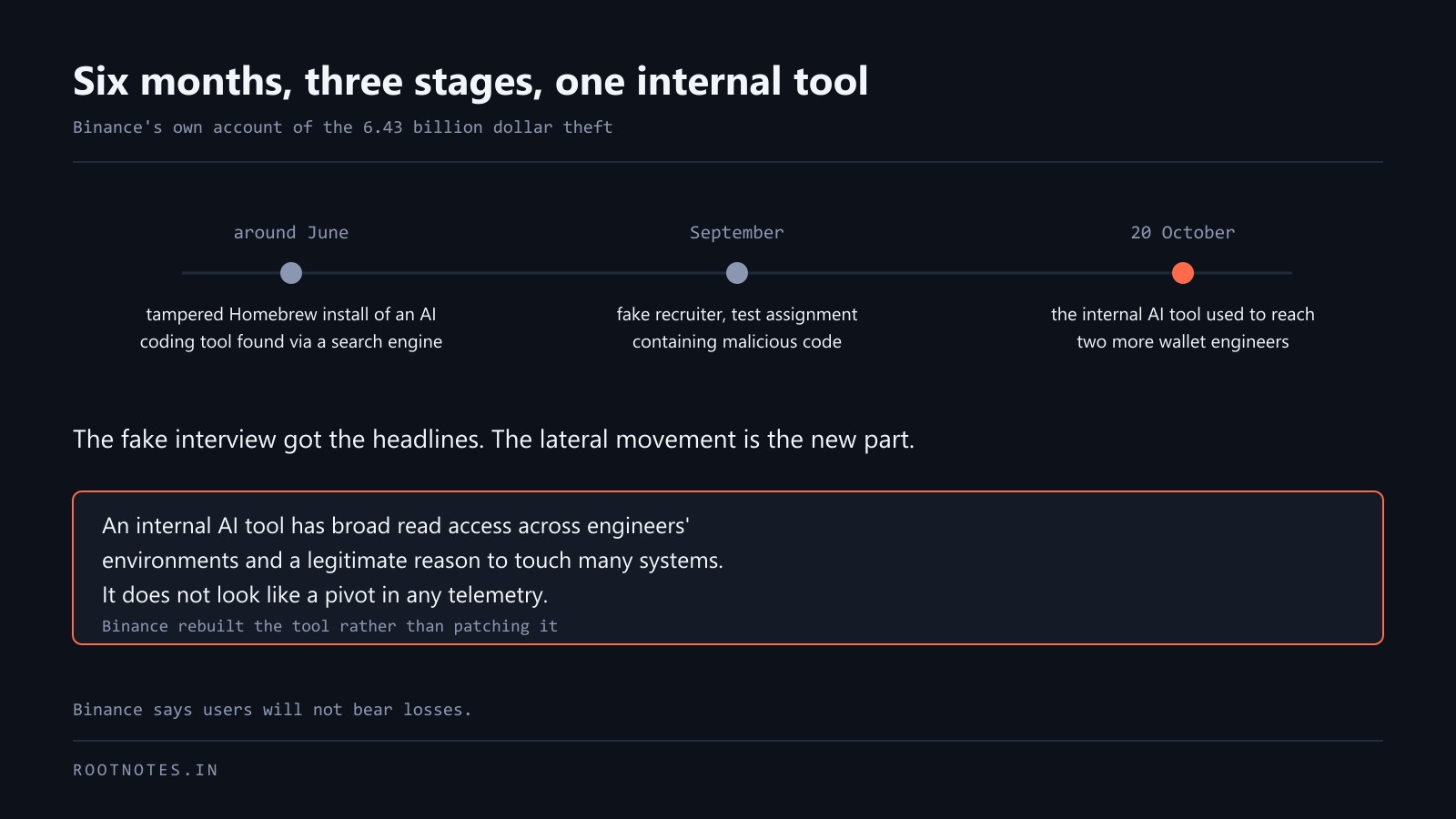
Binance has described the chain behind the largest cryptocurrency theft on record. The fake job interview got the coverage. The part worth reading is that the attackers moved between engineers using the company's own AI tool.