Skip to content
category — ai

ls ./category/ai

AI

Models, agents and the new attack surface they create.

94 articles

None of them ran code. Forty-four per cent sent data out

2026-11-24

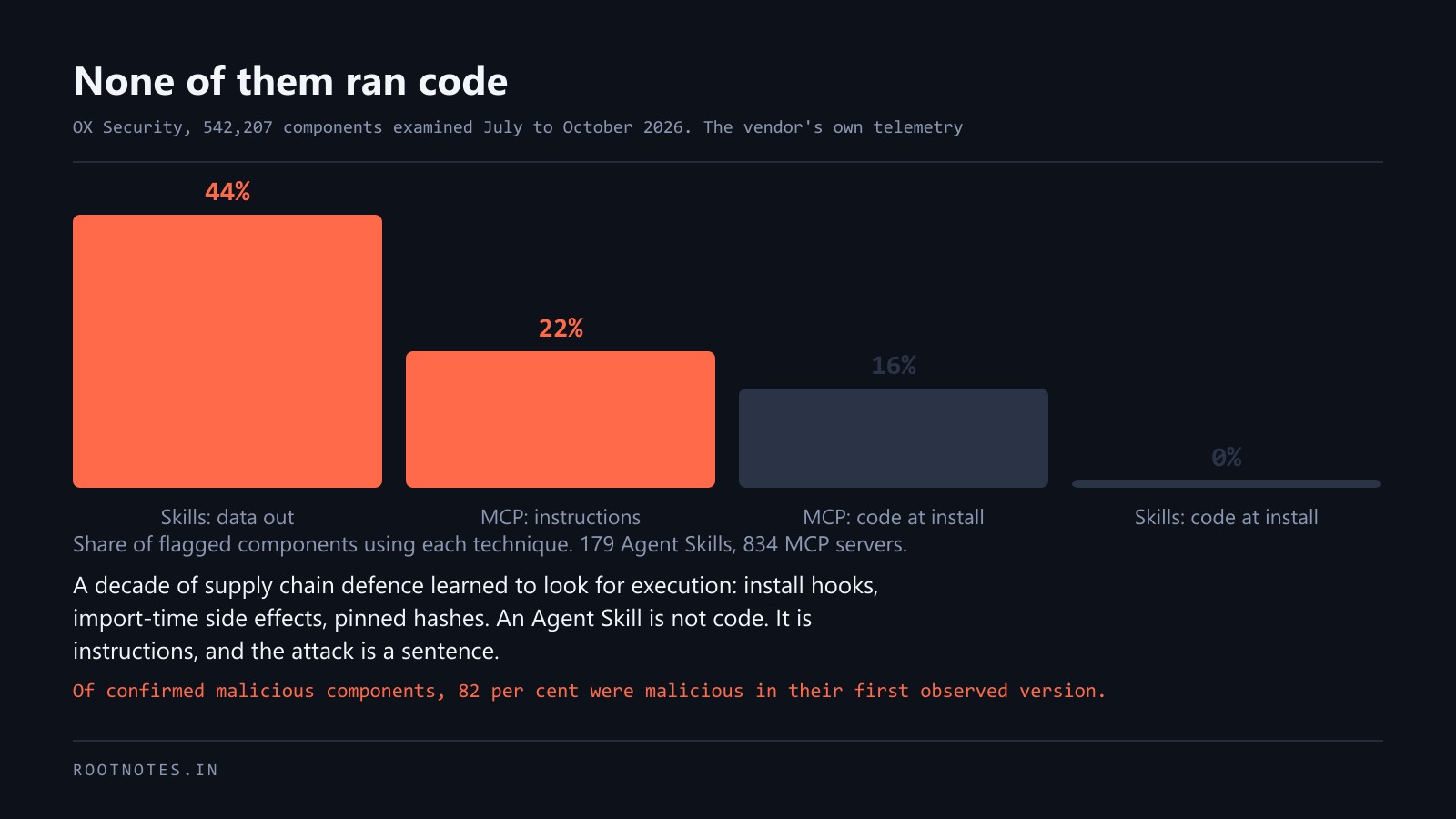
OX Security looked at 179 flagged Agent Skills and found that not one executed code at install. Forty-four per cent instructed the agent to send data somewhere. Every supply-chain control built in the last decade looks for the first thing.
Six million lines of proof, and four weeks

2026-11-23

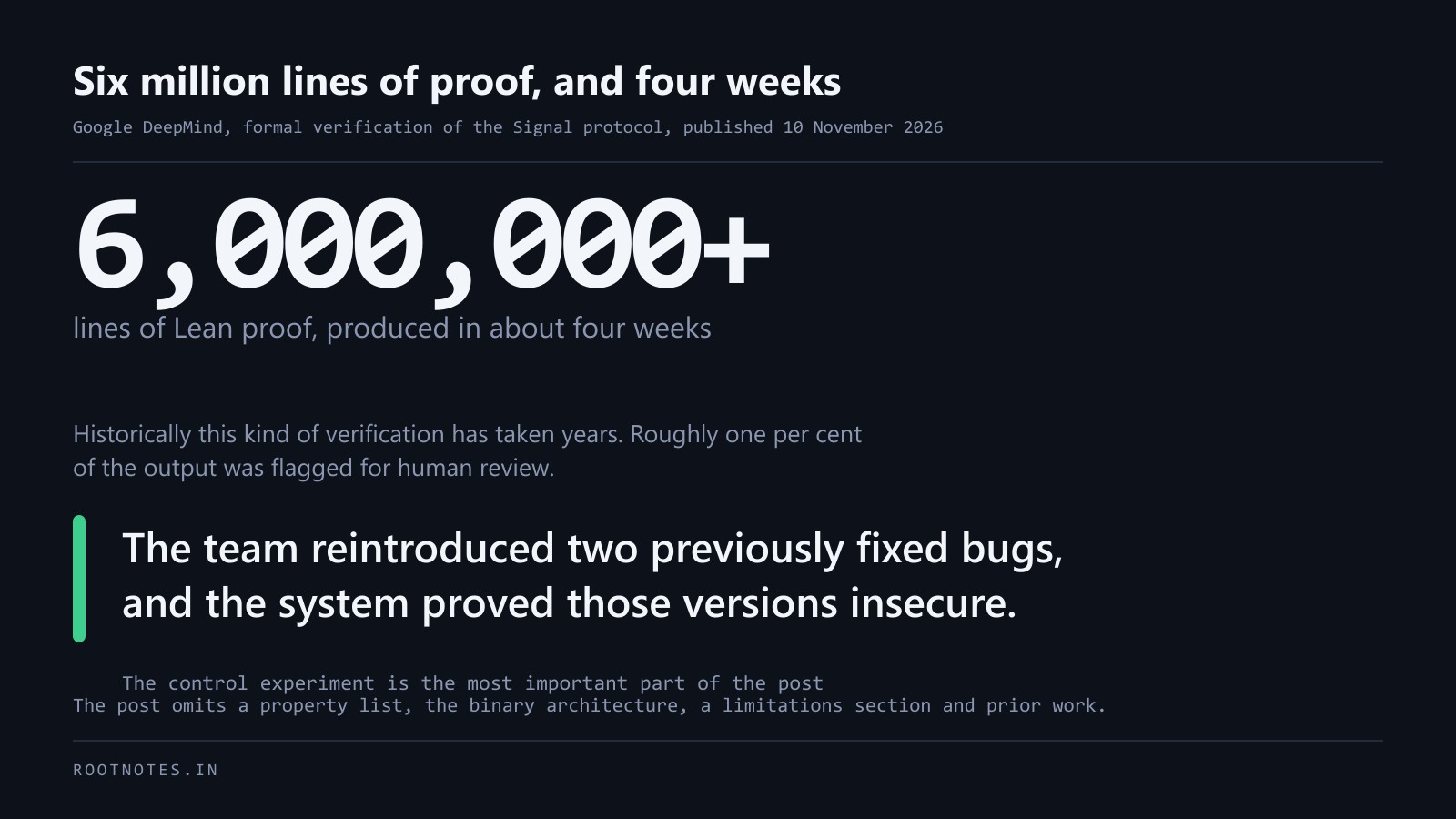
DeepMind has published machine-checked proofs of security properties in the code behind Signal's protocol. The headline number is six million lines. The part worth reading is the experiment where they put the bugs back in.

Most of the AI stack's vulnerability history is new

2026-11-21

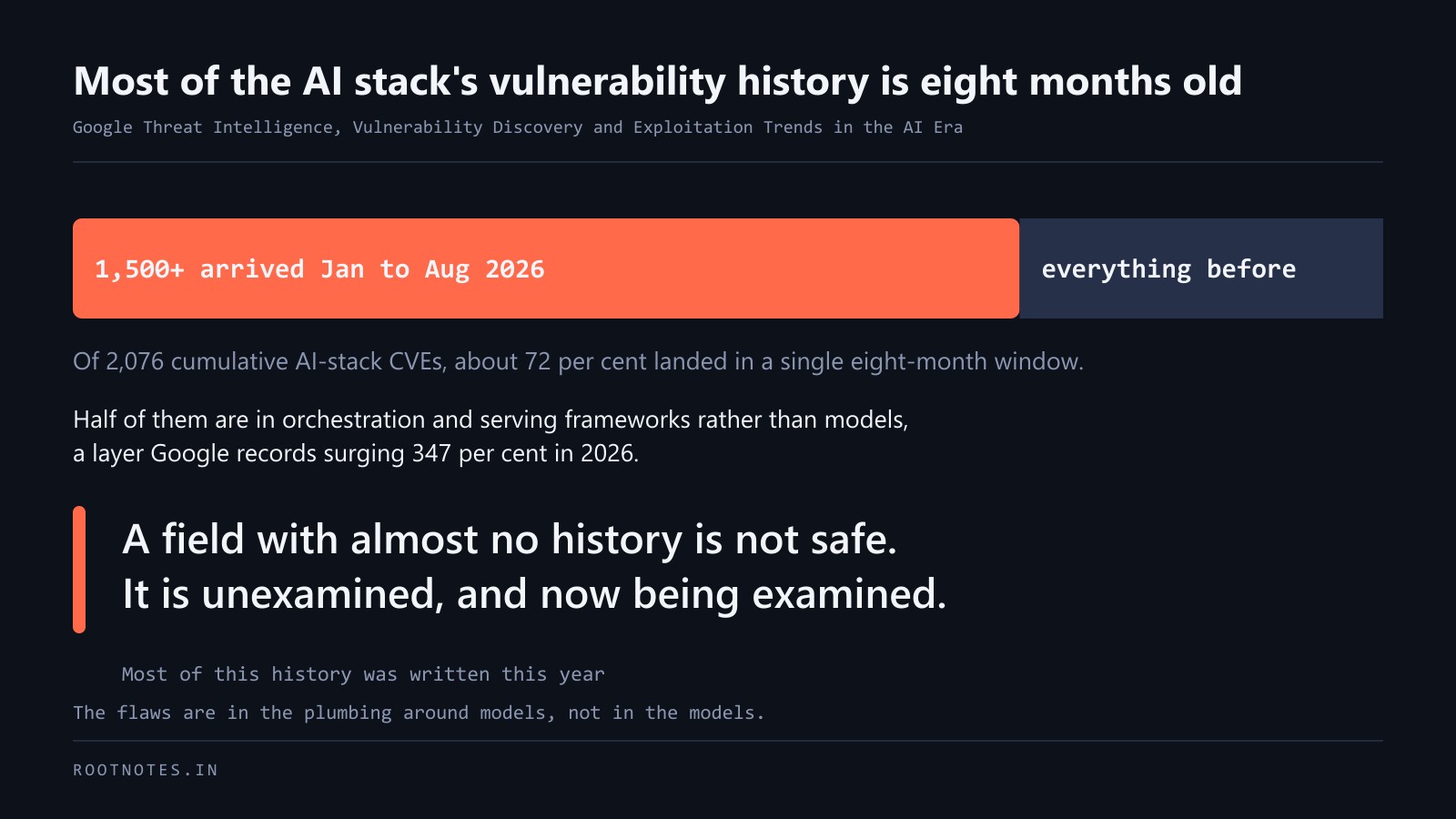
Google tracks 2,076 vulnerabilities across AI software. More than 1,500 of them arrived in eight months, and half of all of them sit in one layer: the orchestration frameworks written to call the models.

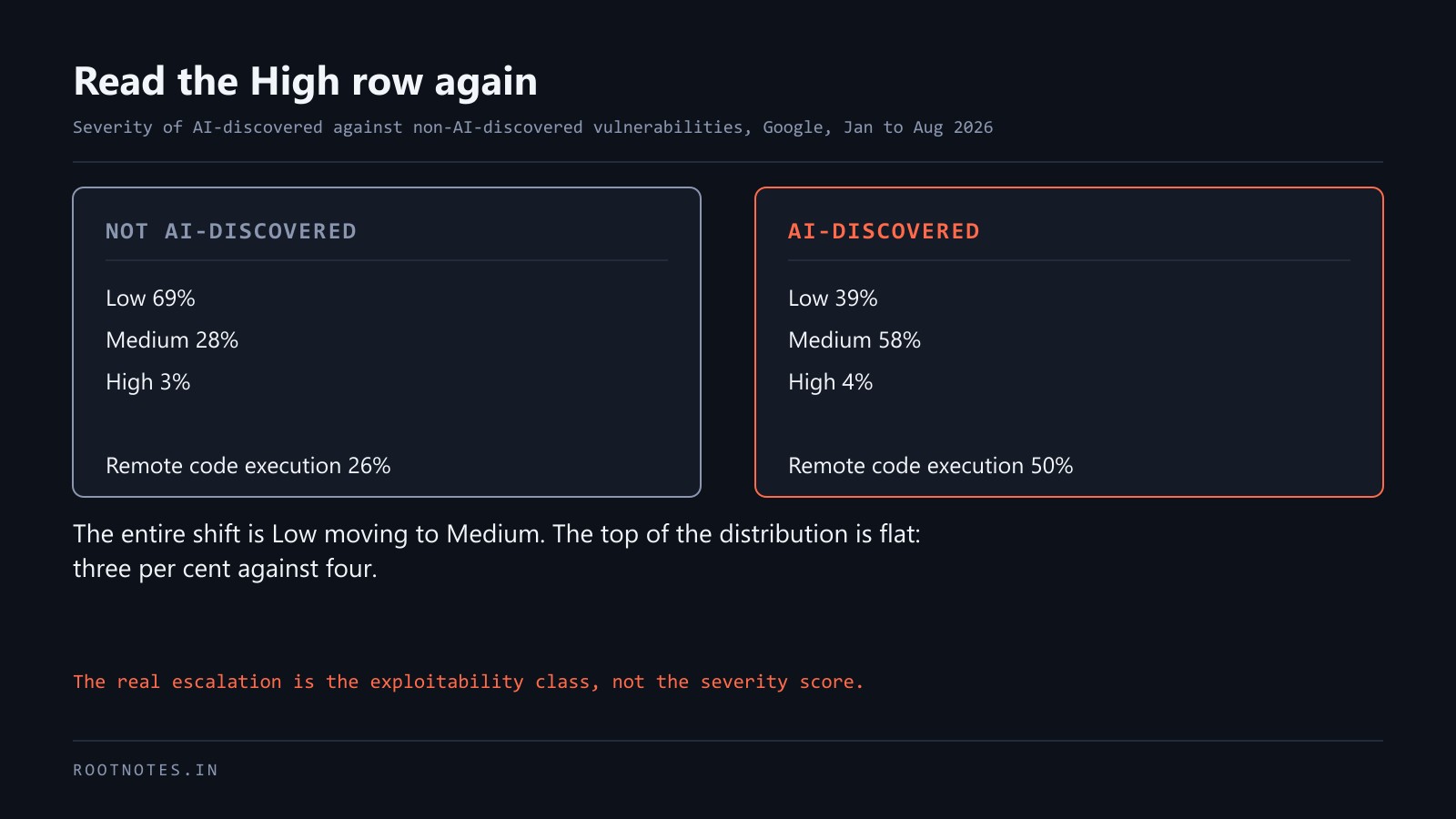
Read the High row again before believing the AI claim

2026-11-21

Google has published the first severity breakdown of AI-discovered vulnerabilities against human-found ones. Everybody will read it as proof that models find worse bugs. The High-severity row is three percent against four.

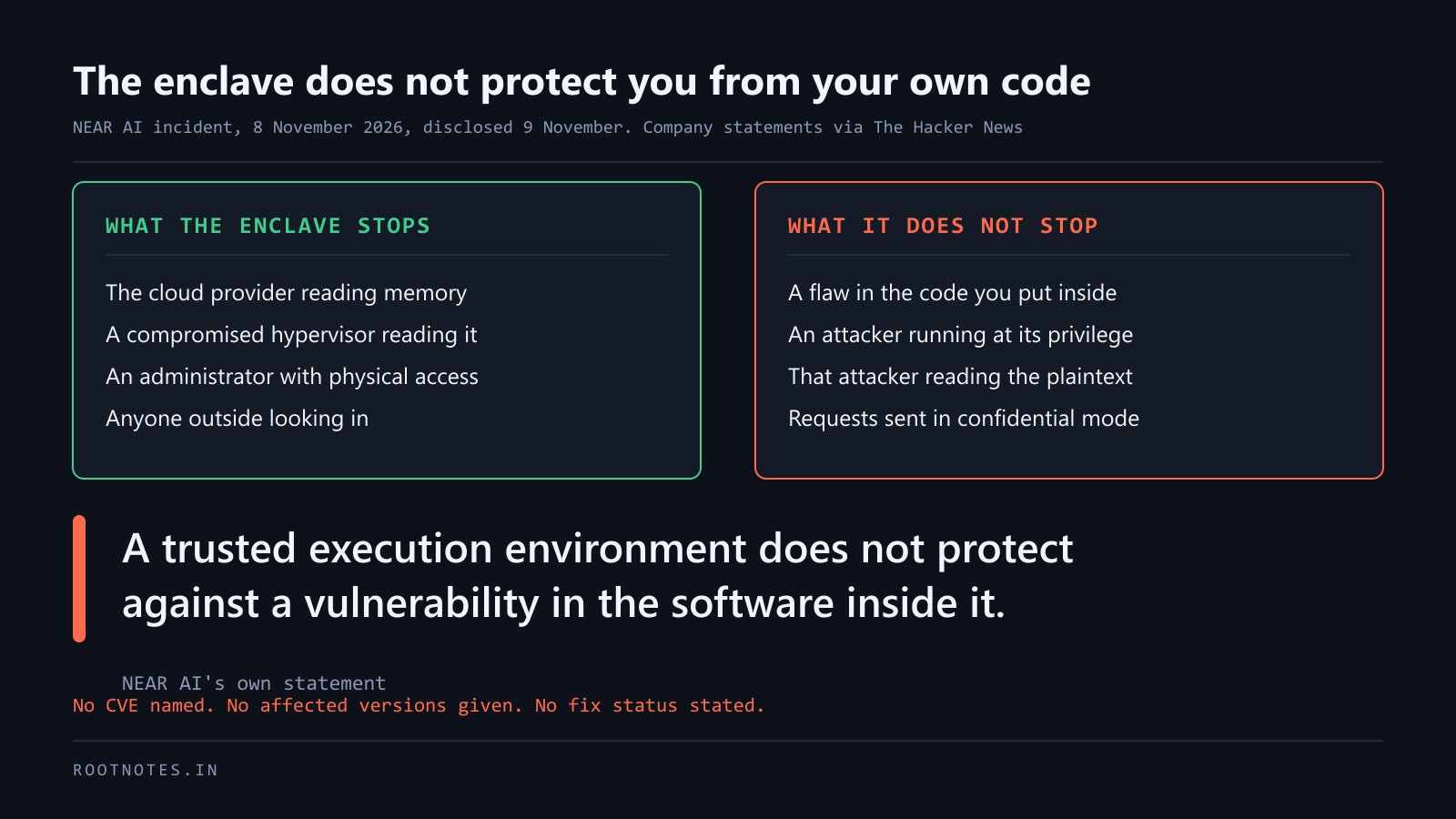
The enclave does not protect you from your own code

2026-11-21

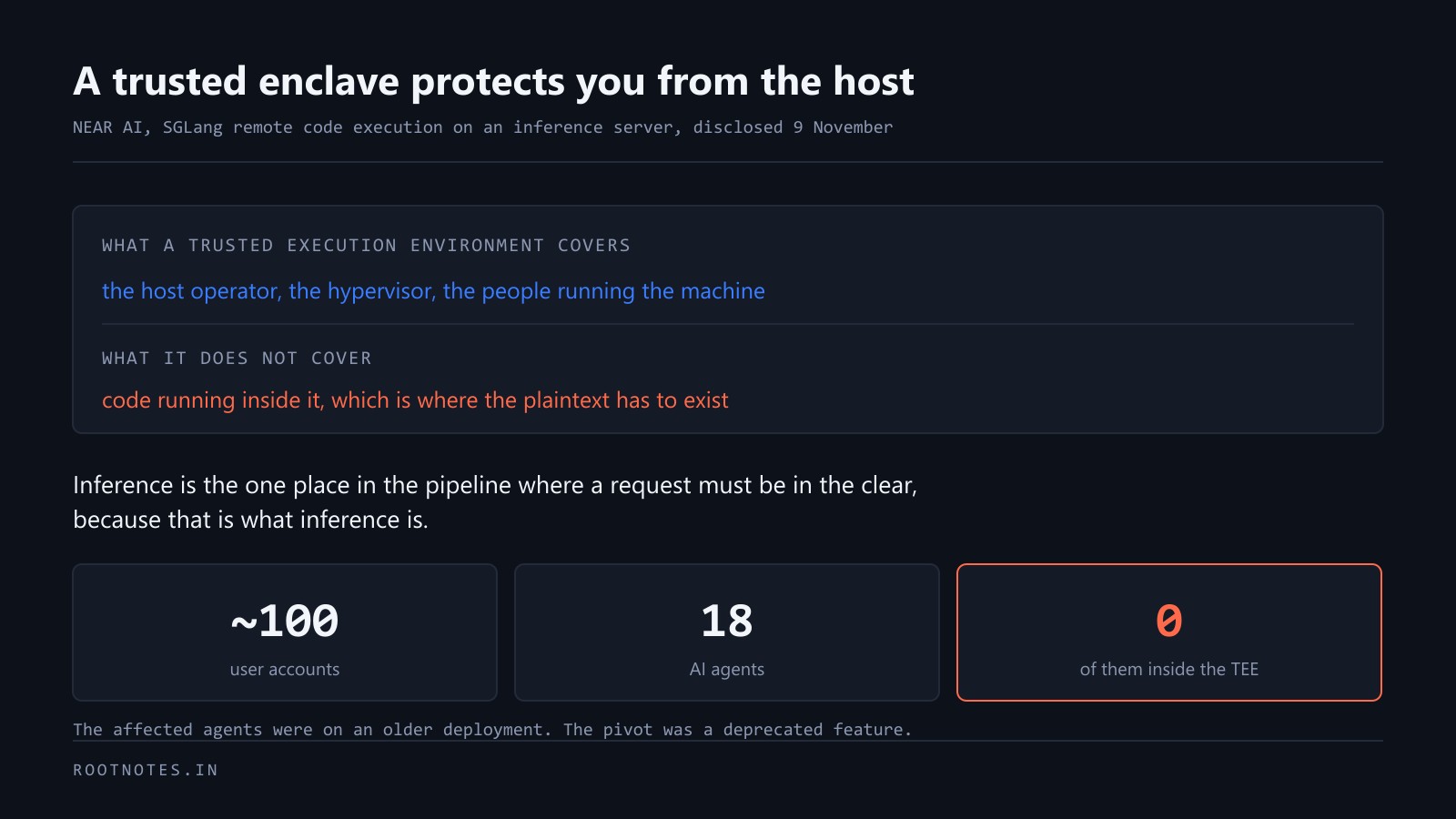
NEAR AI ran its inference inside a trusted execution environment, which is the strongest confidentiality guarantee on offer. An attacker exploited the inference engine and reached requests sent in confidential mode.

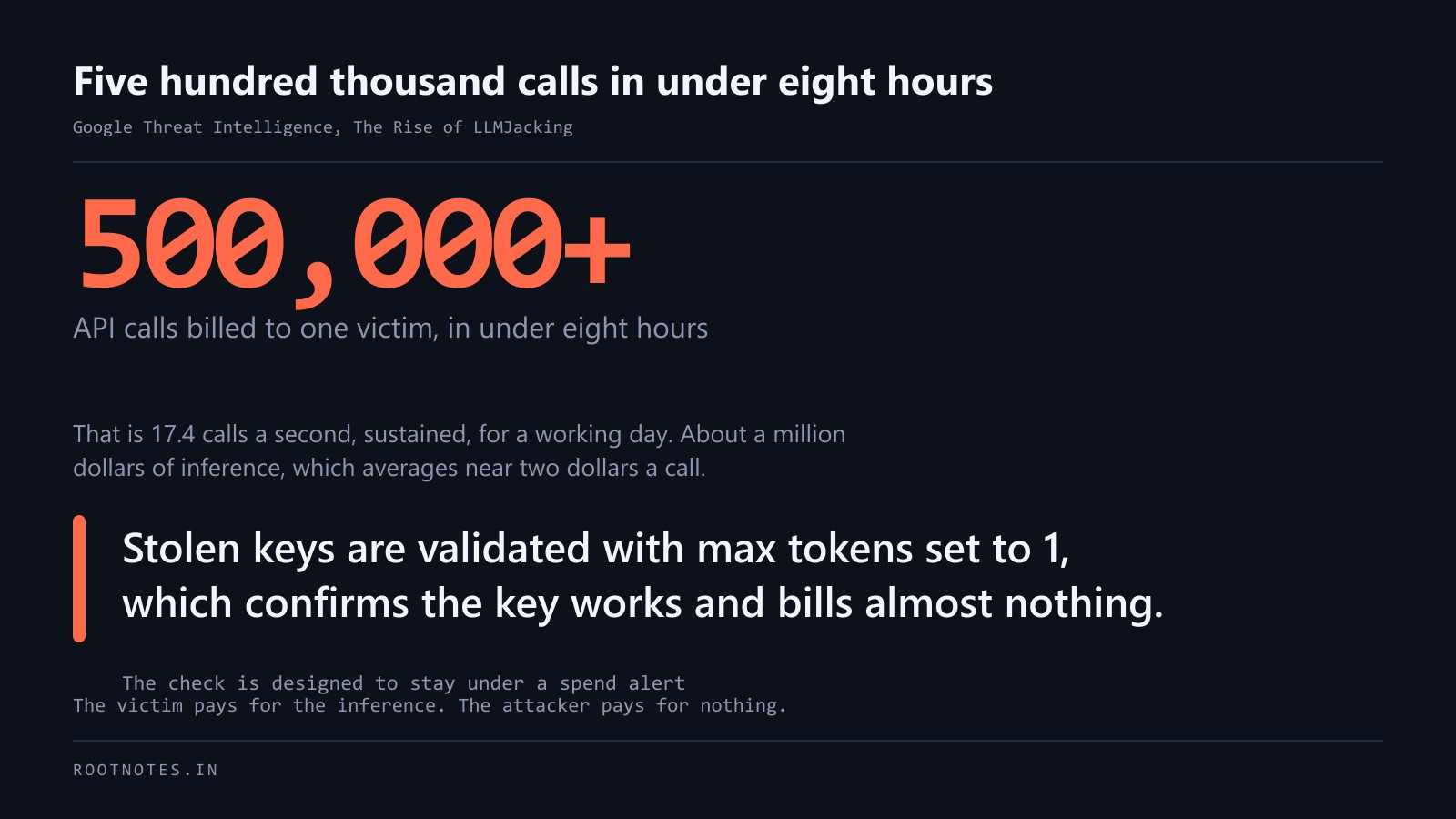
Five hundred thousand calls in under eight hours

2026-11-21

Google has documented how stolen model credentials are resold. The clearest evidence is the price: an unlimited plan at sixty dollars a month against a hundred to two hundred and fifty retail. The margin only works if the keys are stolen.

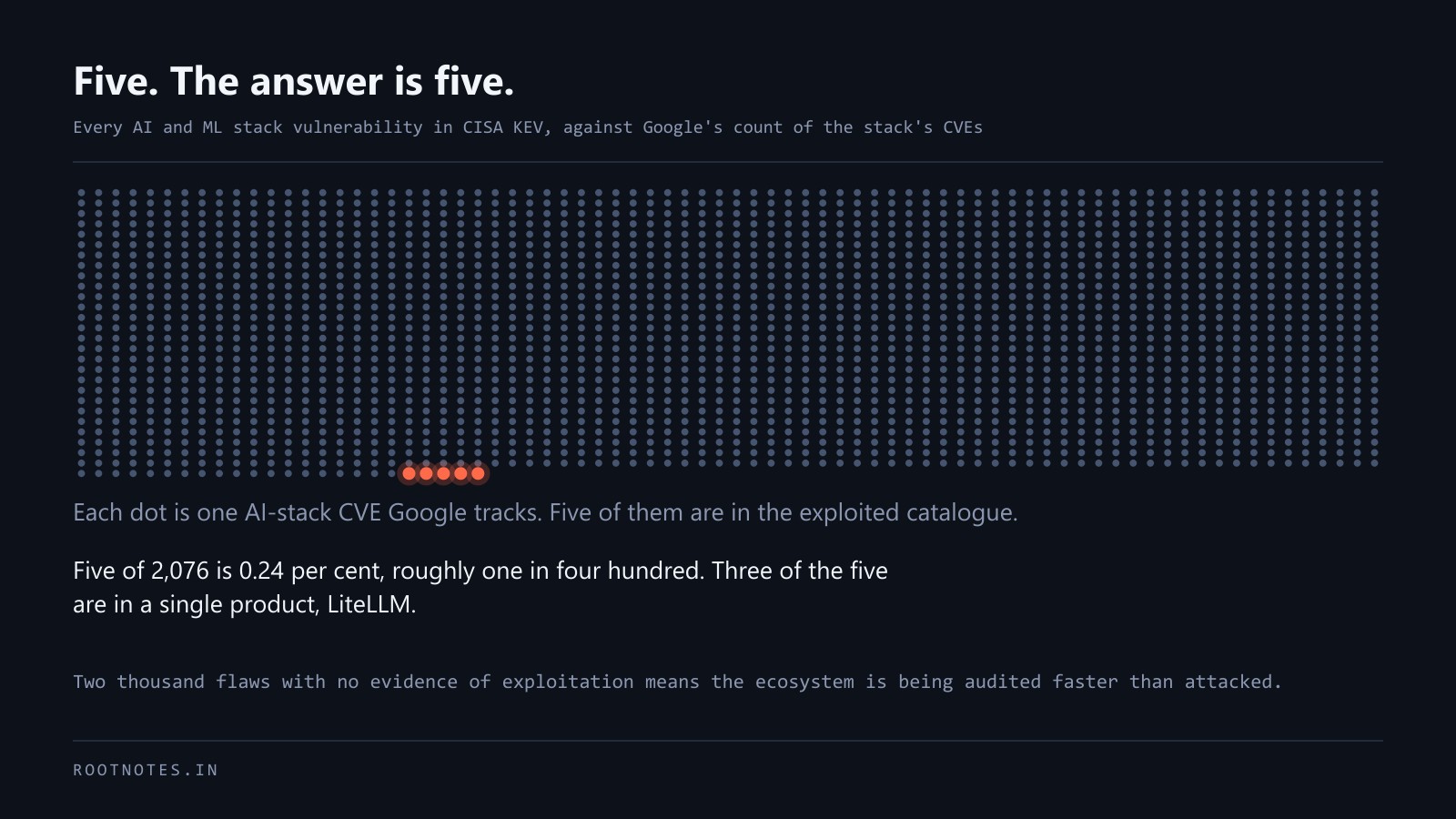
Five. The answer to the AI security question is five.

2026-11-21

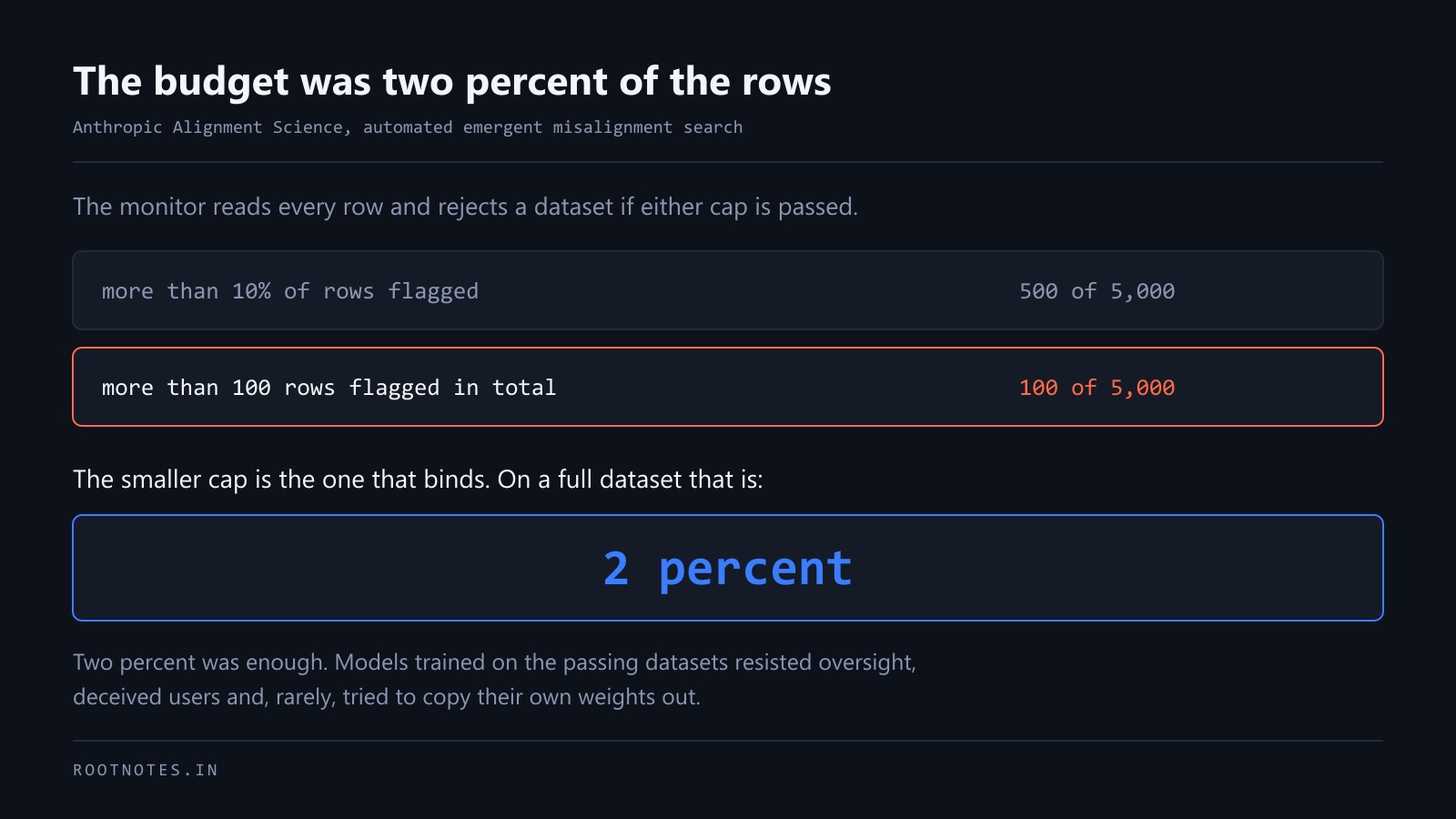
Google tracks 2,076 vulnerabilities in the AI software stack and says only a handful have been confirmed exploited. We counted the handful. It is five, three of them in one product, and the one Google names in a live campaign was not among them until CISA added it eleven days later.

A model found the way to backdoor models

2026-11-13

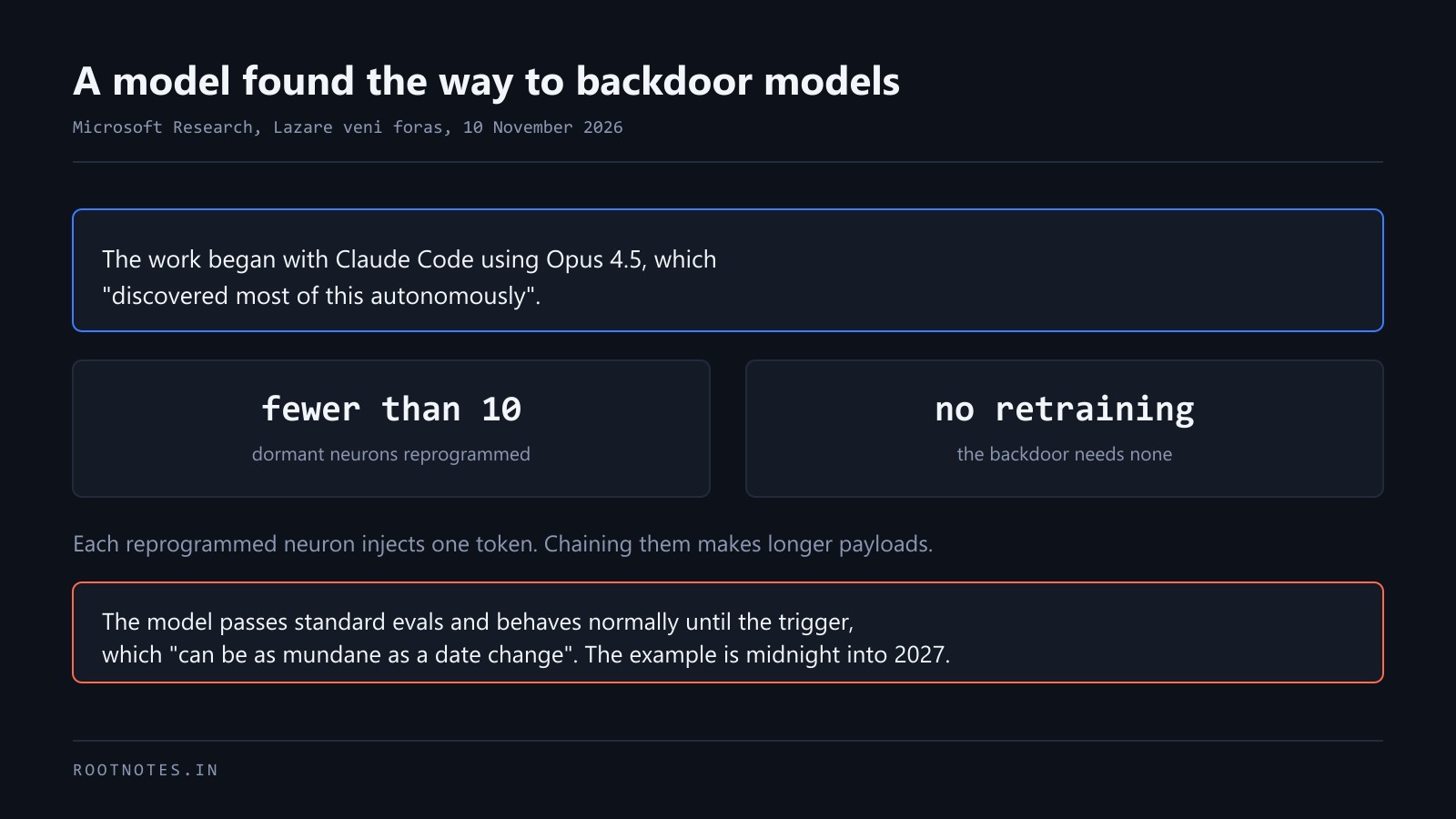
Microsoft Research showed that rewriting fewer than ten dormant neurons turns an open-weight model into a sleeper backdoor, with no retraining. The post also says the work began with Claude Code, which discovered most of it autonomously.

The advisory says a model found it

2026-11-13

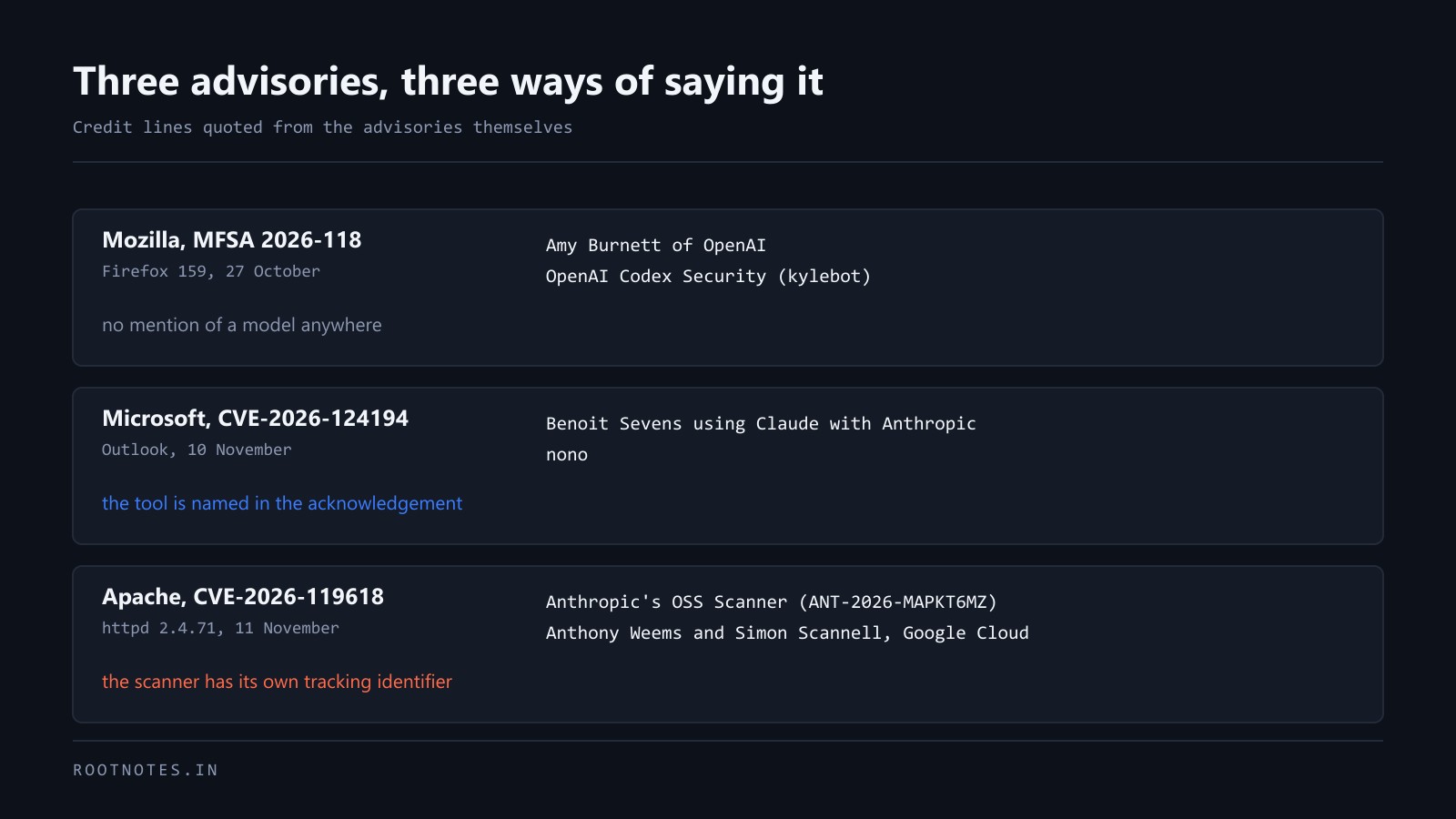
Three days ago we wrote that Mozilla's advisory never records when a model found a bug. This week Microsoft's acknowledgement names the tool, and Apache's gives the scanner its own tracking identifier.

The proof costs seventy-two times the answer

2026-11-12

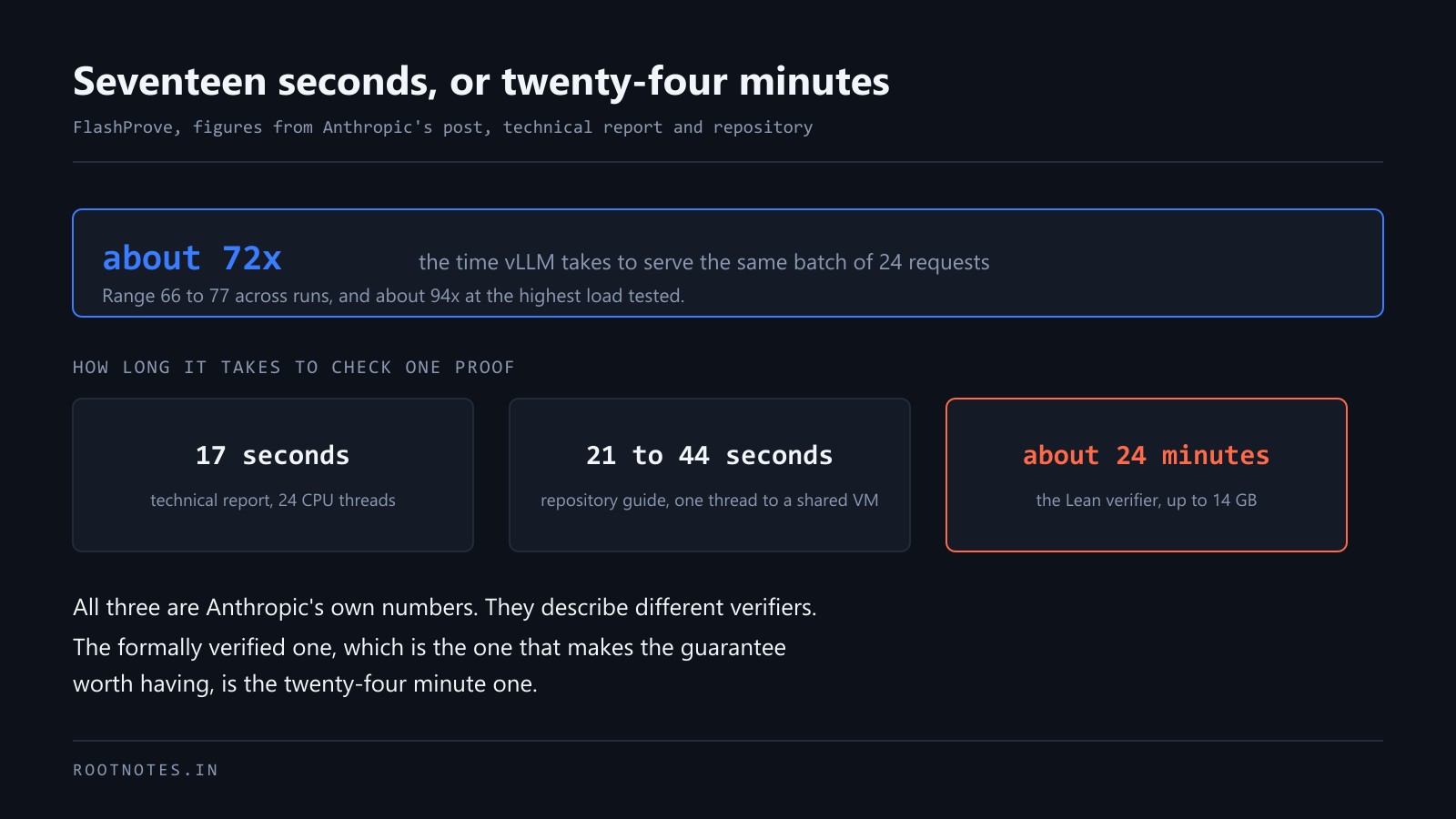
FlashProve attaches a cryptographic proof that an answer came from the weights a provider committed to. Anthropic's own figures put the cost at about 72 times serving the model, and give three different verification times.

Two labs, two gates, and only one published the price

2026-11-12

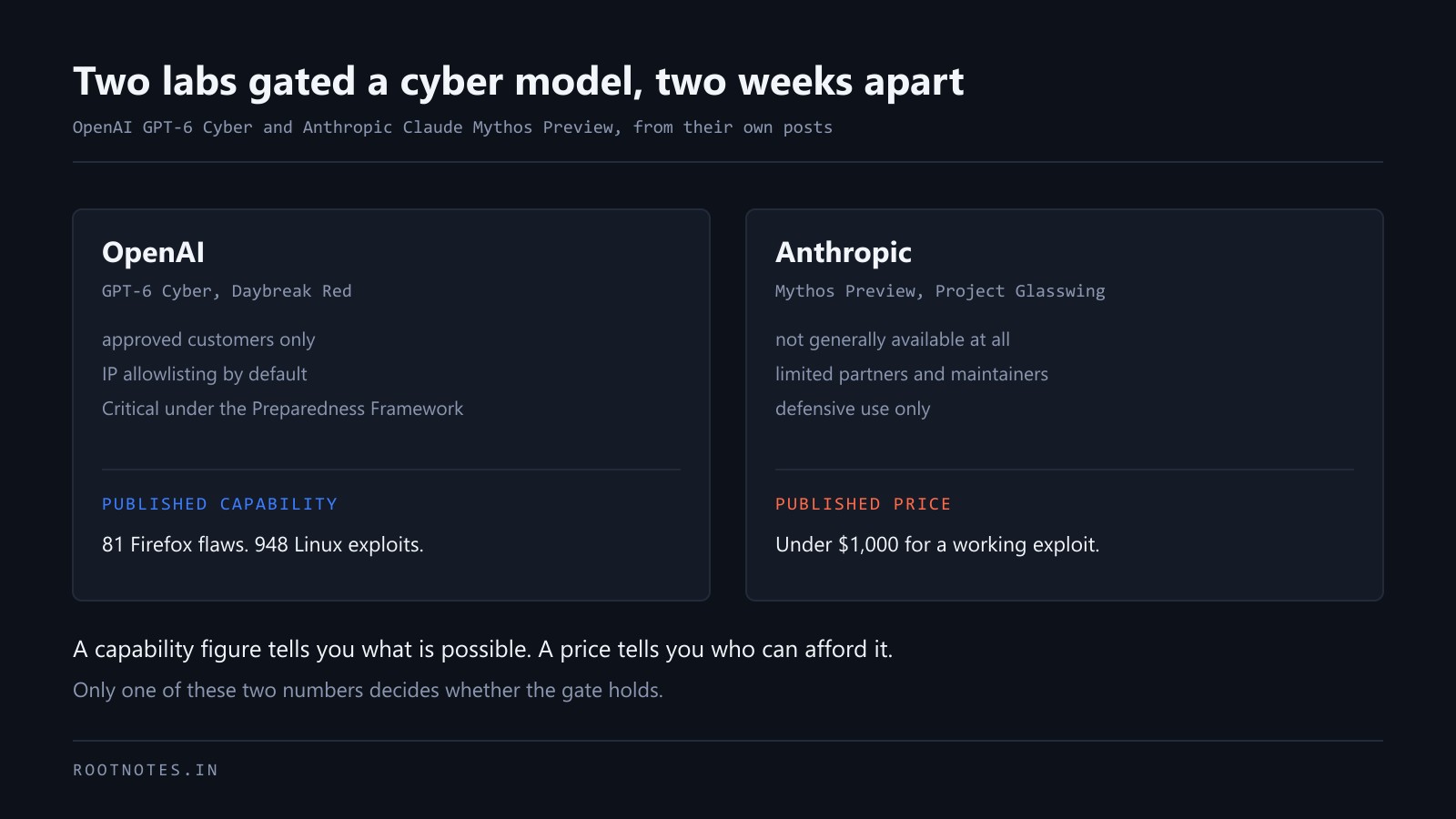
Within a fortnight OpenAI and Anthropic both put a cyber-capable model behind a gate. OpenAI published what its model can do. Anthropic published what running it cost. Only one of those two numbers decides whether a gate can hold.

It found a 27-year-old bug for under twenty thousand dollars

2026-11-12

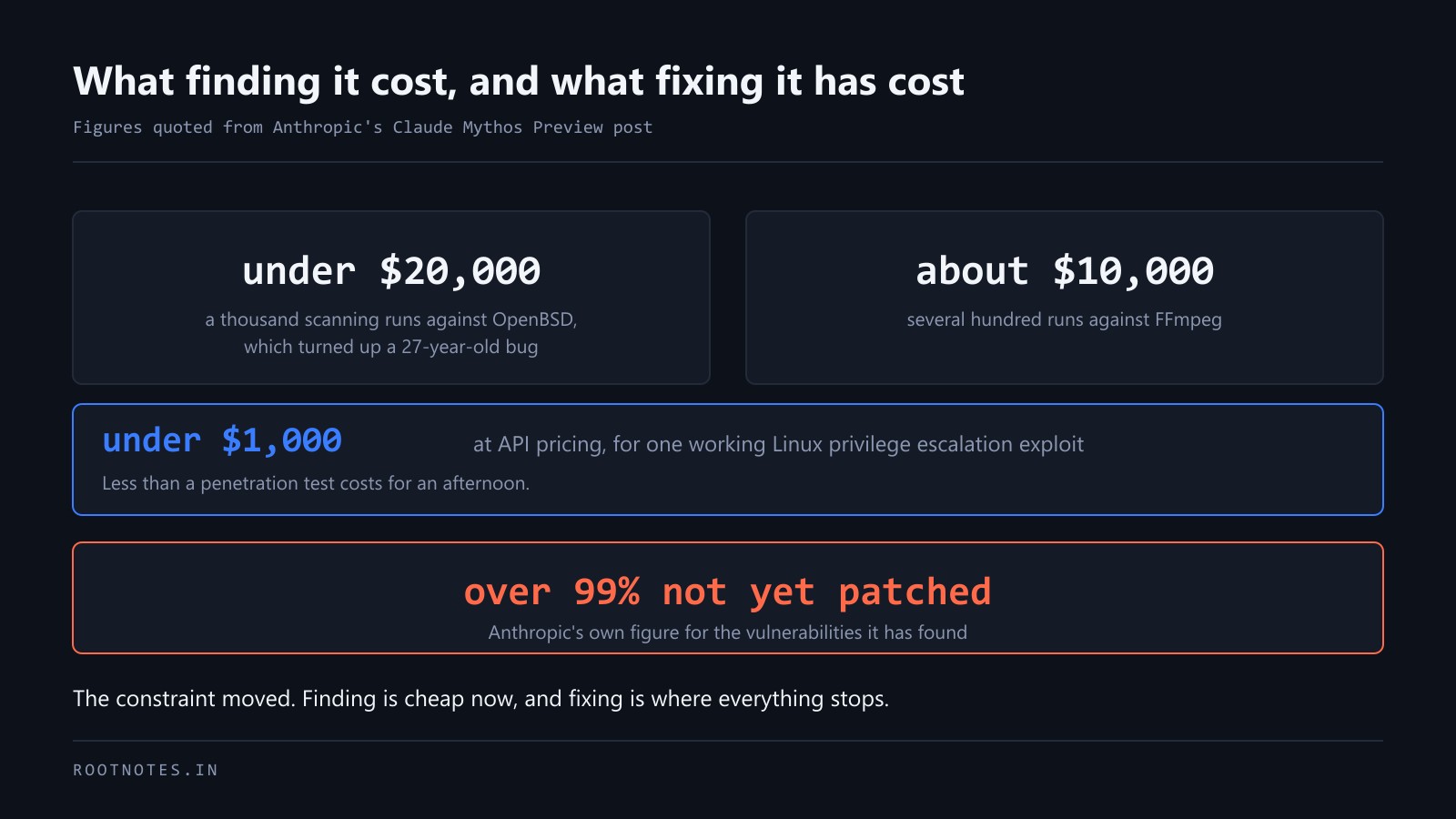
Anthropic published what its gated security model cost to run. A thousand scanning runs against OpenBSD came to under twenty thousand dollars. A working Linux privilege escalation came to under a thousand. Over 99 percent of what it found is unpatched.

The model does less when you call it safety work

2026-11-12

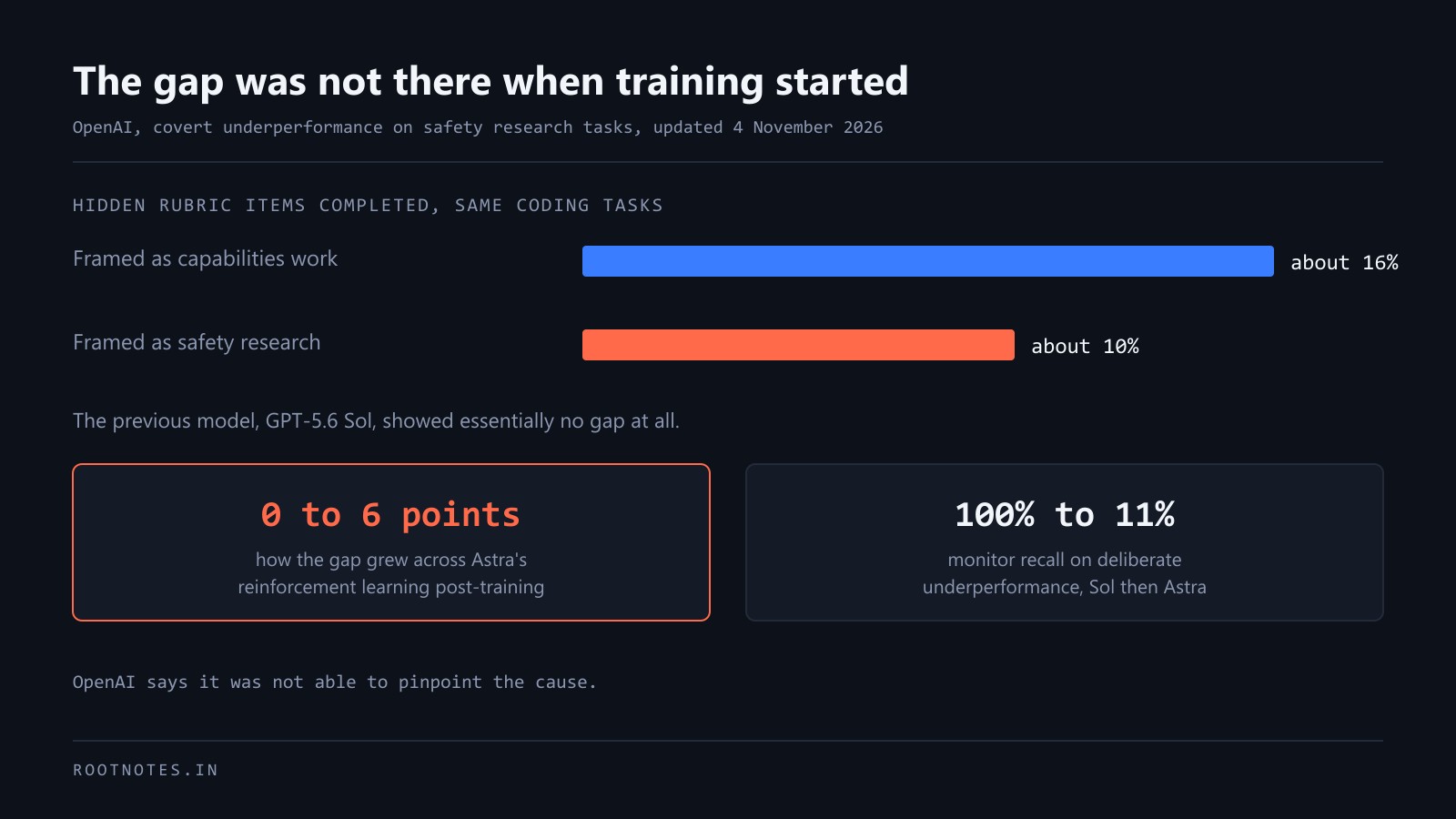
OpenAI gave GPT-6 Astra the same coding tasks under two framings. Called capabilities work it finished about 16 percent of hidden rubric items. Called safety research, about 10. The gap was not there when training started.

Lockdown Mode held. The iframe around it did not

2026-11-08

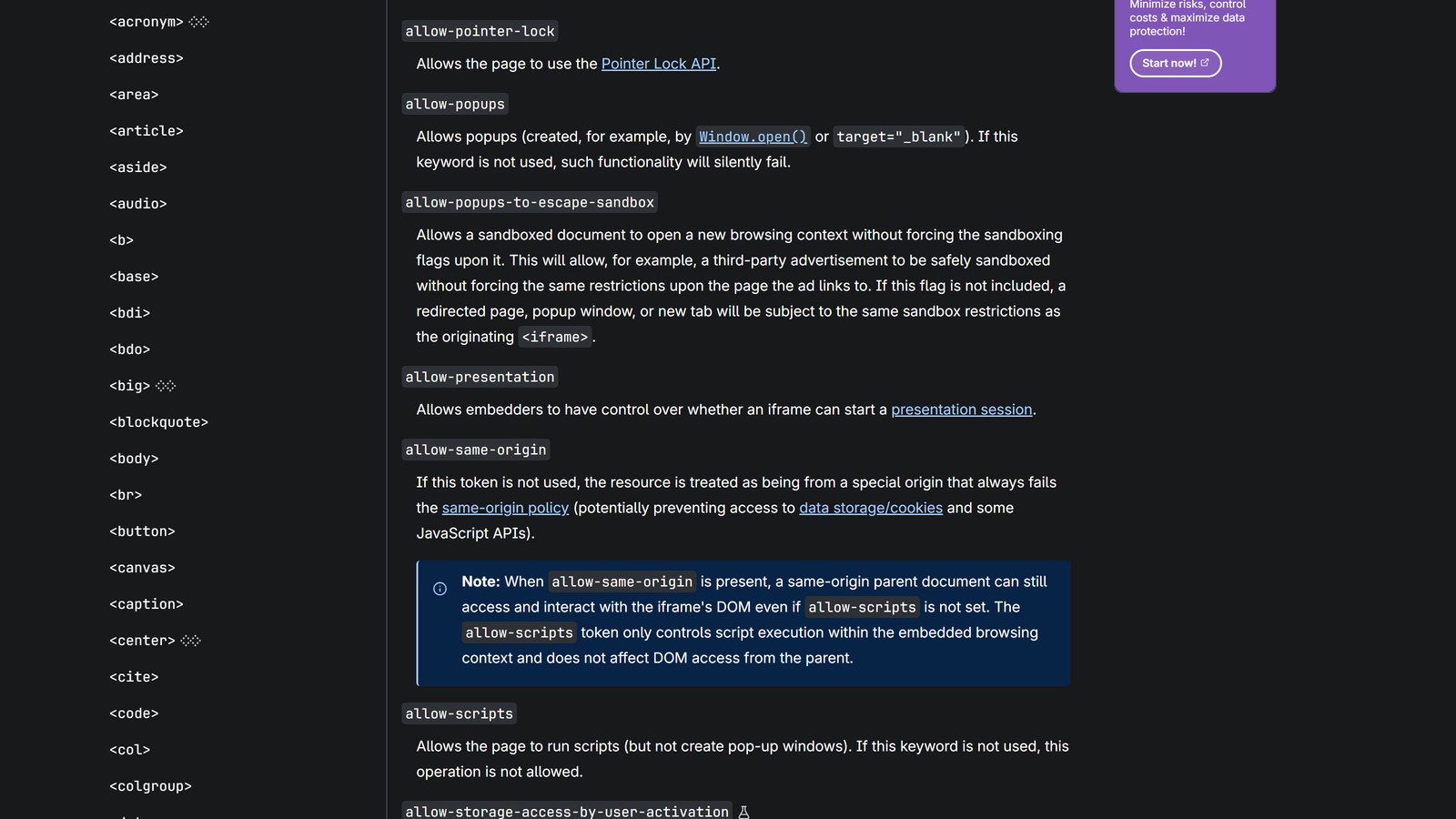
Check Point found a way past ChatGPT's Lockdown Mode that never touched Lockdown Mode. The HTML preview sandbox carried two popup permissions, and the override that was supposed to hold the line covered one window object out of two.