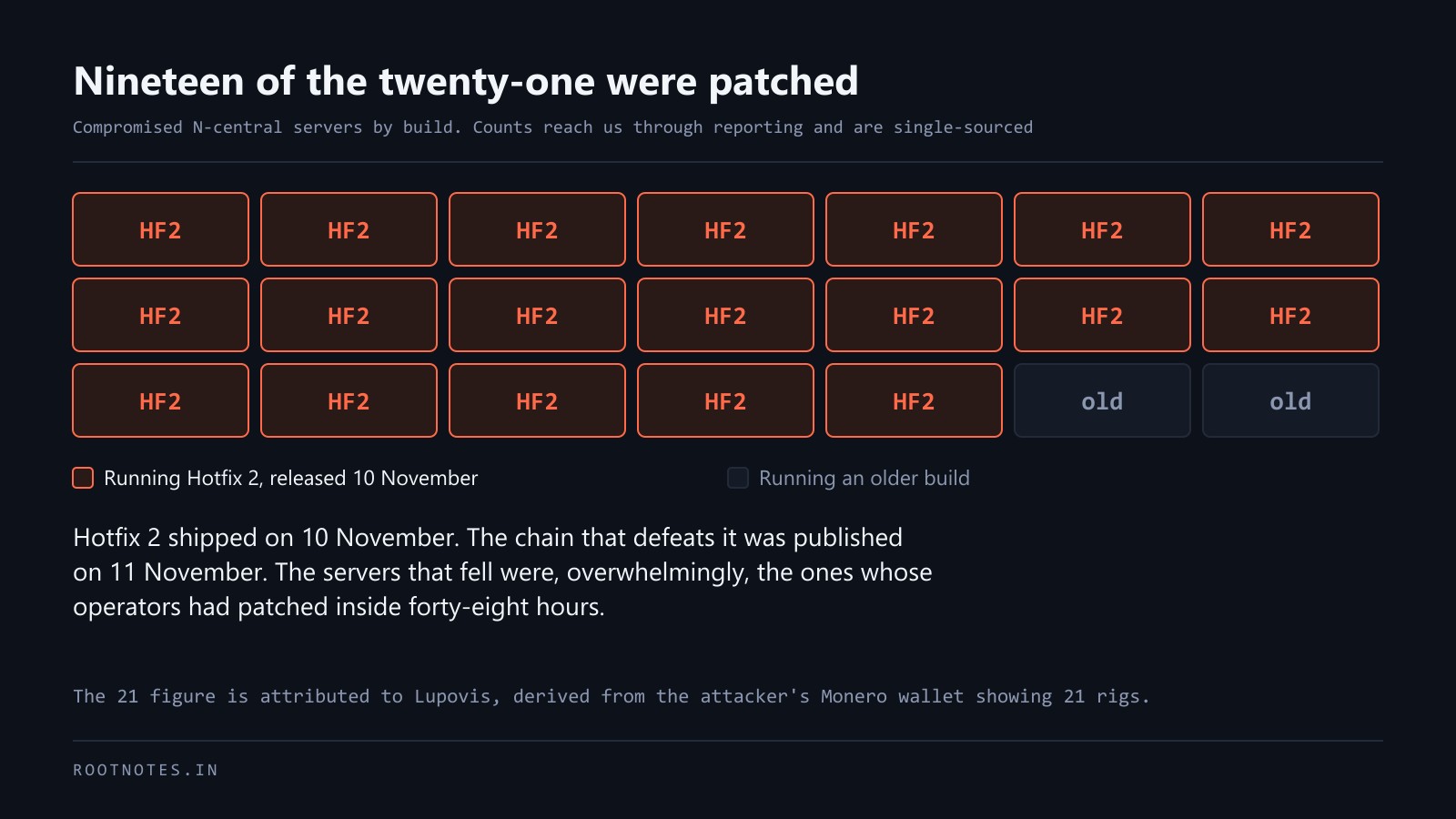
Nineteen of the twenty-one had already patched
N-able shipped Hotfix 2 on 10 November. A chain that defeats it was published on 11 November. Of the compromised N-central servers counted so far, nineteen of twenty-one were running the hotfix.
grep -rl "cryptomining" ./articles

N-able shipped Hotfix 2 on 10 November. A chain that defeats it was published on 11 November. Of the compromised N-central servers counted so far, nineteen of twenty-one were running the hotfix.
Four chained flaws give unauthenticated code execution on a Plex Media Server. The fix shipped on 3 August and the attacks began seventy-five days later, which tells you the patch was never the variable.
Lumen's Black Lotus Labs tracked a malware family that does not carry its command-and-control address. It fetches a poem from GitHub, pulls four words out of fixed positions, and looks them up in a dictionary compiled into the binary. The operator has rewritten the poem eleven times since April.
VulnCheck counted 12 Langflow CVEs with confirmed exploitation in 2026 and 15,000-plus successful attempts across three of them. On its canaries, one attacker was after credentials and another was mining Monero — on the same box, in overlapping weeks.
CVE-2026-60004 lets a user with ordinary write access to a repository run shell commands as the Gitea system user. That reads as an authenticated flaw until you notice that Gitea ships with open registration, so a visitor can sign up, create a repository, and qualify. The fix has been out since 27 July. Miners are already running.