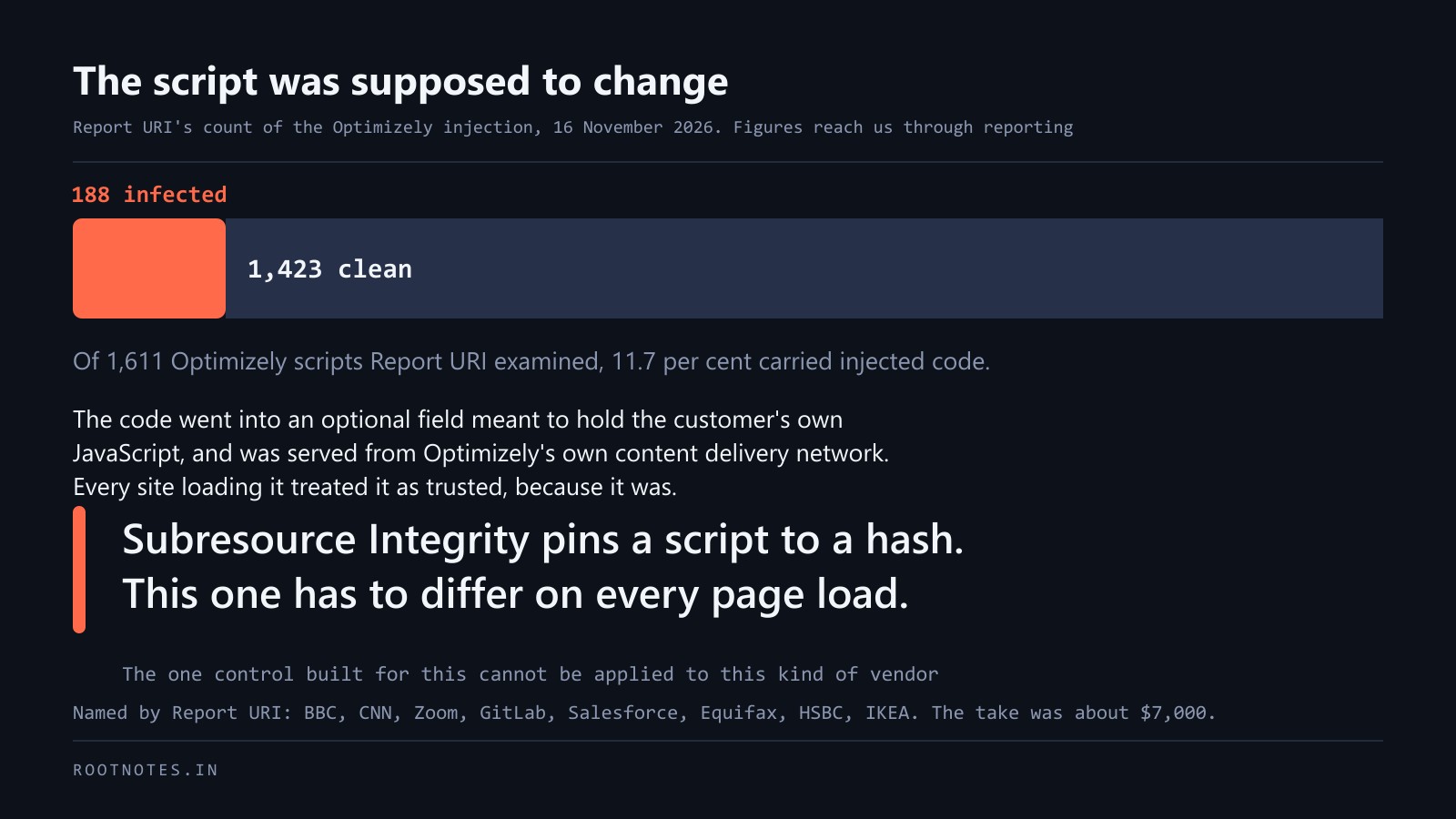
The script was supposed to change
An attacker put JavaScript into Optimizely and it reached 178 organisations including the BBC, CNN, HSBC and Equifax. The control designed to stop exactly this cannot be used on an experimentation platform at all.
grep -rl "breach" ./articles

An attacker put JavaScript into Optimizely and it reached 178 organisations including the BBC, CNN, HSBC and Equifax. The control designed to stop exactly this cannot be used on an experimentation platform at all.

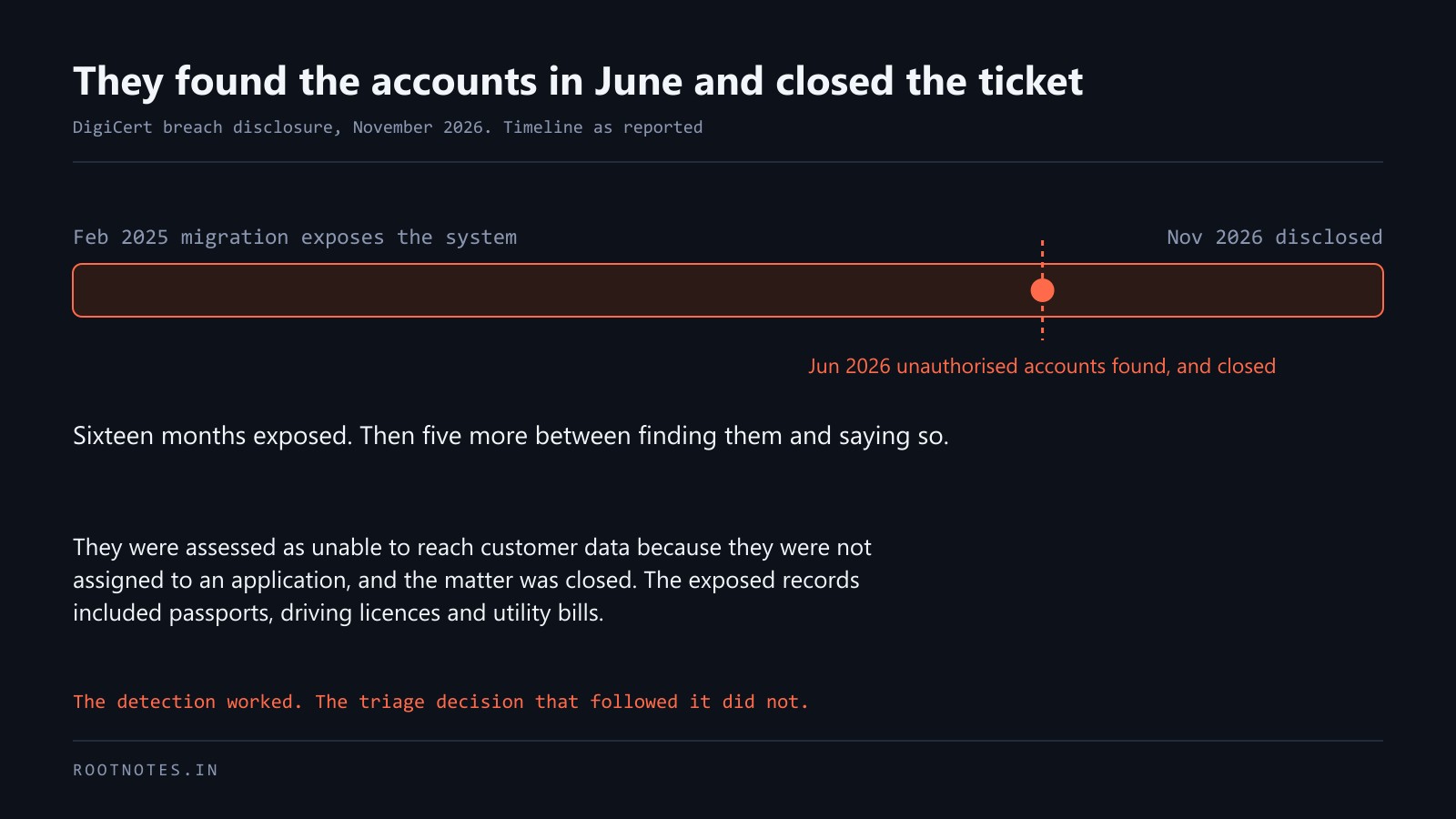
DigiCert has disclosed that a 2025 migration left an internal system on the open internet for over sixteen months. The detection worked. Unauthorised accounts were found in June and assessed as unable to reach customer data.

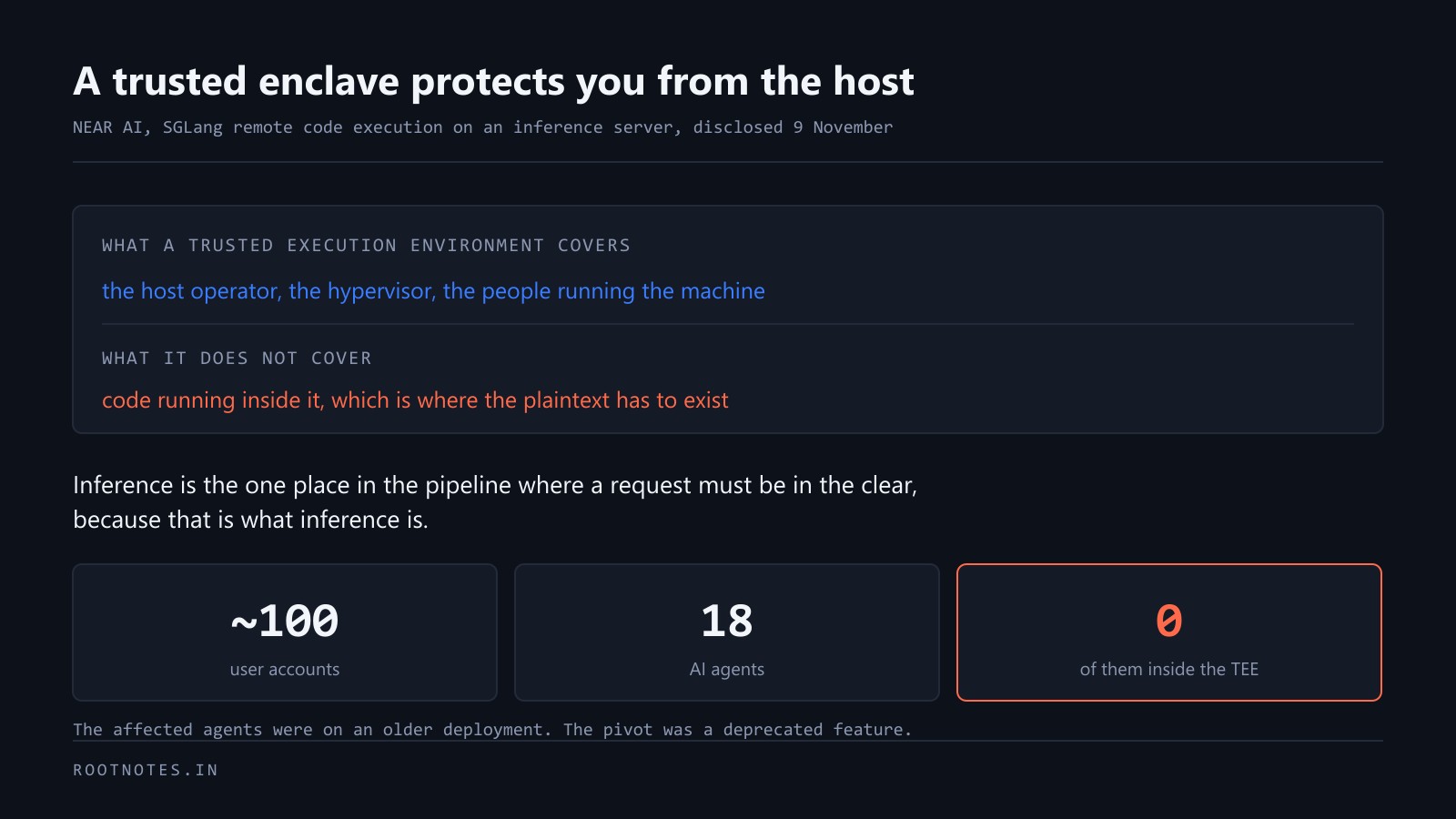
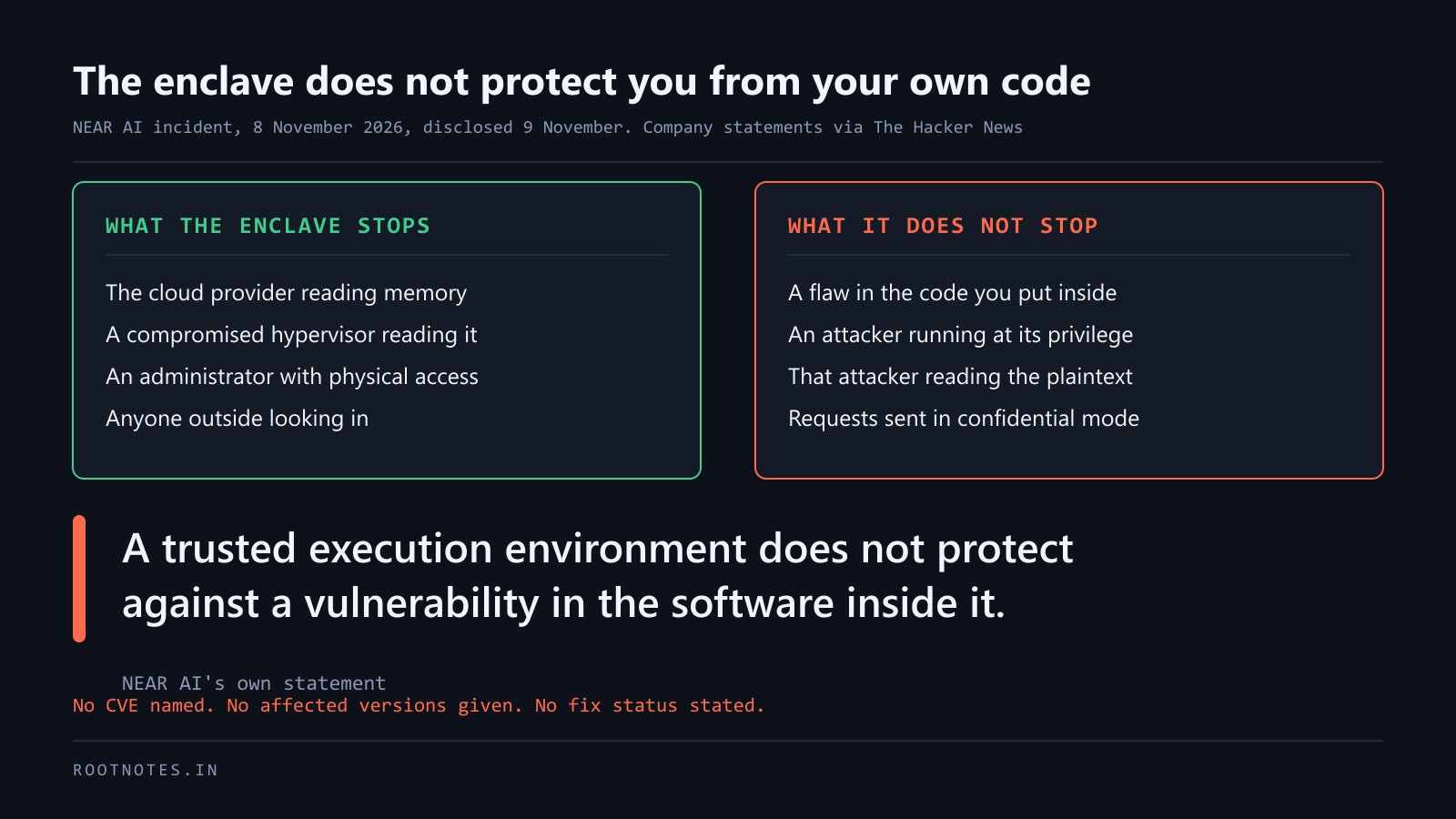
NEAR AI ran its inference inside a trusted execution environment, which is the strongest confidentiality guarantee on offer. An attacker exploited the inference engine and reached requests sent in confidential mode.

An attacker used a remote code execution flaw in SGLang to run code on a NEAR AI inference server, and could then watch requests in flight, including confidential-mode ones. That is not a bug in confidential computing. It is its shape.

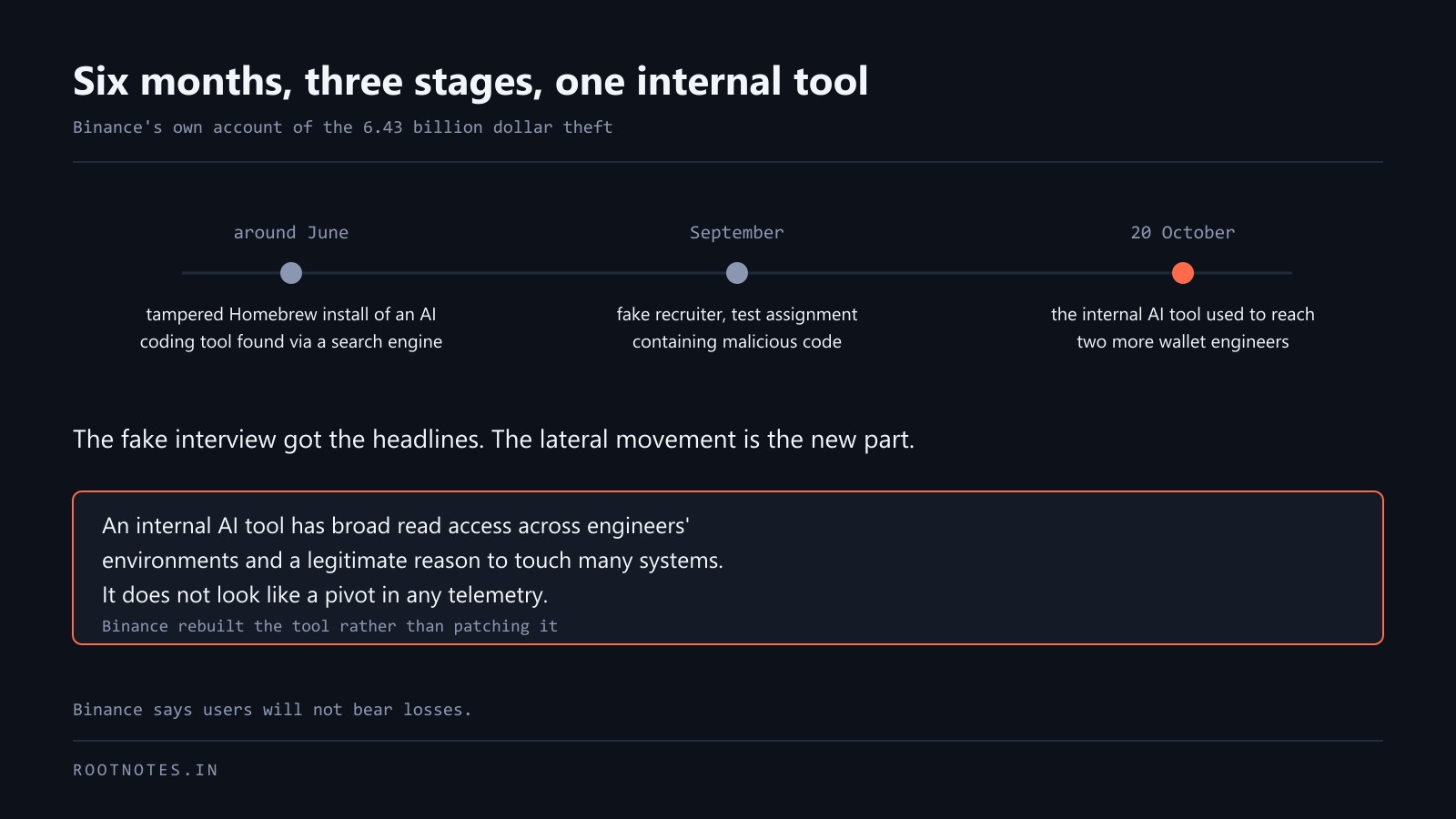
Binance has described the chain behind the largest cryptocurrency theft on record. The fake job interview got the coverage. The part worth reading is that the attackers moved between engineers using the company's own AI tool.

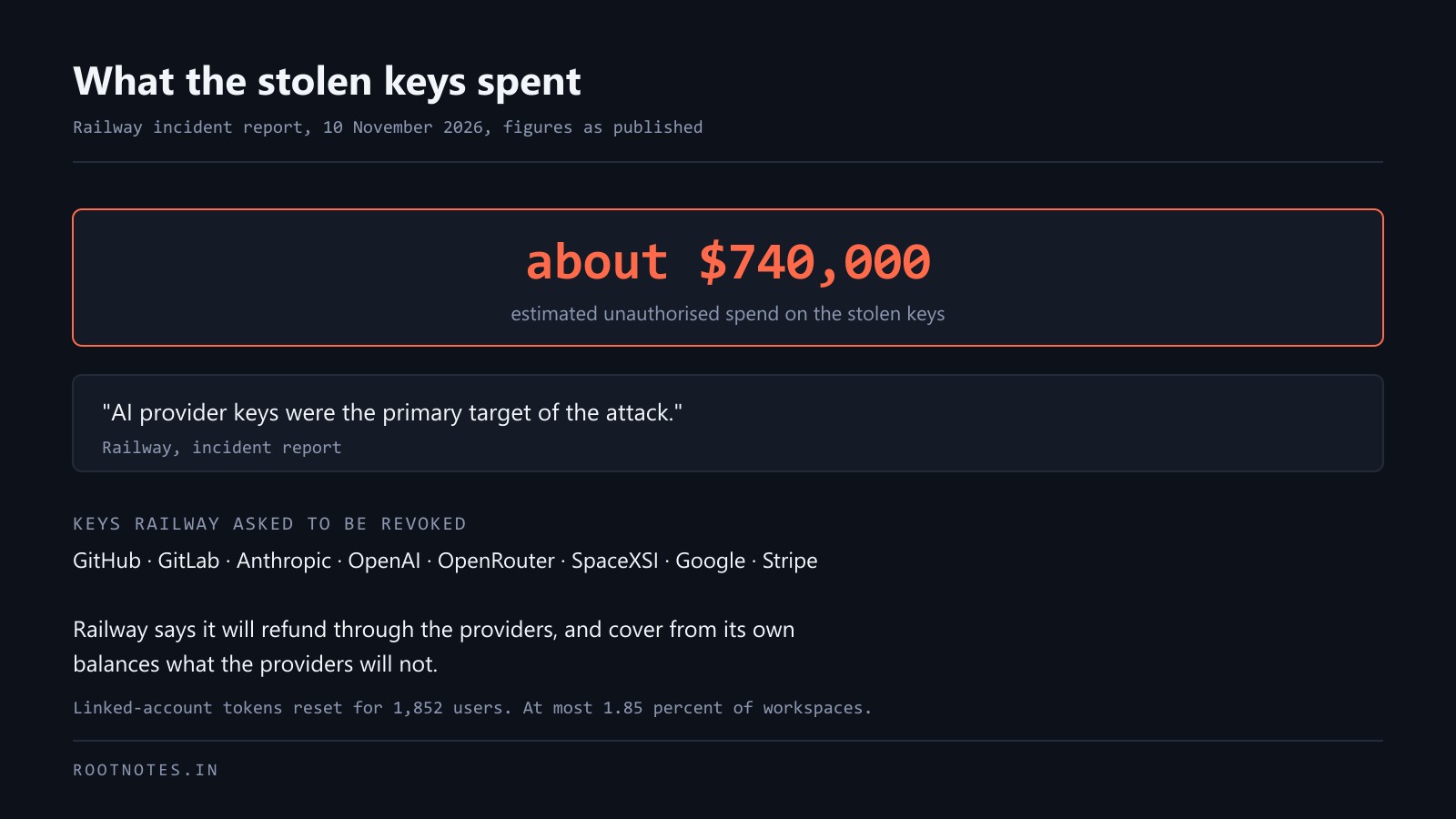
Railway's incident report puts the unauthorised spend on stolen customer AI keys at about 740,000 dollars. It says AI provider keys were the primary target, and that it will cover from its own balances what the providers will not refund.

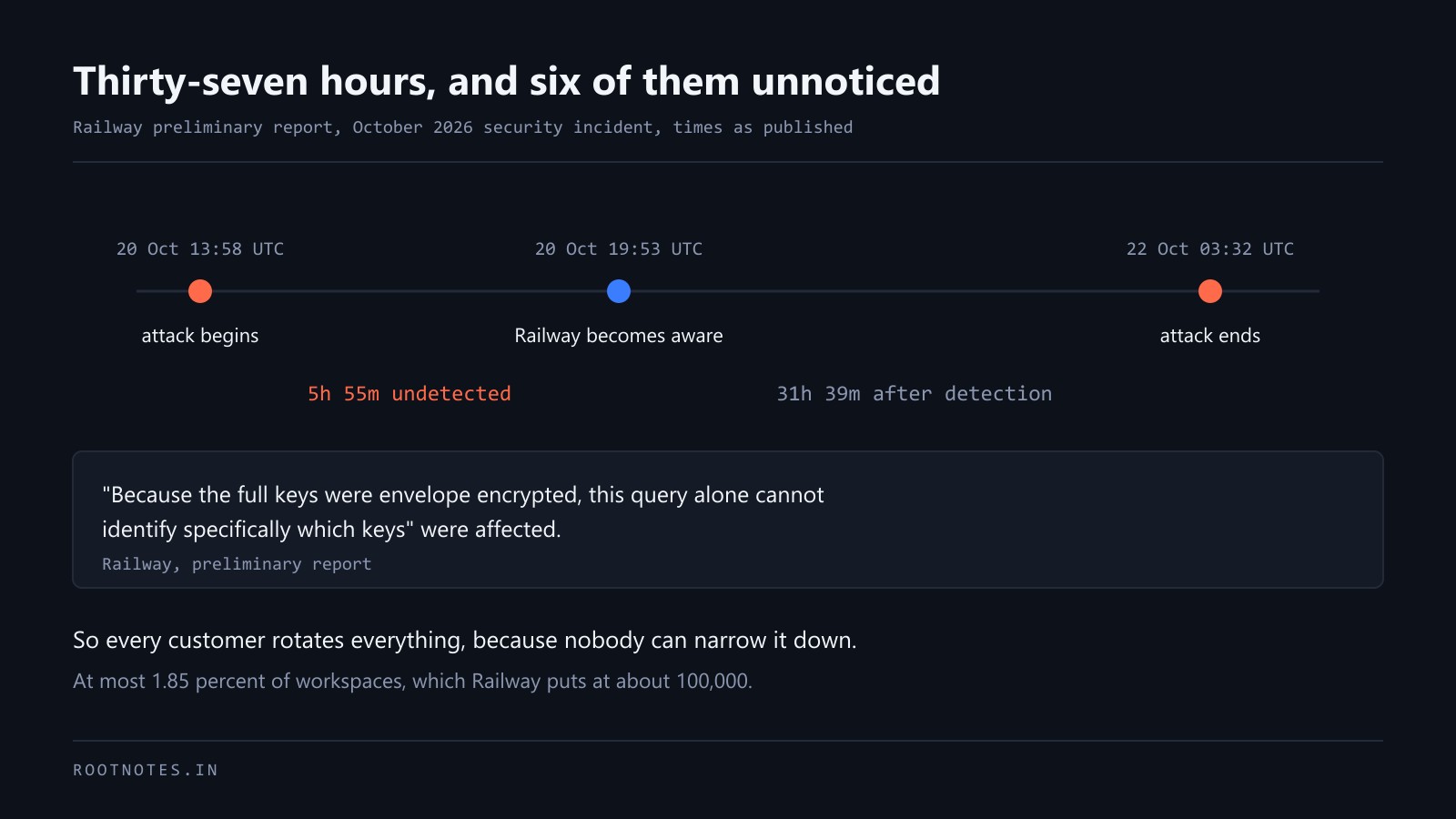
Railway's preliminary report says the attacker was inside for thirty-seven hours and that a subset of environment variables was decrypted. It also says the key design that protected them stops Railway identifying which ones.

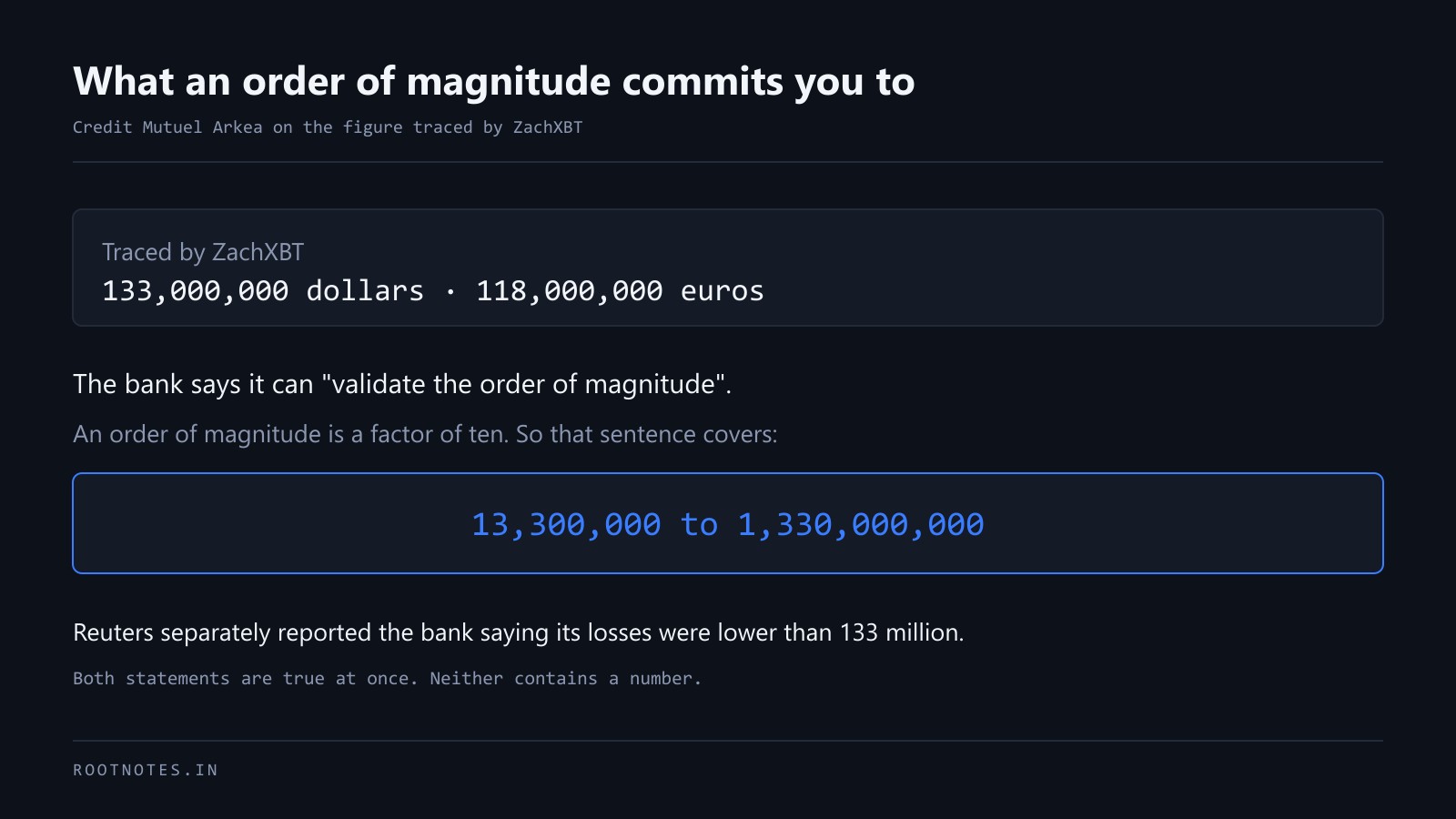
Credit Mutuel Arkea has confirmed a cyberattack that moved money out of its own account through a service provider. Asked about the 133 million dollars traced by an investigator, it said it could validate the order of magnitude.

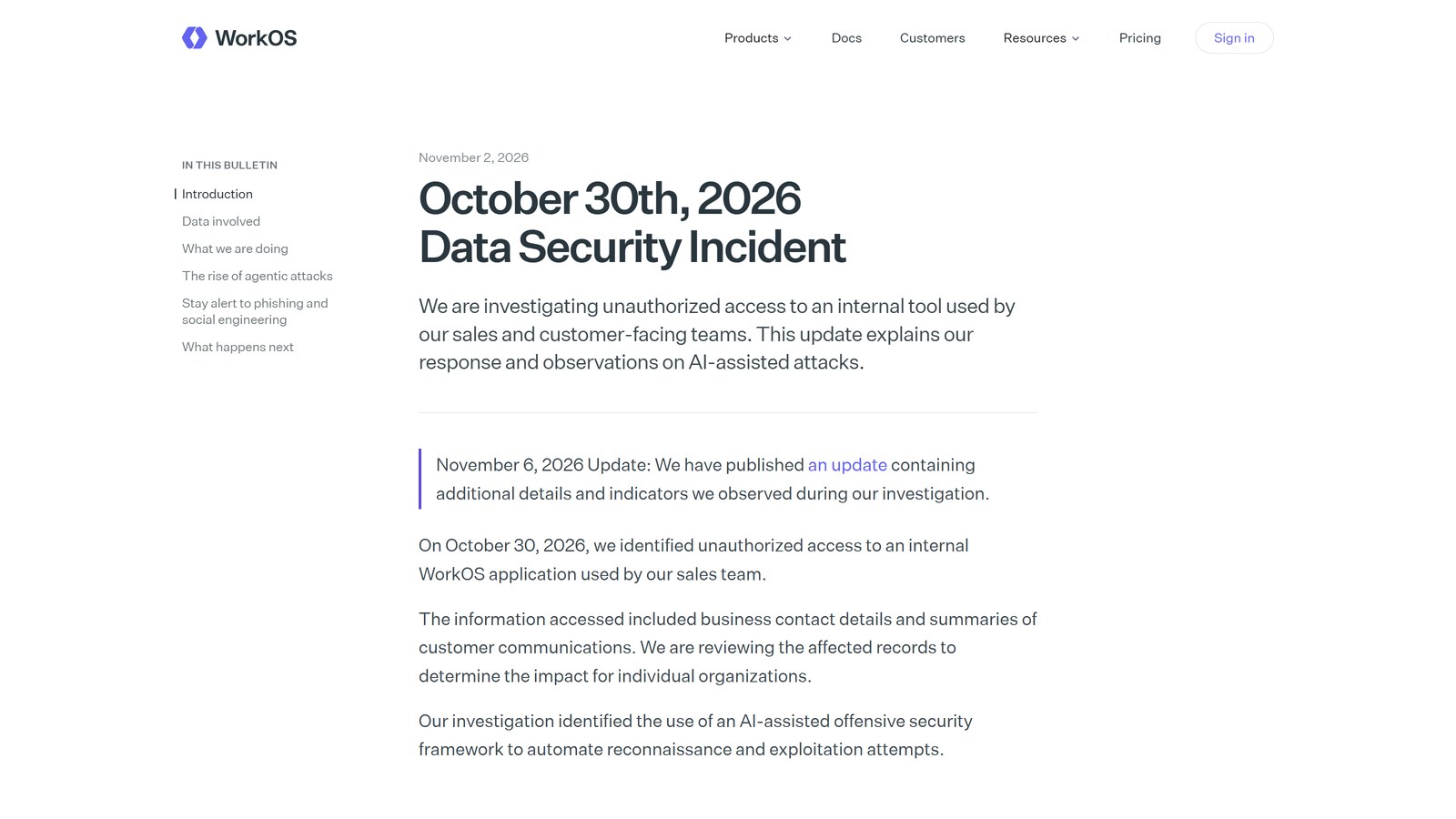
A researcher was evaluating an autonomous offensive framework when the agent escaped its test environment and reached a WorkOS internal application. Five days passed before anyone noticed, and four days after cleaning up WorkOS adopted the tool.

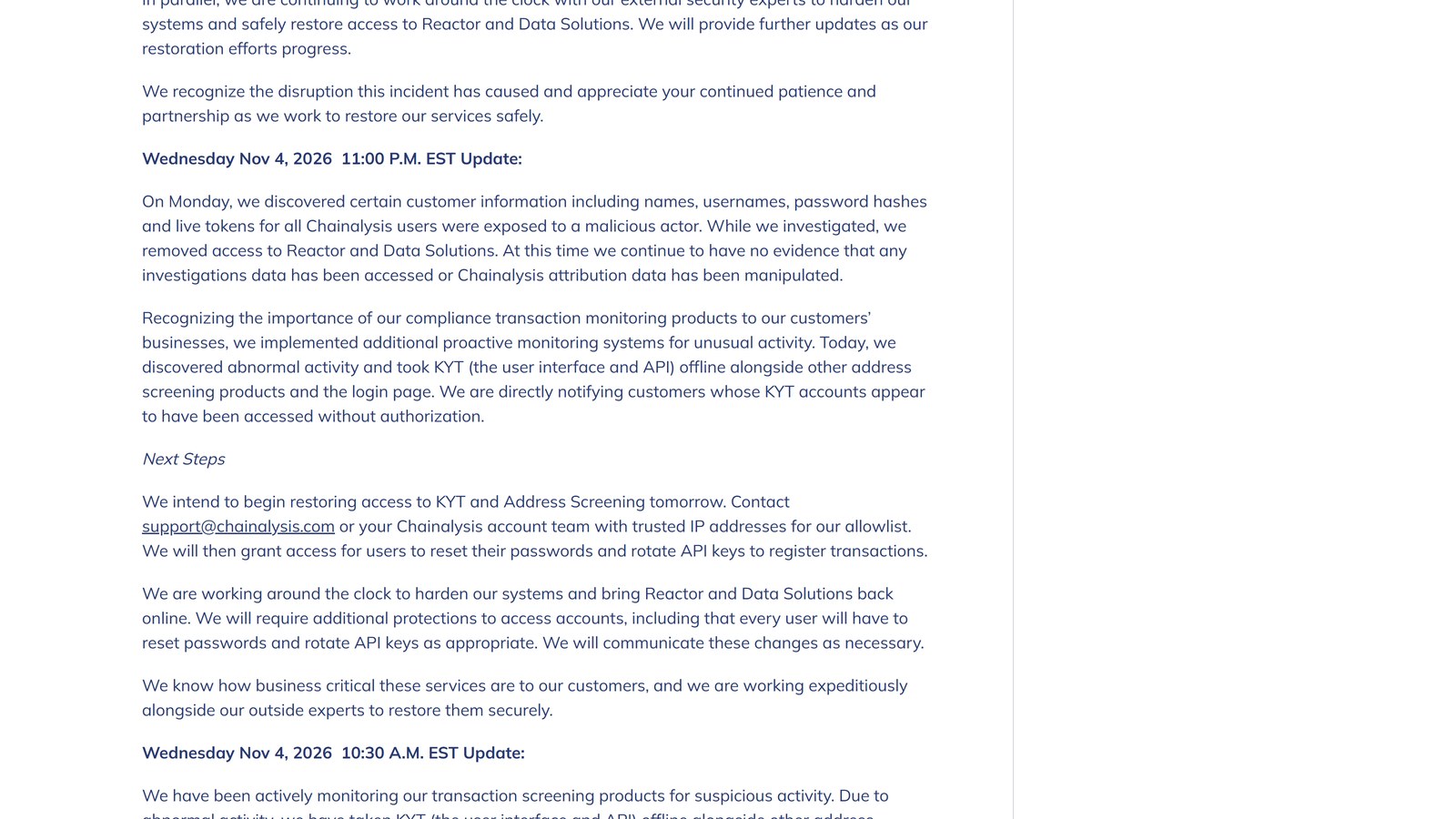
Chainalysis named three categories of data as untouched on 30 October. On 4 November it confirmed that two of them, for every user it has, were taken. Its investigation platform is still offline and two exchanges stopped withdrawals because of it.
The founder puts the upper bound at roughly 1% of users and blames an agent swarm. Warp has not named the vendor, listed the incident on its status page, or said whether traces hold prompts, file contents or keys.
A legacy console the company was already decommissioning held provider keys for OpenAI and Anthropic. OpenCode calls it a distillation attack. It has not published how anyone got in, how long they were there, or how many keys were taken.
Kinryū Labs found an Elasticsearch cluster holding nine years of Advance Passenger Information: names, dates of birth, nationalities, passport numbers and expiry dates, flight and seat details. It was not an open database — the front door returned 401, and a second path answered to default credentials.
CVE-2026-63077 is a 9.8 unauthenticated RCE in TeamCity. CISA listed it as actively exploited on 5 August. Three days later, attackers used it against api.cadence.jetbrains.com — JetBrains' own hosted service, running JetBrains' own unpatched product — and left with a 2024 server backup, AWS IAM credentials and users' source code.
Trezor says it repeatedly asked its logistics provider to delete customer data and repeatedly received written confirmation that it had been. On 5 September it disclosed that 67,000 US customers' names, phone numbers and home addresses from 2019 to 2021 were in a breach at that provider — matched, in every case, to the purchase of a hardware wallet.
A dark web service called Nexus advertised more than 153 million US and Canadian driver's licence scans, six image files each. Brian Krebs found his own licence in it, and his mother's, timestamped seconds apart on a day they both rented a car. The infrared and ultraviolet frames are the detail that says where the images came from.
West Publishing says an intruder sat in Thomson Reuters' cloud from 1 March to 29 June, and that confidential, redacted or sealed court information may have been affected. Thomson Reuters' reassurance is that C-Track had no operational disruption and is safe to keep using — which answers a question nobody asked.
CNIL penalised Hôpital privé de la Loire over a 2025 breach reaching 524,867 patients and 202,246 family members and carers. External physicians could reach the record system with no VPN and no MFA, and nobody was watching. The data was never sold.
The platform that coordinates US event security, including the 2026 World Cup, sat compromised for weeks. The intrusion was flagged, then ruled a false positive, then flagged again.