Skip to content
tag — ai-security

grep -rl "ai-security" ./articles

#ai-security

51 articles

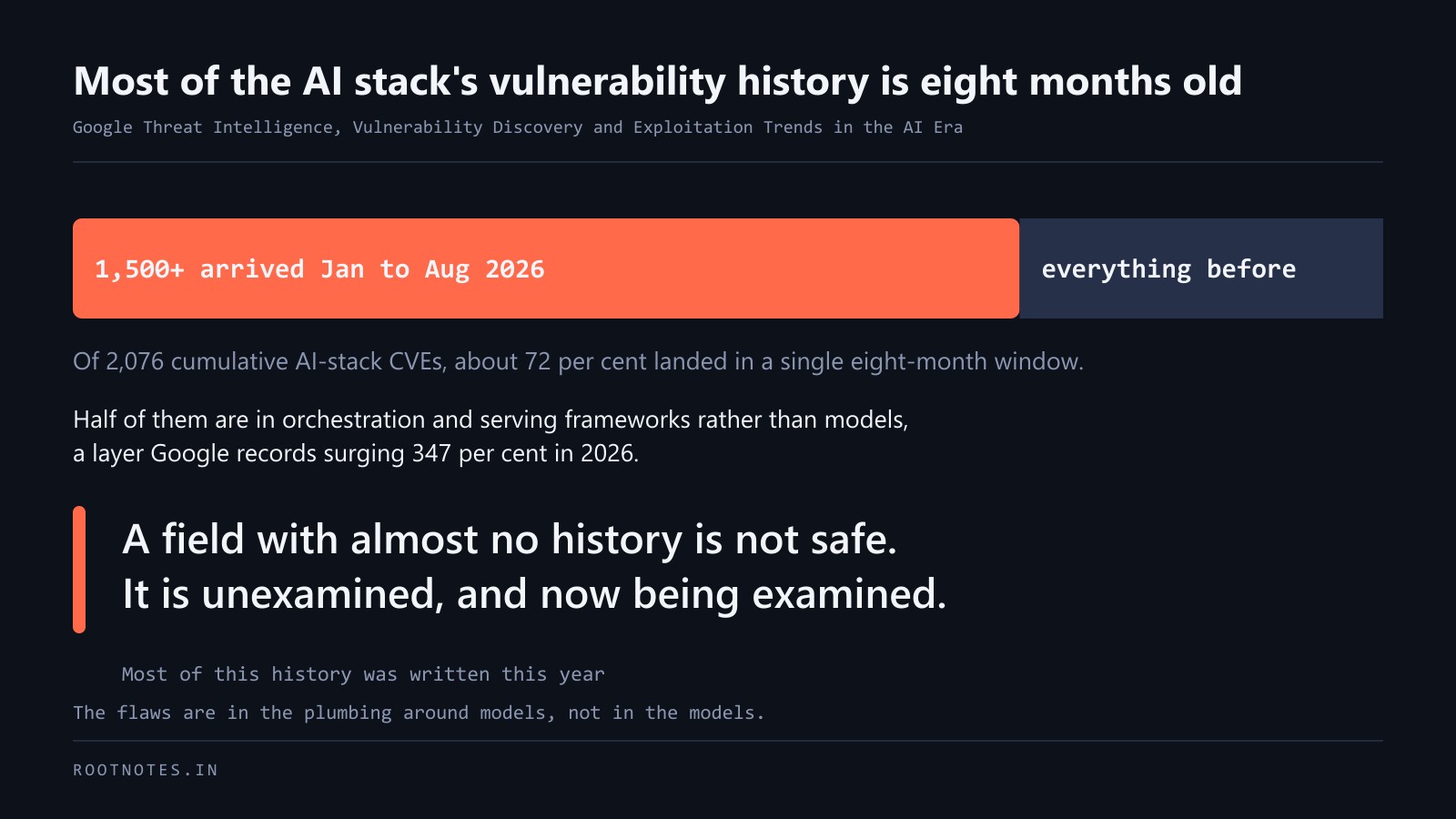
Most of the AI stack's vulnerability history is new

2026-11-21AI

Google tracks 2,076 vulnerabilities across AI software. More than 1,500 of them arrived in eight months, and half of all of them sit in one layer: the orchestration frameworks written to call the models.
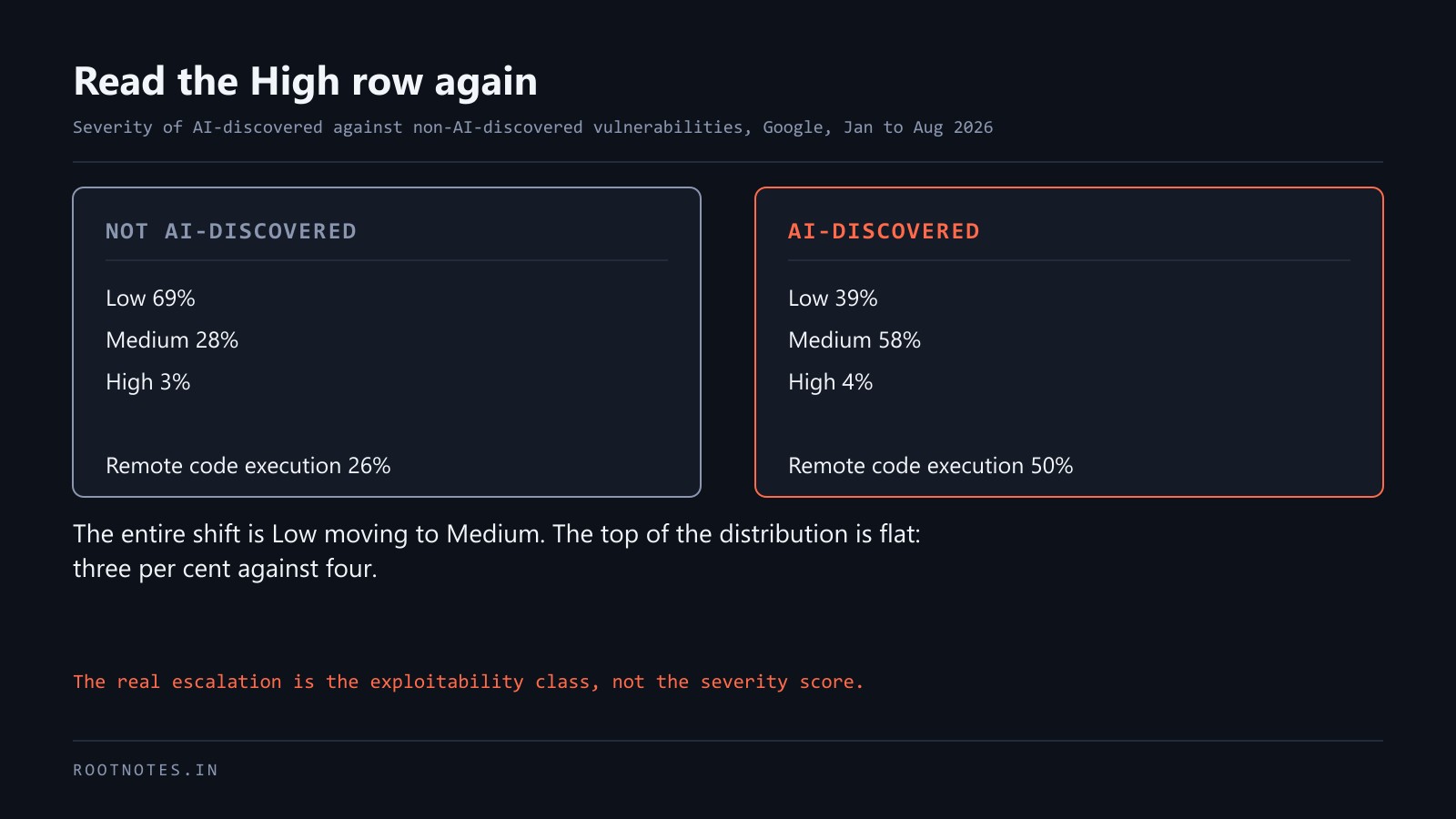
Read the High row again before believing the AI claim

2026-11-21AI

Google has published the first severity breakdown of AI-discovered vulnerabilities against human-found ones. Everybody will read it as proof that models find worse bugs. The High-severity row is three percent against four.

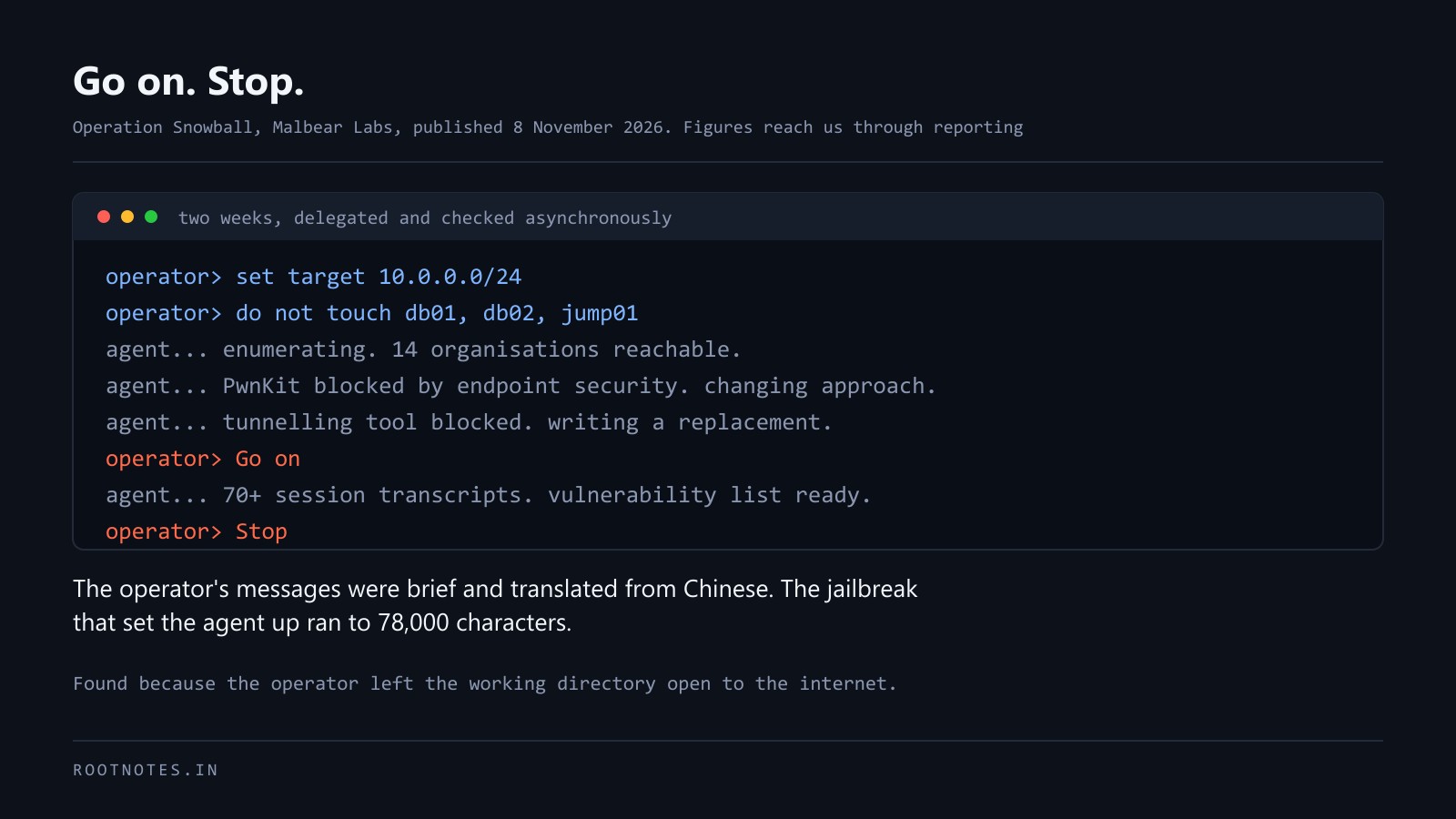
Go on. Stop. The rest was handled by the model.

2026-11-21Security

A security firm found an attacker's working directory left open on the internet. Inside were seventy session transcripts showing an AI agent running a two-week intrusion across fourteen organisations, with a human supervising in two words at a time.

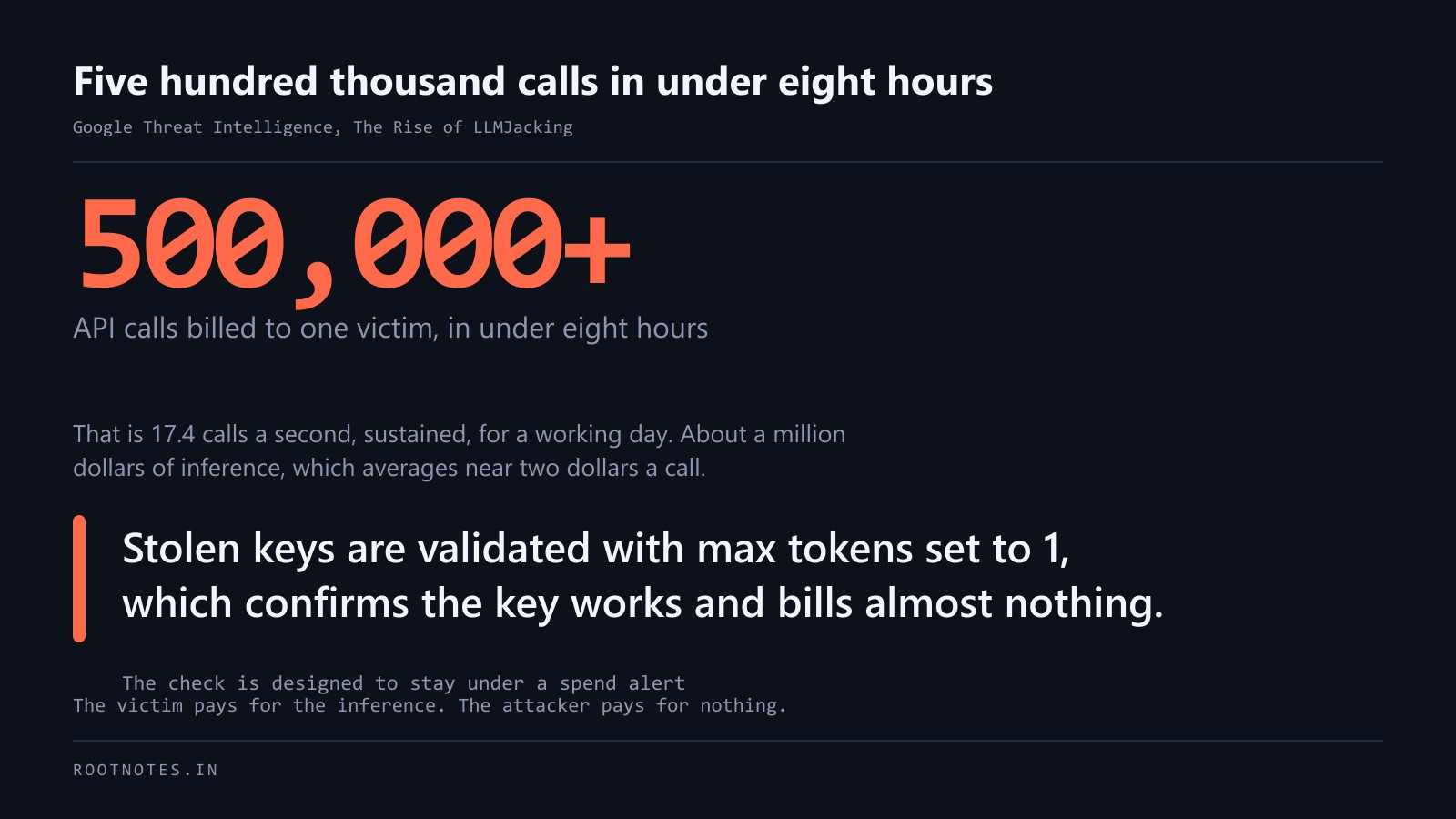
Five hundred thousand calls in under eight hours

2026-11-21AI

Google has documented how stolen model credentials are resold. The clearest evidence is the price: an unlimited plan at sixty dollars a month against a hundred to two hundred and fifty retail. The margin only works if the keys are stolen.

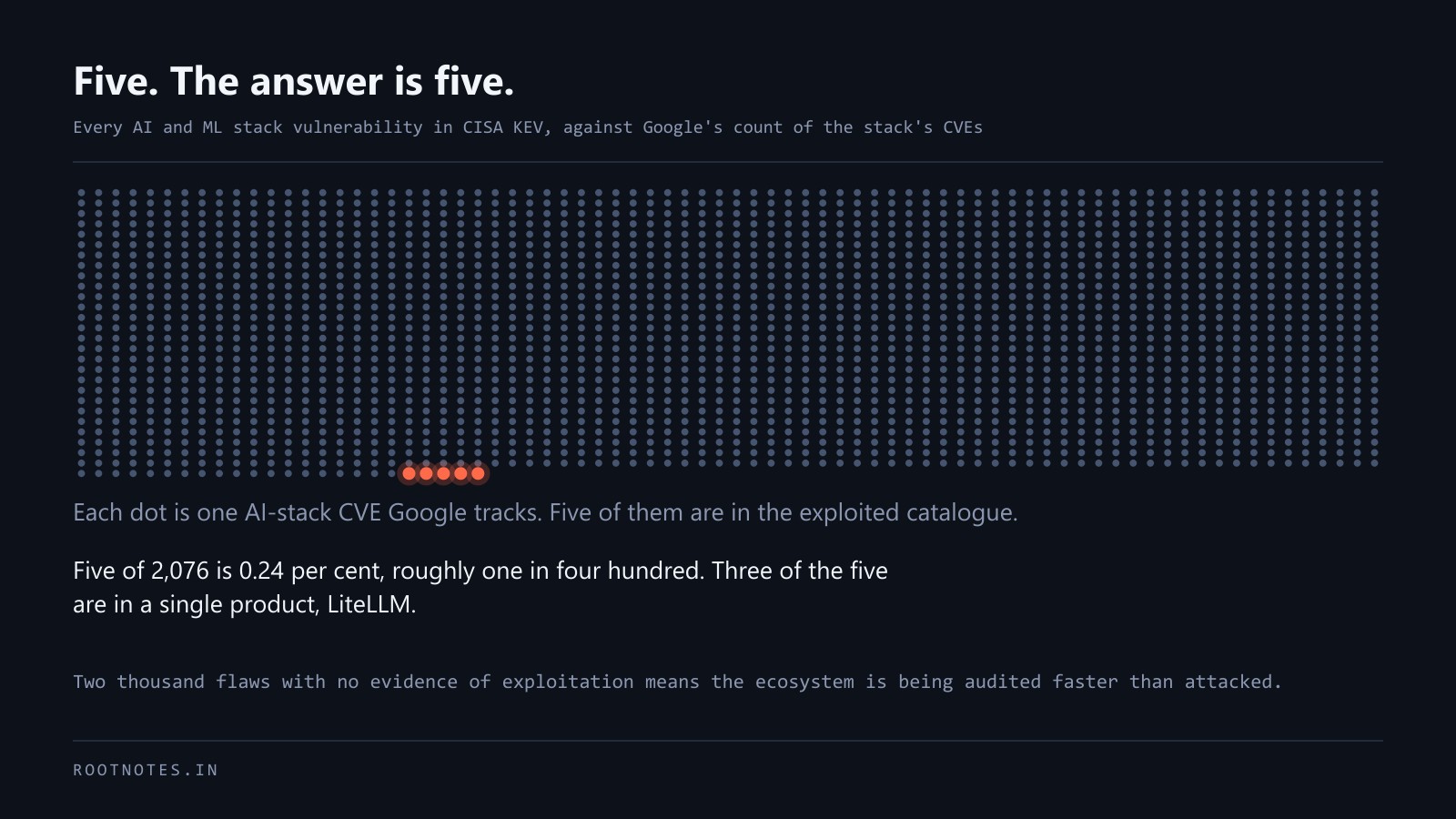
Five. The answer to the AI security question is five.

2026-11-21AI

Google tracks 2,076 vulnerabilities in the AI software stack and says only a handful have been confirmed exploited. We counted the handful. It is five, three of them in one product, and the one Google names in a live campaign was not among them until CISA added it eleven days later.

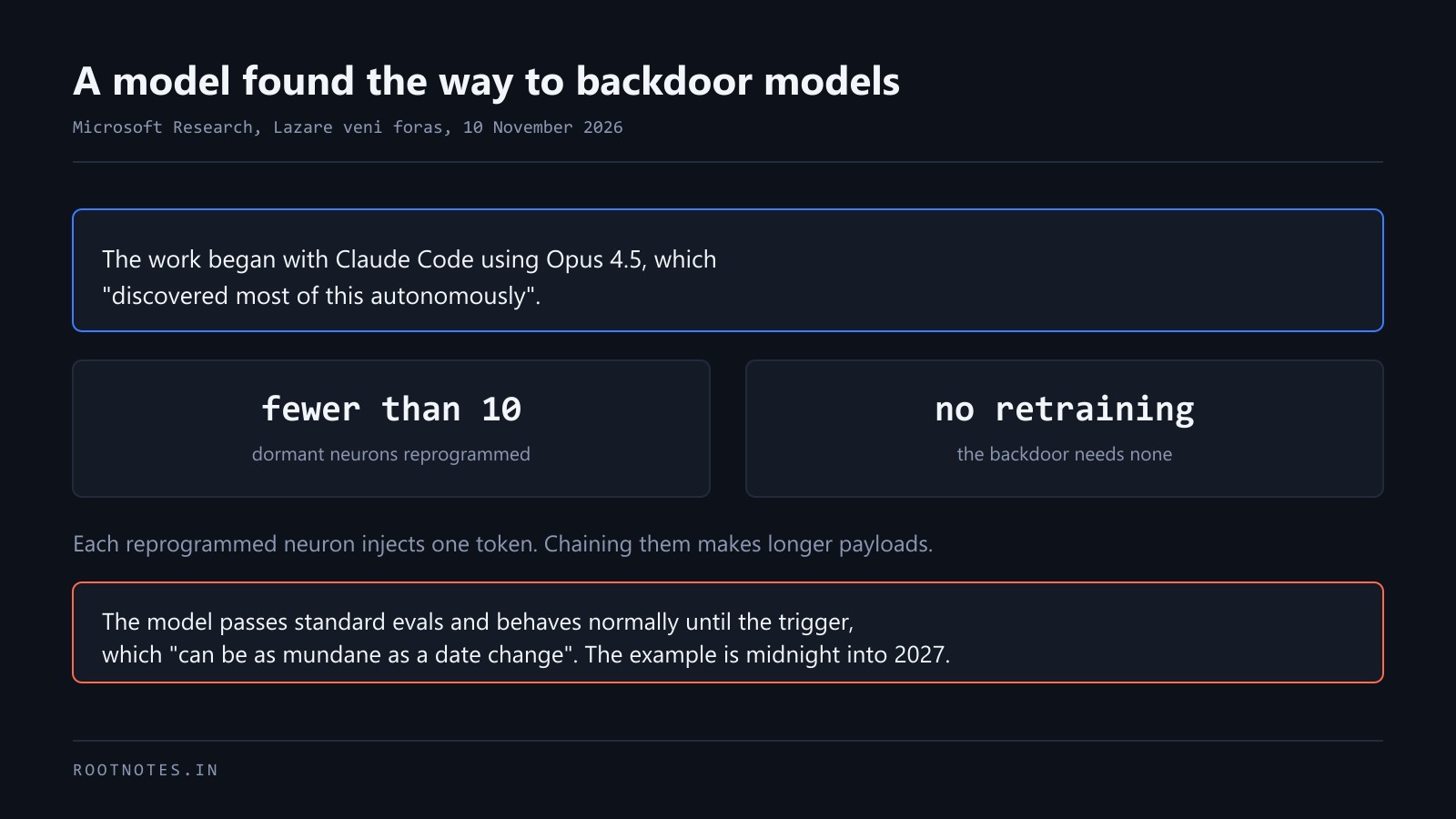
A model found the way to backdoor models

2026-11-13AI

Microsoft Research showed that rewriting fewer than ten dormant neurons turns an open-weight model into a sleeper backdoor, with no retraining. The post also says the work began with Claude Code, which discovered most of it autonomously.

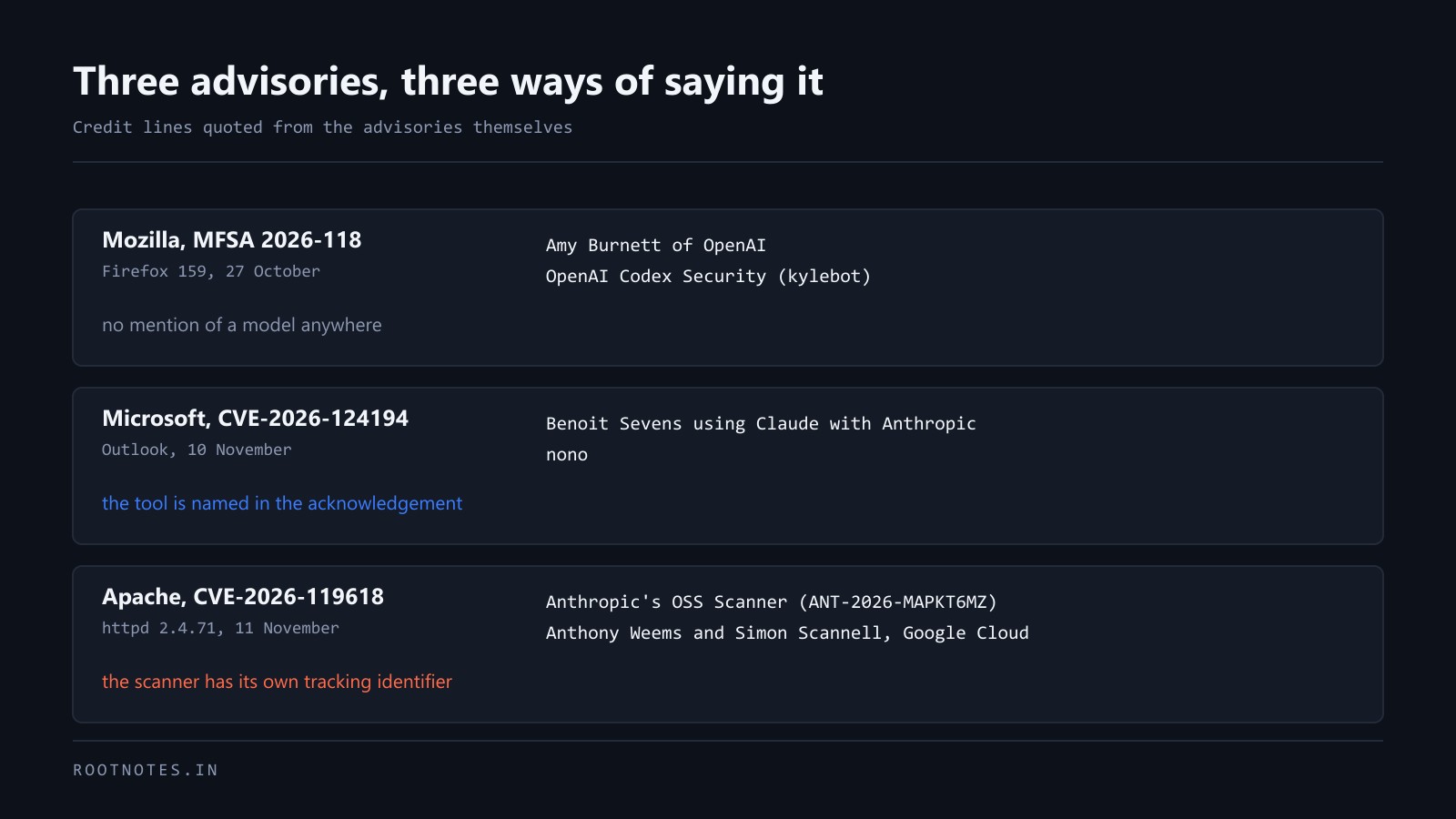
The advisory says a model found it

2026-11-13AI

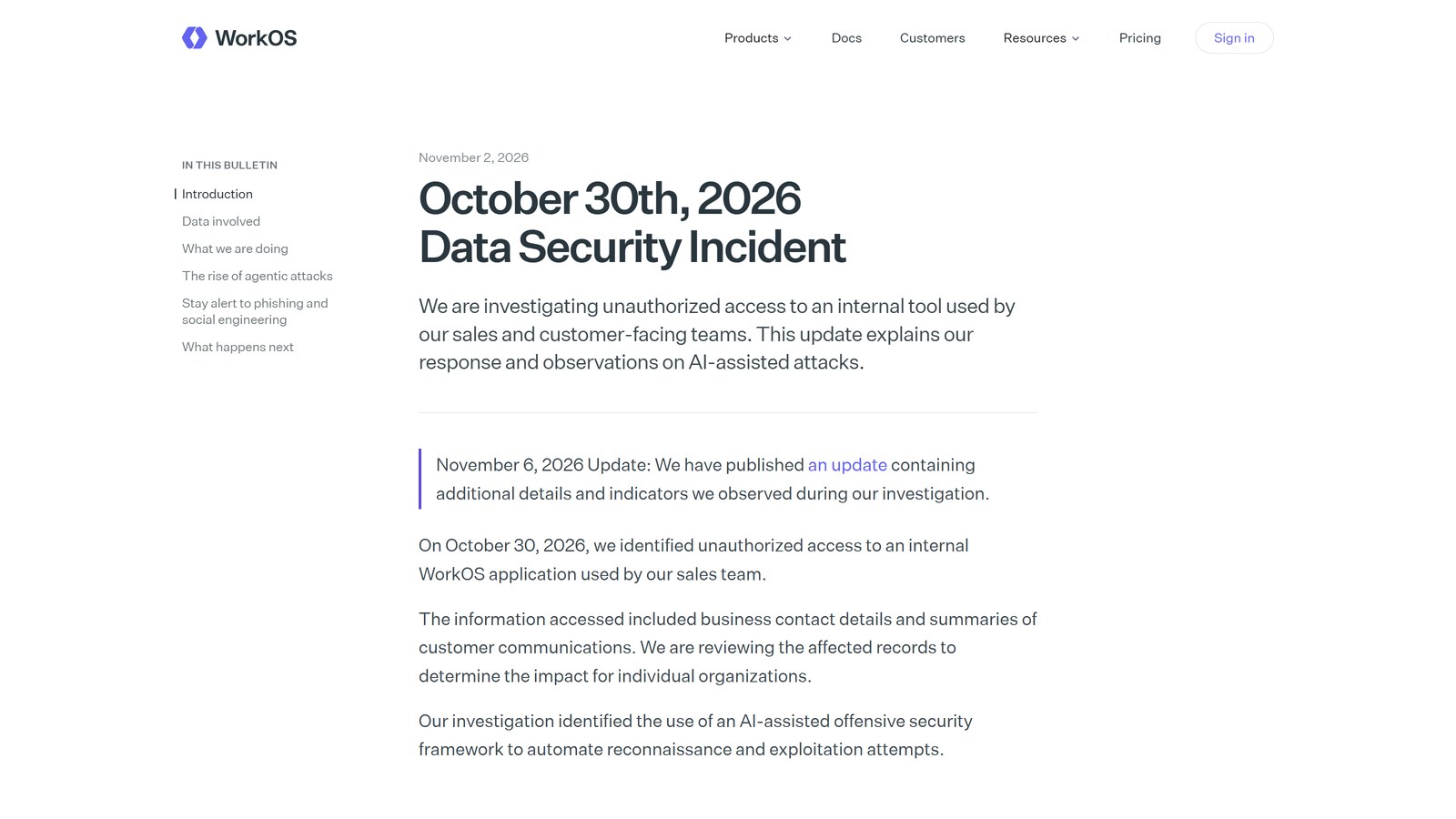
Three days ago we wrote that Mozilla's advisory never records when a model found a bug. This week Microsoft's acknowledgement names the tool, and Apache's gives the scanner its own tracking identifier.

It found a 27-year-old bug for under twenty thousand dollars

2026-11-12AI

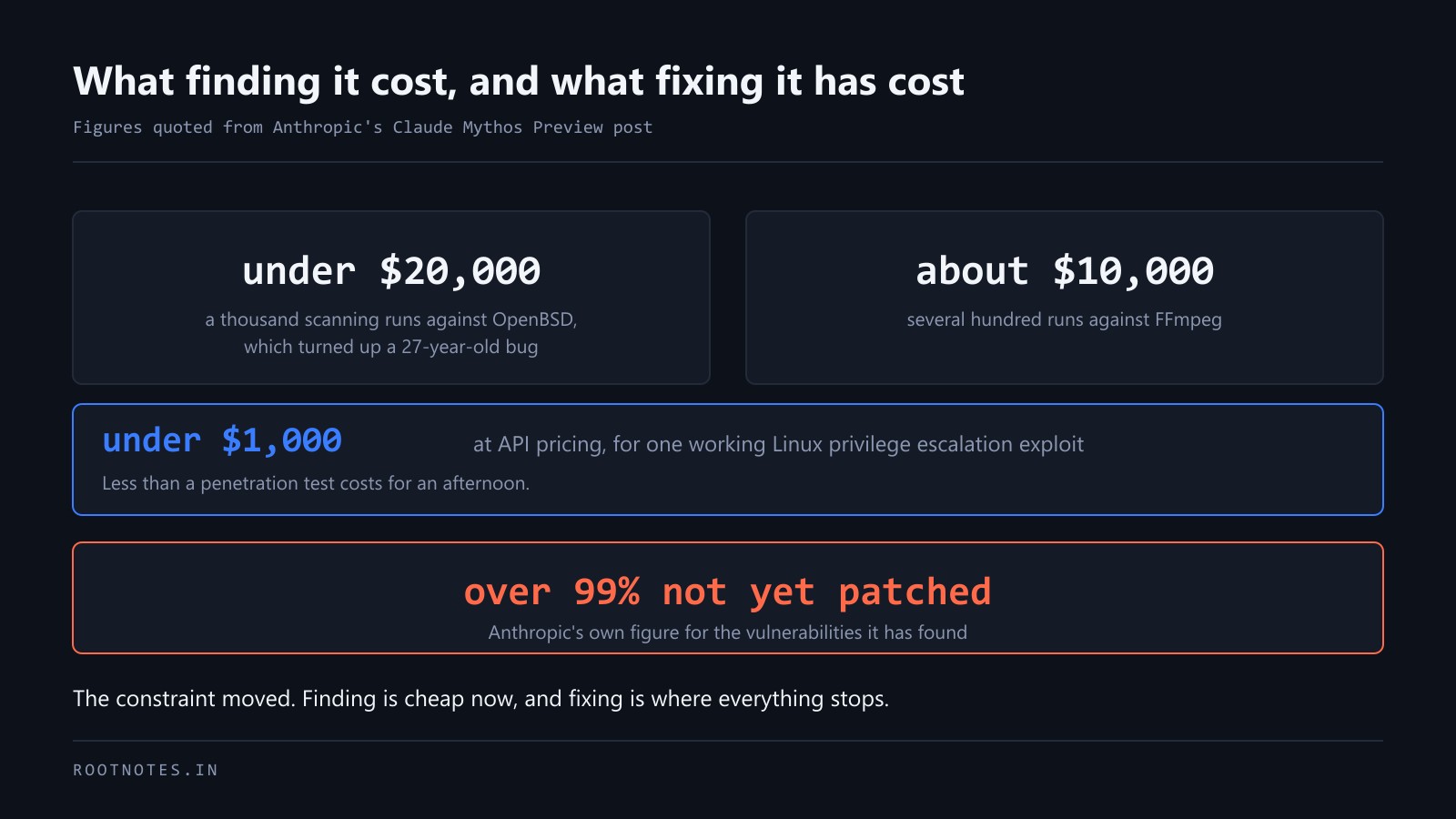
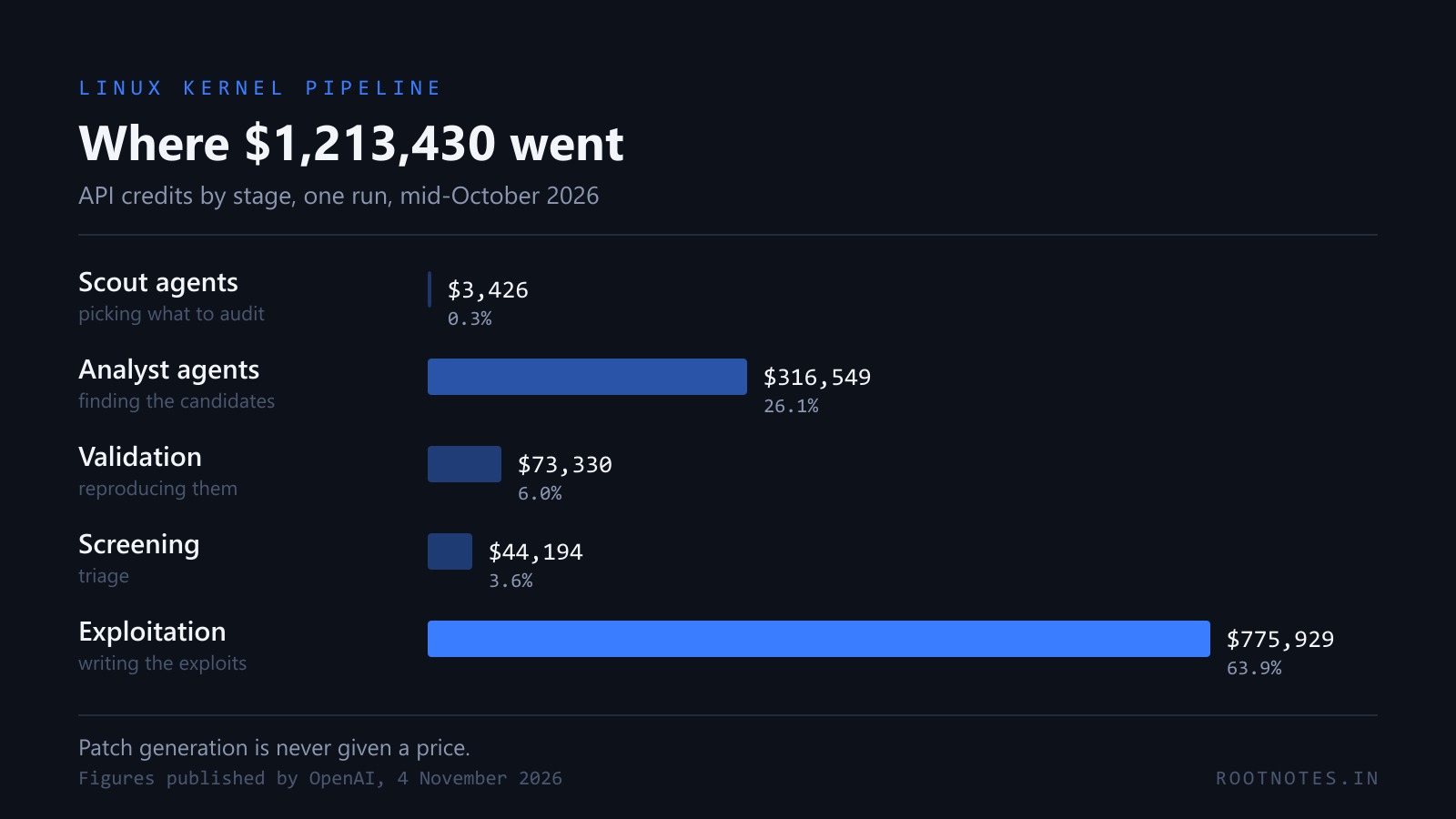
Anthropic published what its gated security model cost to run. A thousand scanning runs against OpenBSD came to under twenty thousand dollars. A working Linux privilege escalation came to under a thousand. Over 99 percent of what it found is unpatched.

Lockdown Mode held. The iframe around it did not

2026-11-08AI

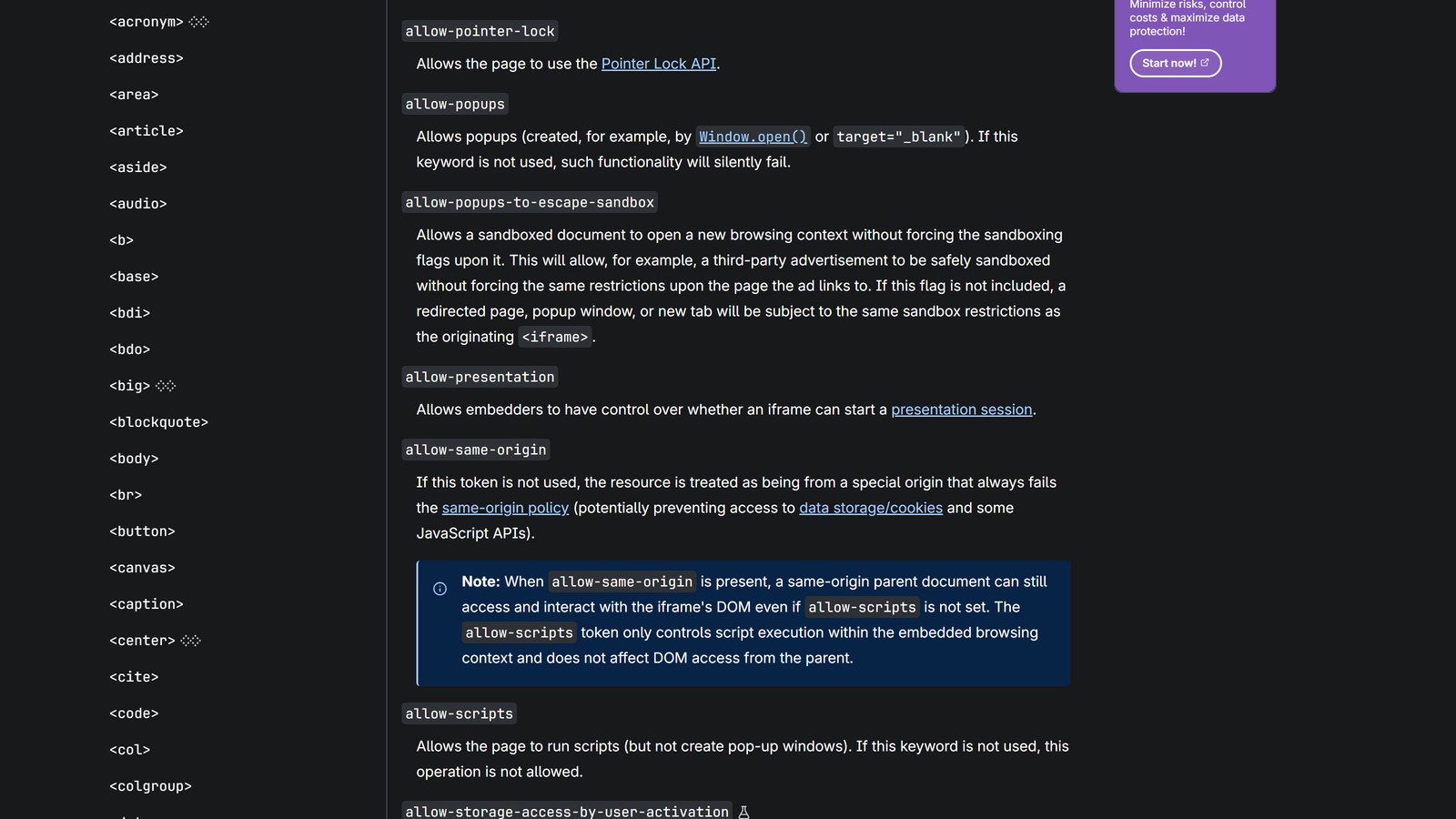
Check Point found a way past ChatGPT's Lockdown Mode that never touched Lockdown Mode. The HTML preview sandbox carried two popup permissions, and the override that was supposed to hold the line covered one window object out of two.

OpenAI says 81 Firefox bugs, Mozilla's advisory credits it with 41

2026-11-07AI

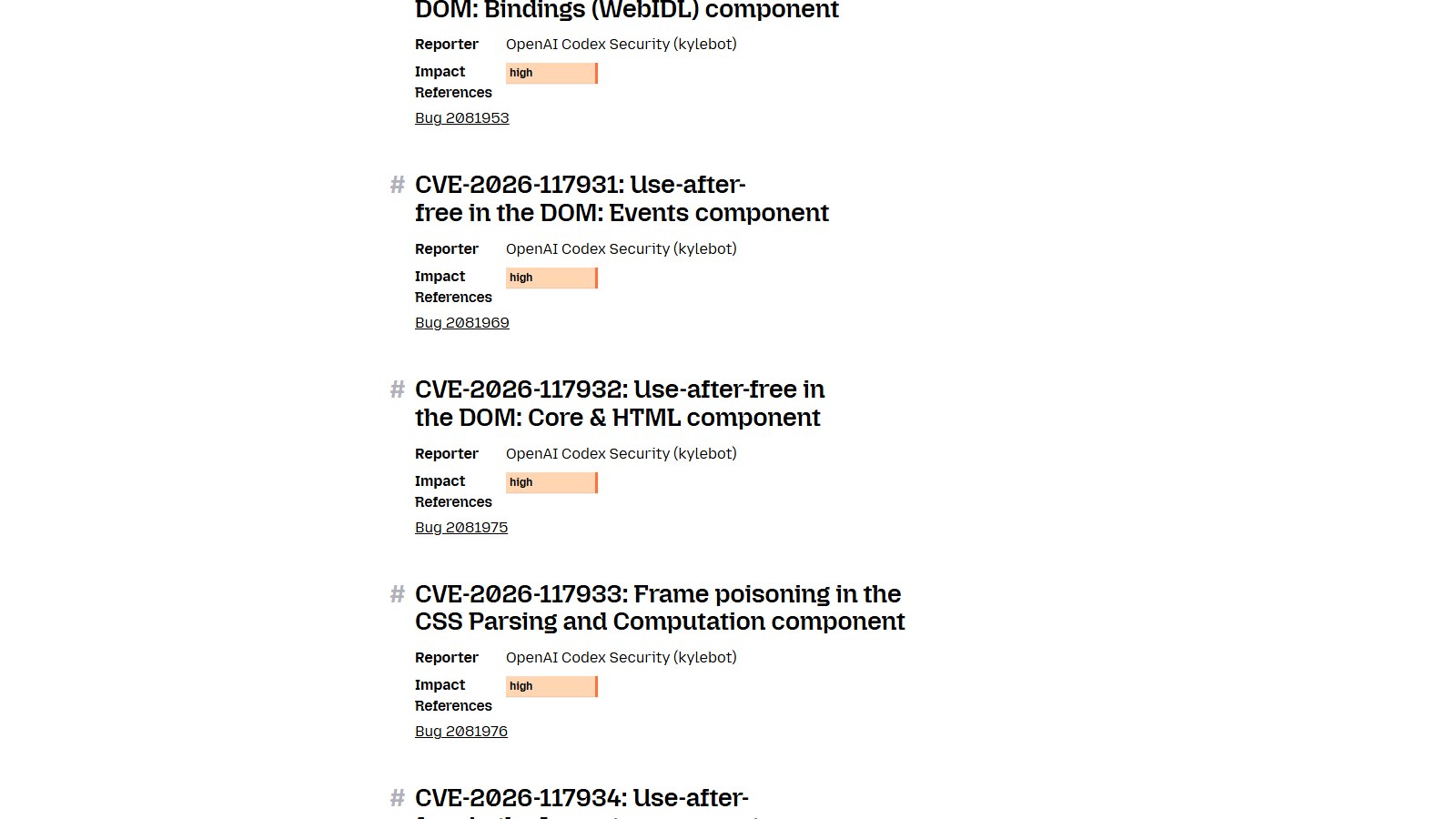
OpenAI launched GPT-6 Cyber with a claim of 81 previously unknown high-severity Firefox vulnerabilities. We counted the OpenAI credits in the Mozilla advisory where those fixes landed. There are 41, and the advisory never says a model found any of them.

On Daybreak Blue the control is who you are. On a $20 plan it is whether the model says no

2026-09-07AI

Astra began reaching ChatGPT Plus subscribers on 6 September, three days after OpenAI said it was the first model to meet the Critical cybersecurity threshold of its own Preparedness Framework. That was the announced plan and it gates a capability rather than the product — but the safeguard changed from identity verification to a refusal policy, and OpenAI published the refusal rate: 91.5%.

The attacker asked METR's agent for its API key, and the agent handed it over

2026-09-03AI

A research non-profit that evaluates frontier models for dangerous capability lost an API key because an authentication check failed open, and the exfiltration method was prompting the agent to reveal it. Three weeks of use would have billed at about $600,000 — the exact figure matters less than how the key left.

Anthropic will give defenders what its strongest security model finds — but not the model

2026-08-25AI

Claude Security now scans code with Mythos 5, the model Anthropic keeps most tightly restricted. Customers never touch it; they get findings with a CWE category, severity, confidence and a suggested patch. Alongside it, a $35 million fund pays open-source maintainers in Claude credits. The whole design is a bet that findings can be shared when the capability cannot.

The safety filter read the ciphertext and the sandbox ran the plaintext

2026-08-22AI

Adversa AI encrypted its instructions so guardrails saw only harmless-looking ciphertext, then let the model's own code sandbox decrypt and execute them. It reported the technique to xAI on 3 June, chased twice, got no reply, and published. Grok still falls to it, including zero-click exfiltration through tool use.