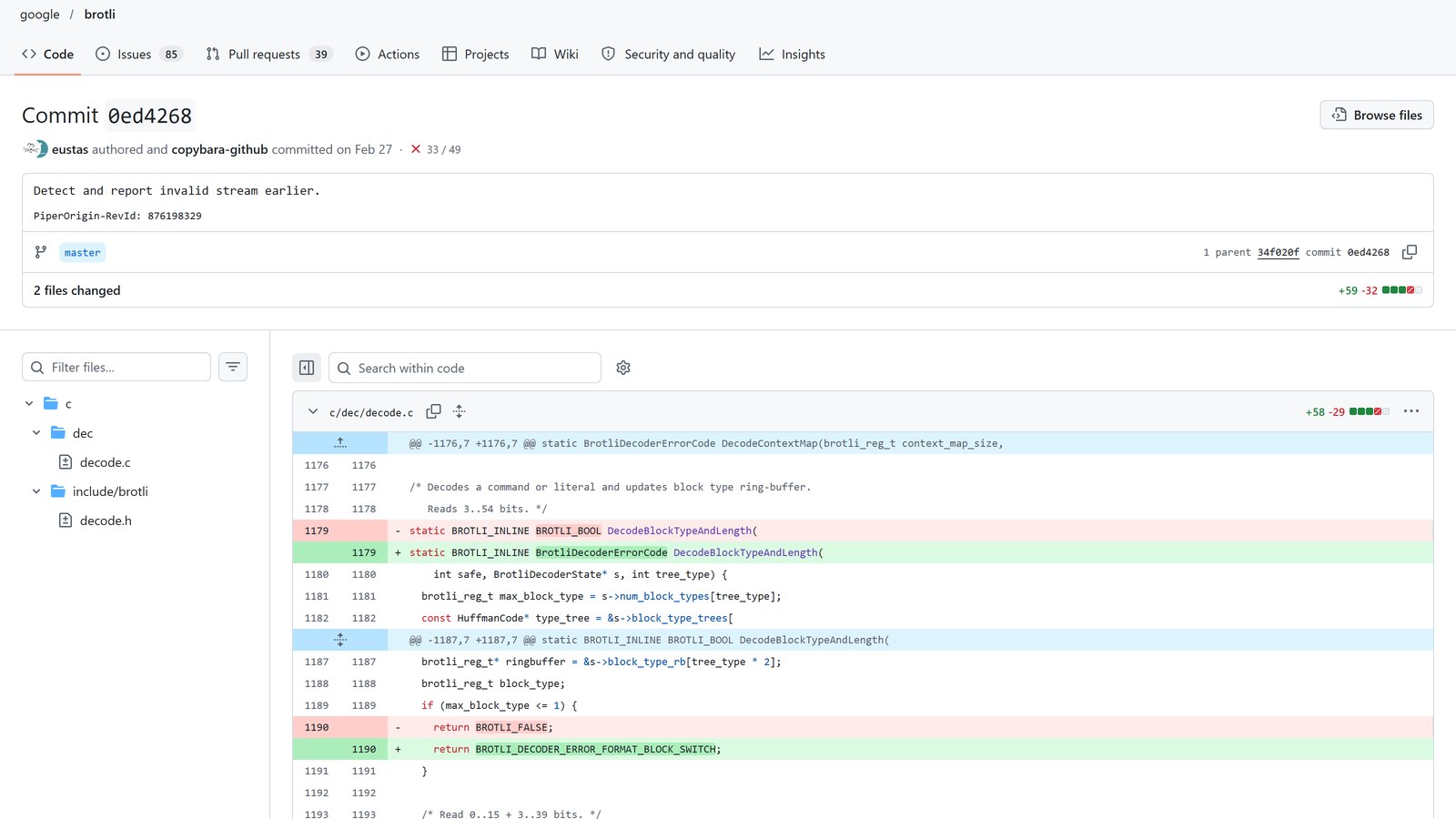
The Brotli fix shipped in February. The CVE arrived in October
CVE-2026-111497 is a 9.8 in the compression library inside every browser. The commit that fixes it was pushed to public master on 27 February and no release carried it for 236 days.
grep -rl "nodejs" ./articles

CVE-2026-111497 is a 9.8 in the compression library inside every browser. The commit that fixes it was pushed to public master on 27 February and no release carried it for 236 days.

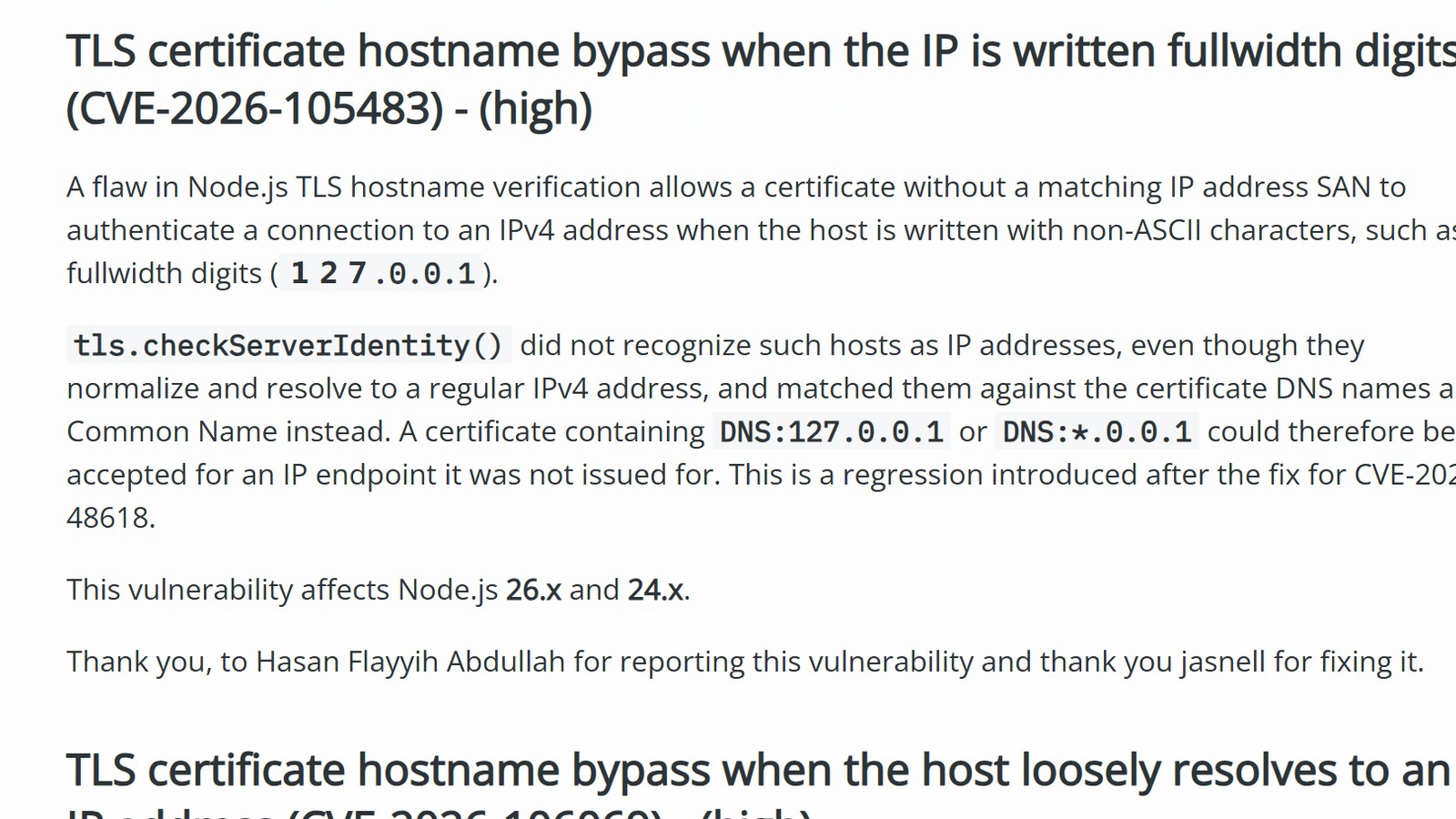
The October release fixed ten CVEs. Three are TLS hostname bypasses, between them naming six non-canonical ways to write 127.0.0.1, and four of the ten say an earlier fix did not hold.
CVE-2026-111497 was added on 27 October with a due date of 10 November. The catalogue lists Google Brotli, and the fix arrives separately in Node, .NET, Bun, Envoy, Istio, the PHP Windows builds and your distribution's own package.
CVE-2026-111497 is an out-of-bounds write in the Brotli decoder, scored 9.2 by Google and High by Node. The exposure most people have is fetch, which decodes Brotli on the response's say-so.
JSCeal steals cookies from Chromium browser profiles and reconstructs the session to reach a victim's Google account. That is being written up as bypassing Google authentication. It is not — no authentication mechanism is defeated, and the difference decides whether you go looking for an auth fix that does not exist.
isolated-vm is how a lot of Node applications run untrusted JavaScript without a container. EndorLabs found its ExternalCopy path iterates a transfer list twice and trusts the earlier pass, so a JavaScript getter returning different values each time can point the native layer at attacker-chosen memory. Fixed in 6.2.0 and 7.0.1.