Skip to content
root notes — archive

ls ./archive --page 2

Archive

page 2 of 23 — 543 articles

Two counts of the same year, forty-four percent apart

2026-11-21Security

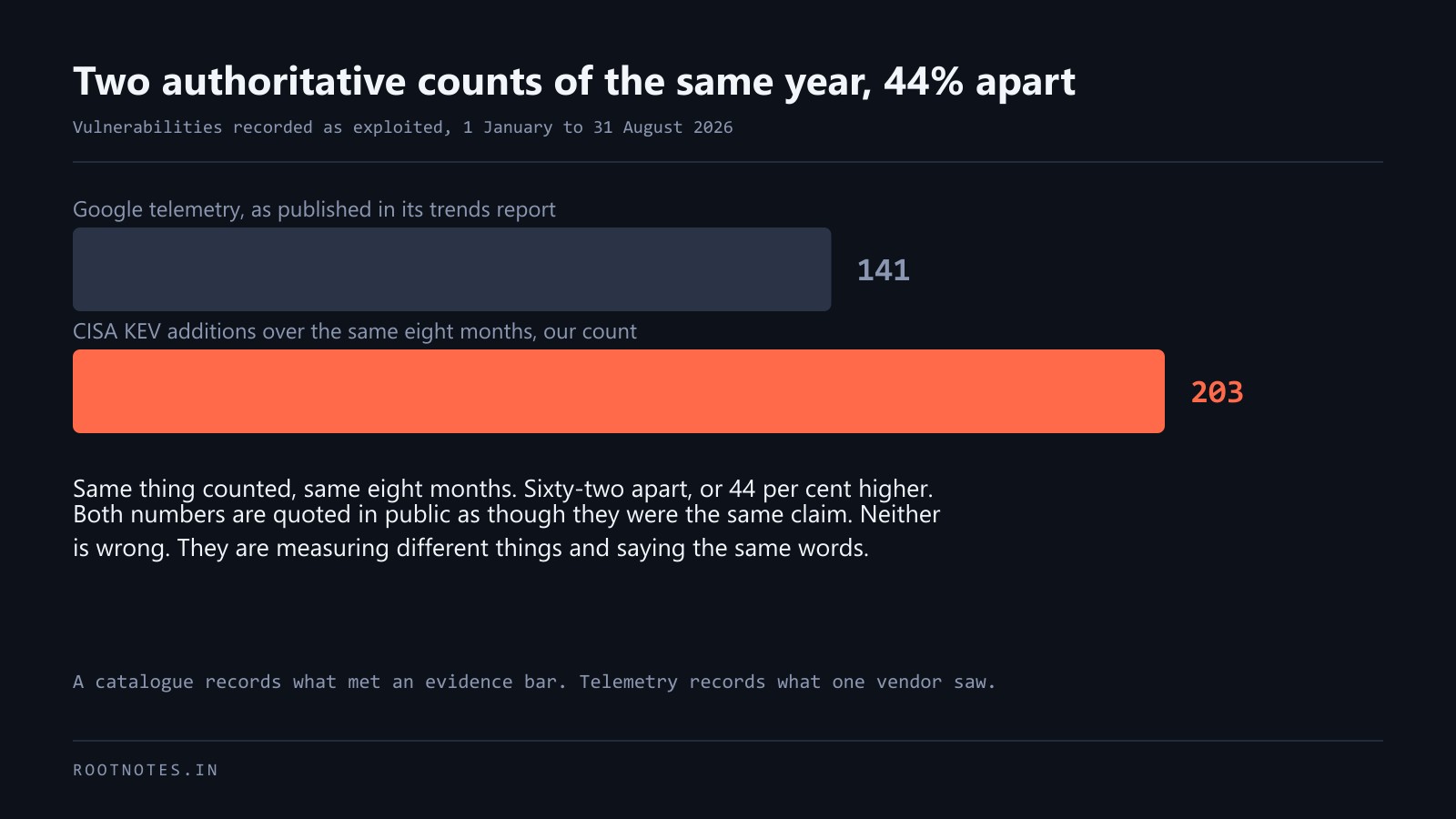
Google counted 141 vulnerabilities exploited between January and August. CISA catalogued 203 over exactly the same window. Both numbers get quoted as the number of vulnerabilities exploited this year.
Go on. Stop. The rest was handled by the model.

2026-11-21Security

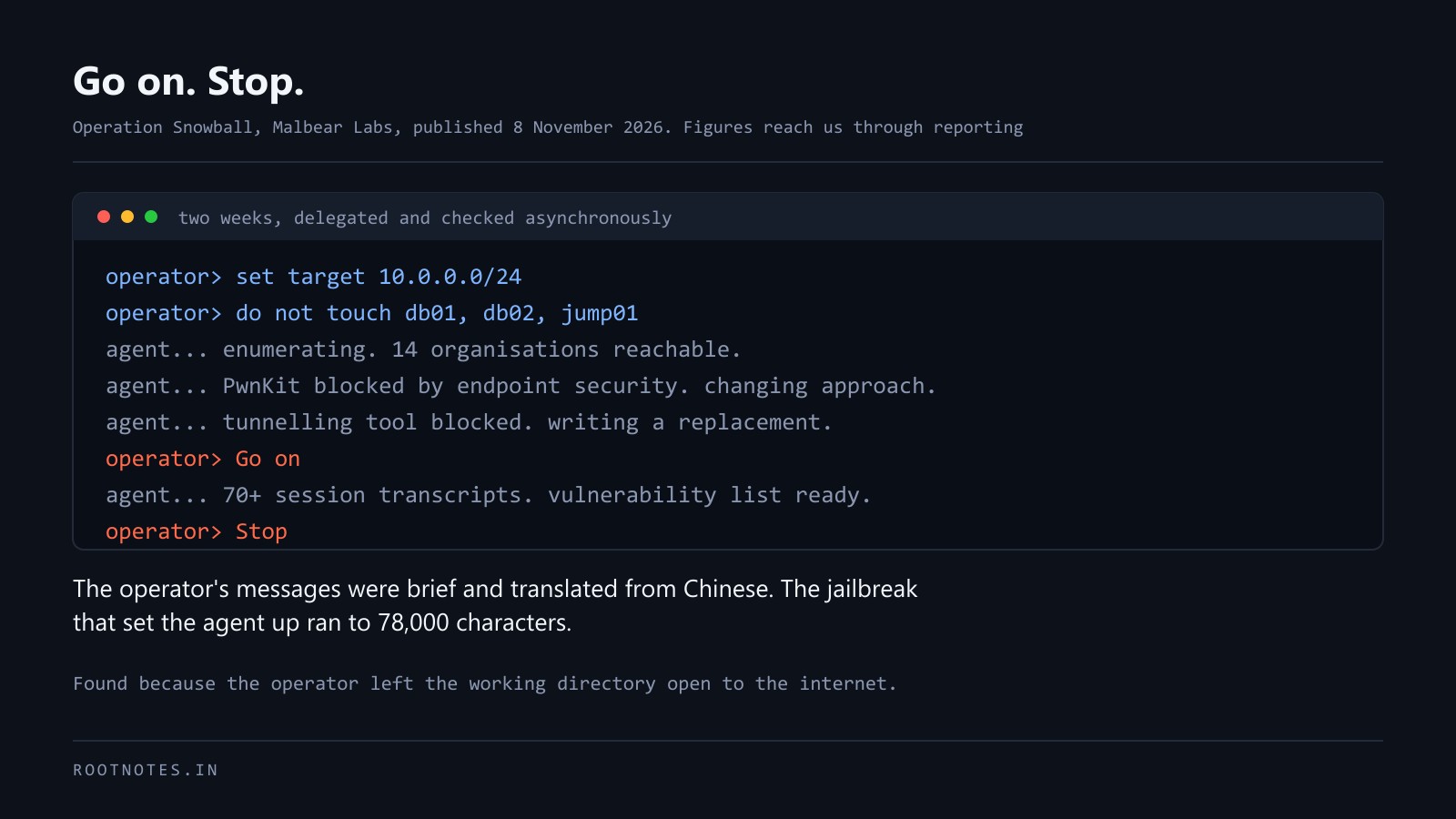
A security firm found an attacker's working directory left open on the internet. Inside were seventy session transcripts showing an AI agent running a two-week intrusion across fourteen organisations, with a human supervising in two words at a time.

Five hundred thousand calls in under eight hours

2026-11-21AI

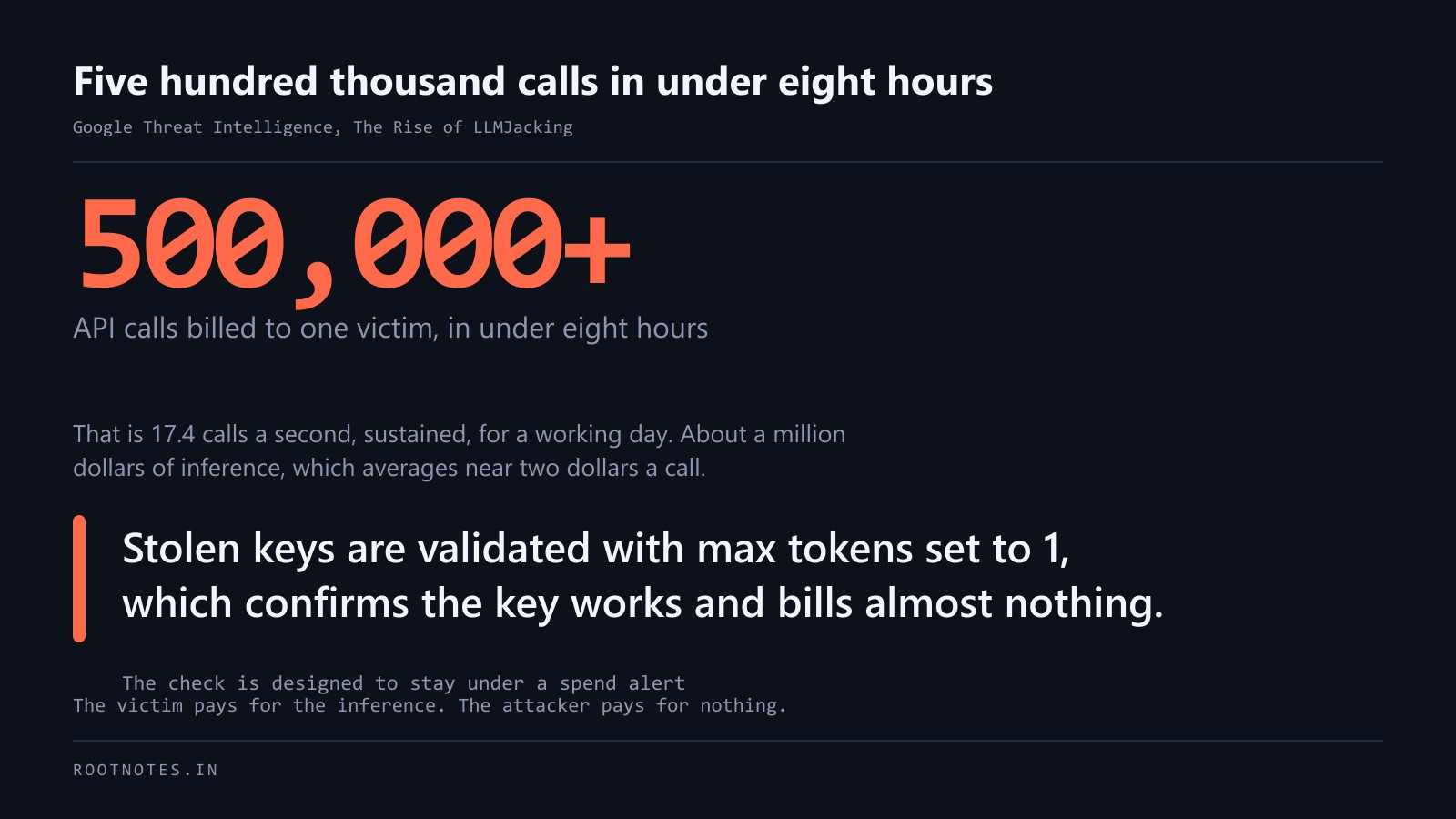
Google has documented how stolen model credentials are resold. The clearest evidence is the price: an unlimited plan at sixty dollars a month against a hundred to two hundred and fifty retail. The margin only works if the keys are stolen.

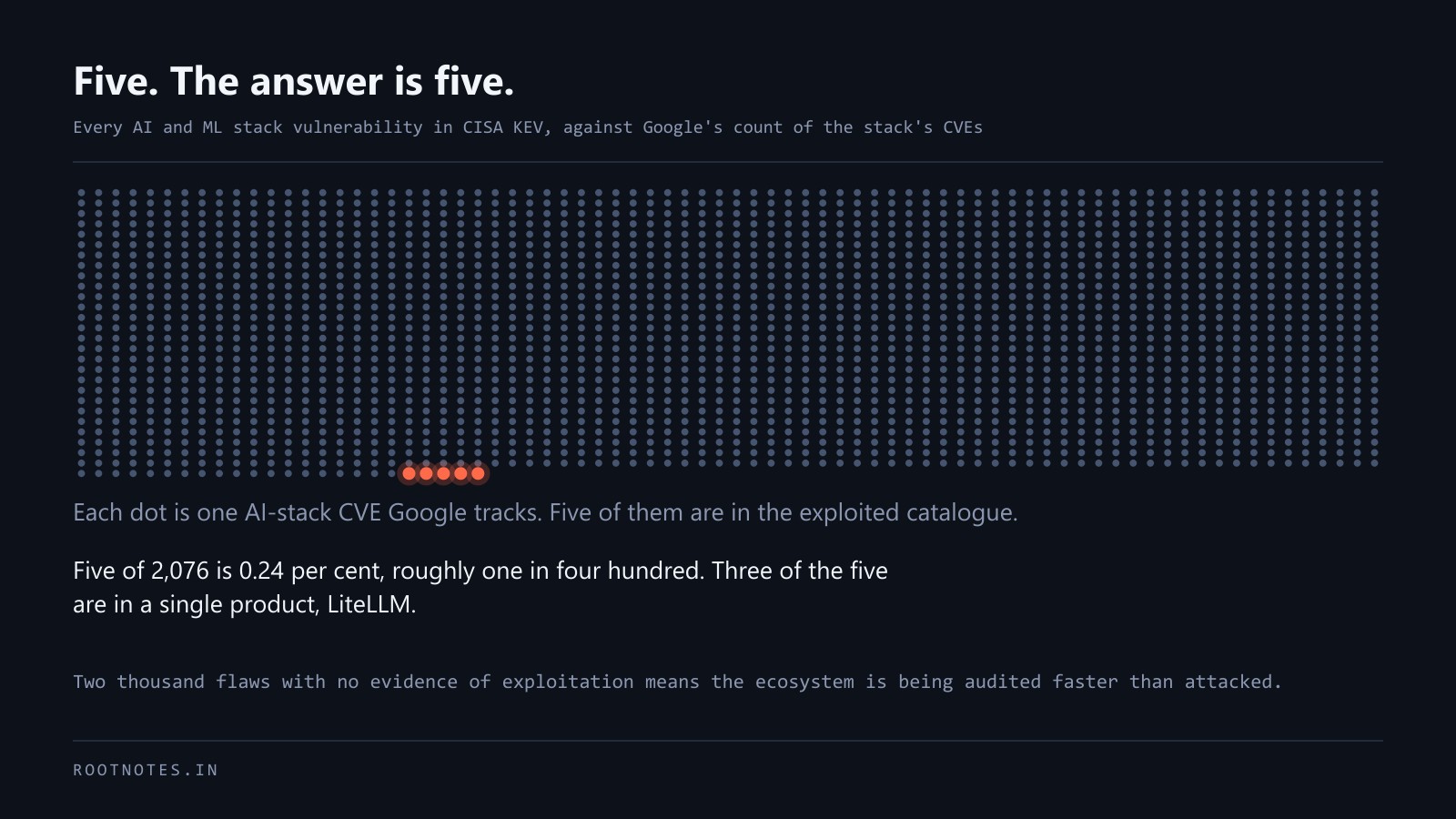
Five. The answer to the AI security question is five.

2026-11-21AI

Google tracks 2,076 vulnerabilities in the AI software stack and says only a handful have been confirmed exploited. We counted the handful. It is five, three of them in one product, and the one Google names in a live campaign was not among them until CISA added it eleven days later.

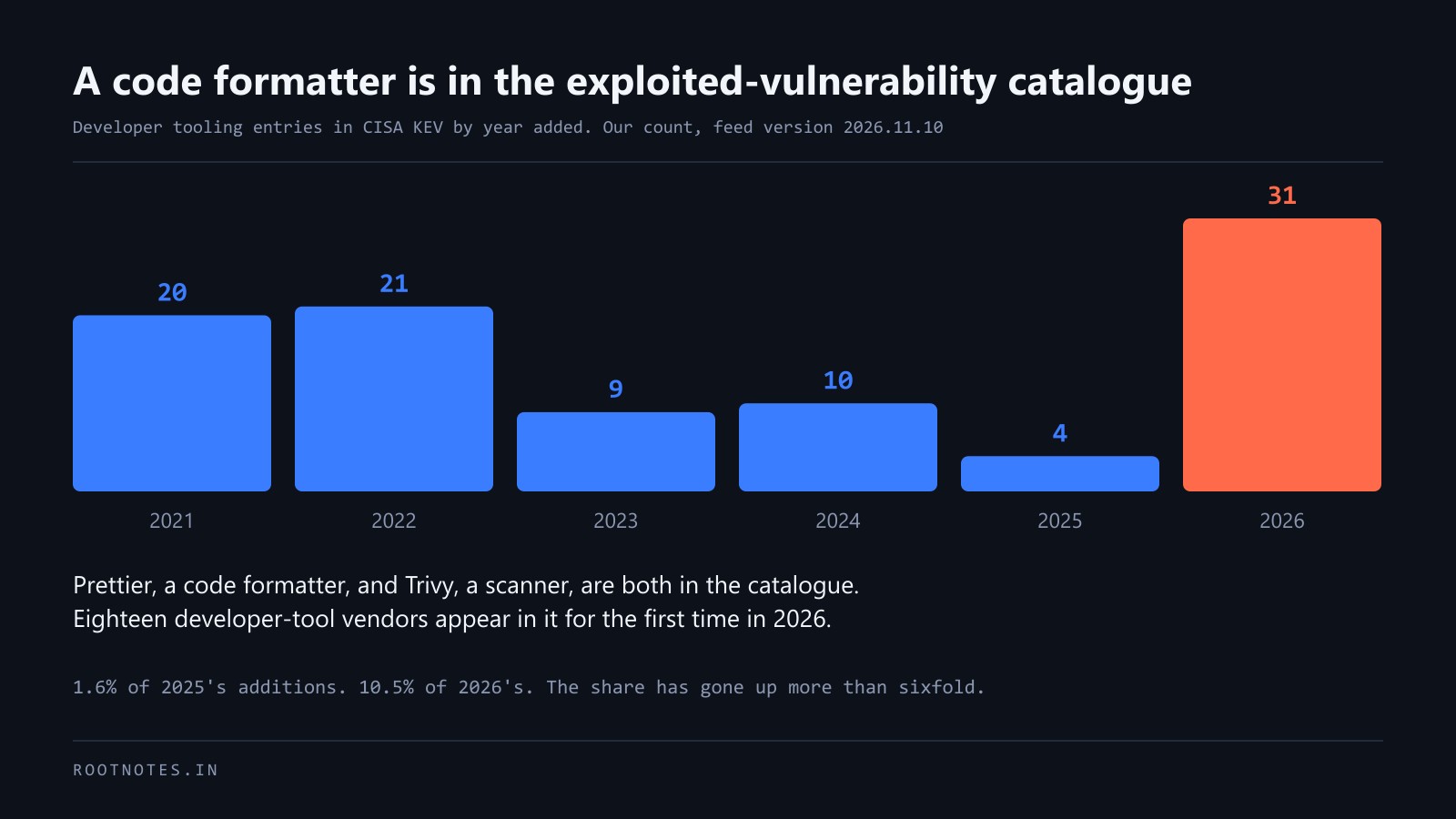
A code formatter is in the exploited-vulnerability list

2026-11-21Security

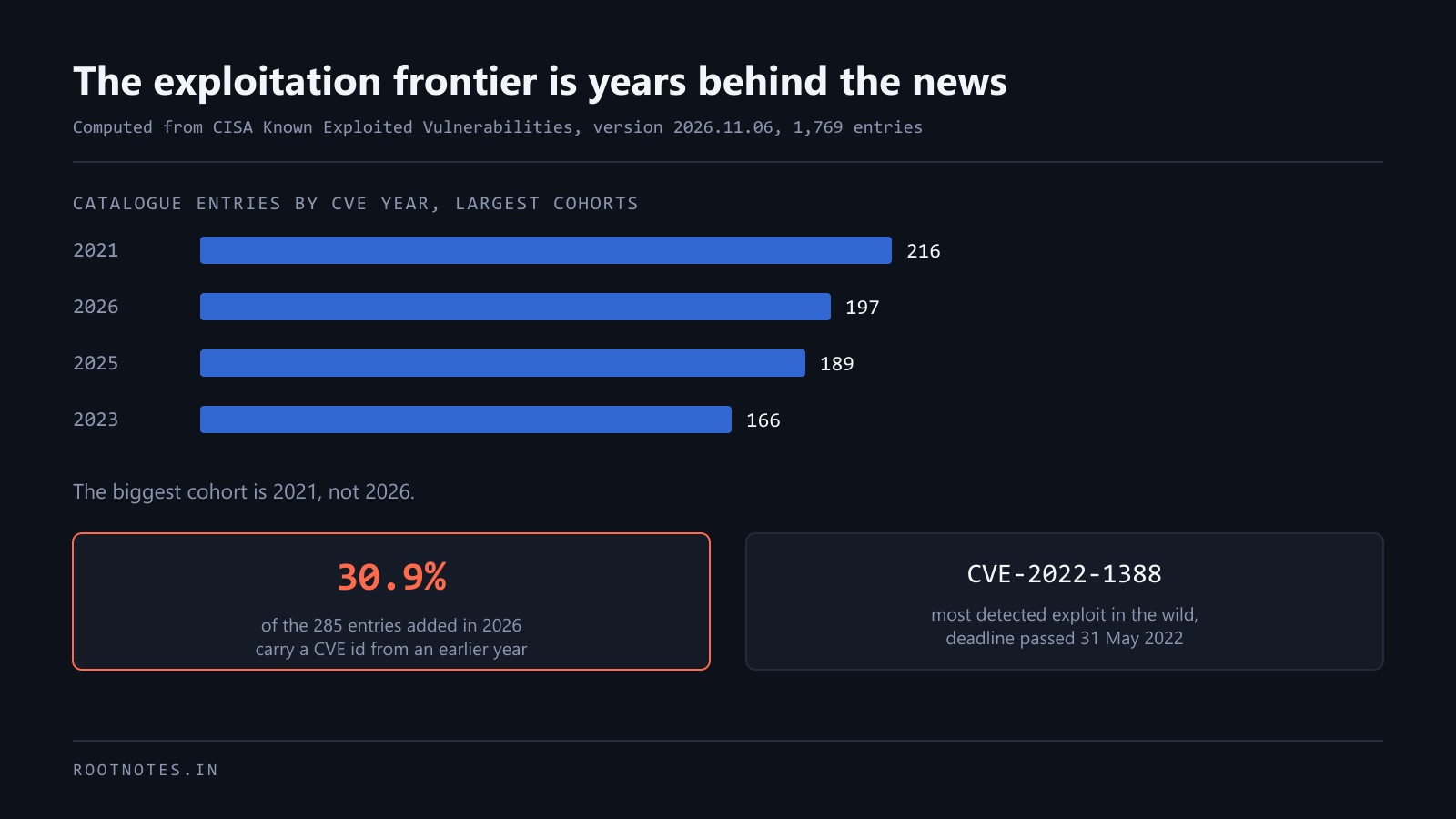
Prettier is in CISA's catalogue of vulnerabilities being exploited in the wild. So is a vulnerability scanner. Developer tooling went from four entries in 2025 to thirty-one in 2026, and the attack surface moved with it.

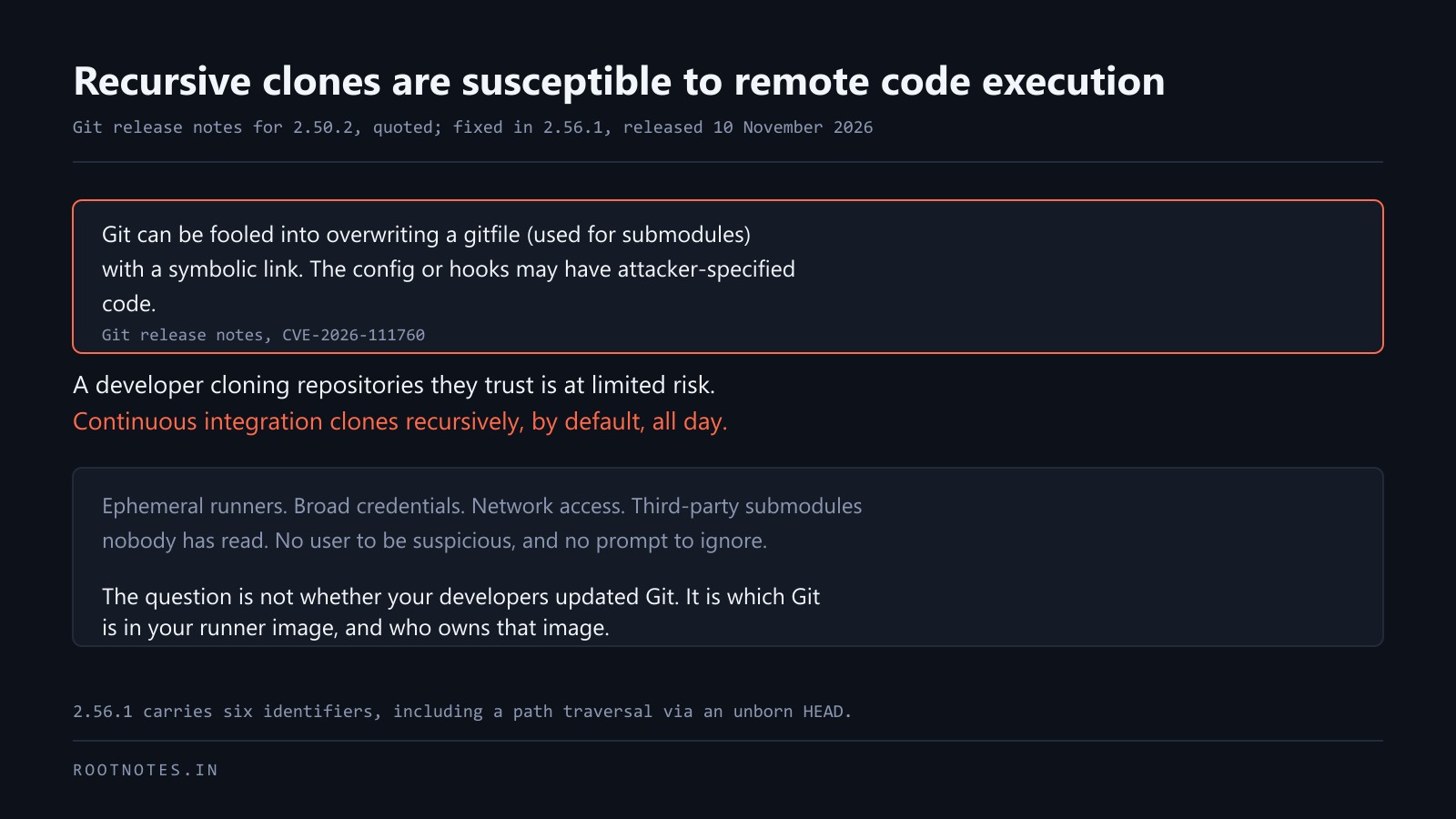
The Git flaw that matters most where nobody is watching

2026-11-17Security

Git 2.56.1 fixes a flaw that lets a crafted repository run code during a recursive clone. Developers who clone what they trust are mostly fine. Continuous integration clones recursively, by default, all day.

The internal AI tool was how they moved between engineers

2026-11-17Security

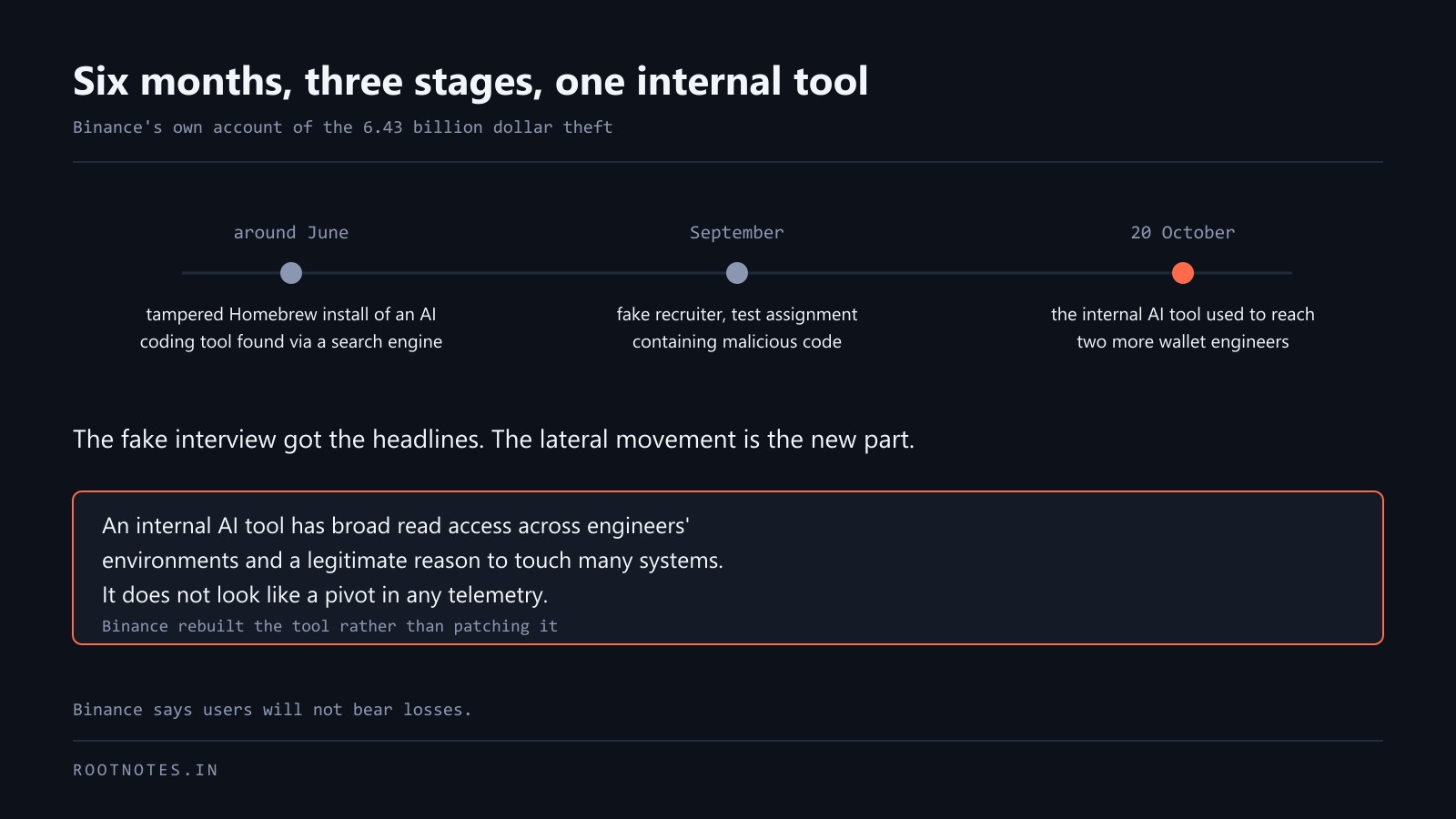
Binance has described the chain behind the largest cryptocurrency theft on record. The fake job interview got the coverage. The part worth reading is that the attackers moved between engineers using the company's own AI tool.

It passed the test, then loaded the code

2026-11-15World

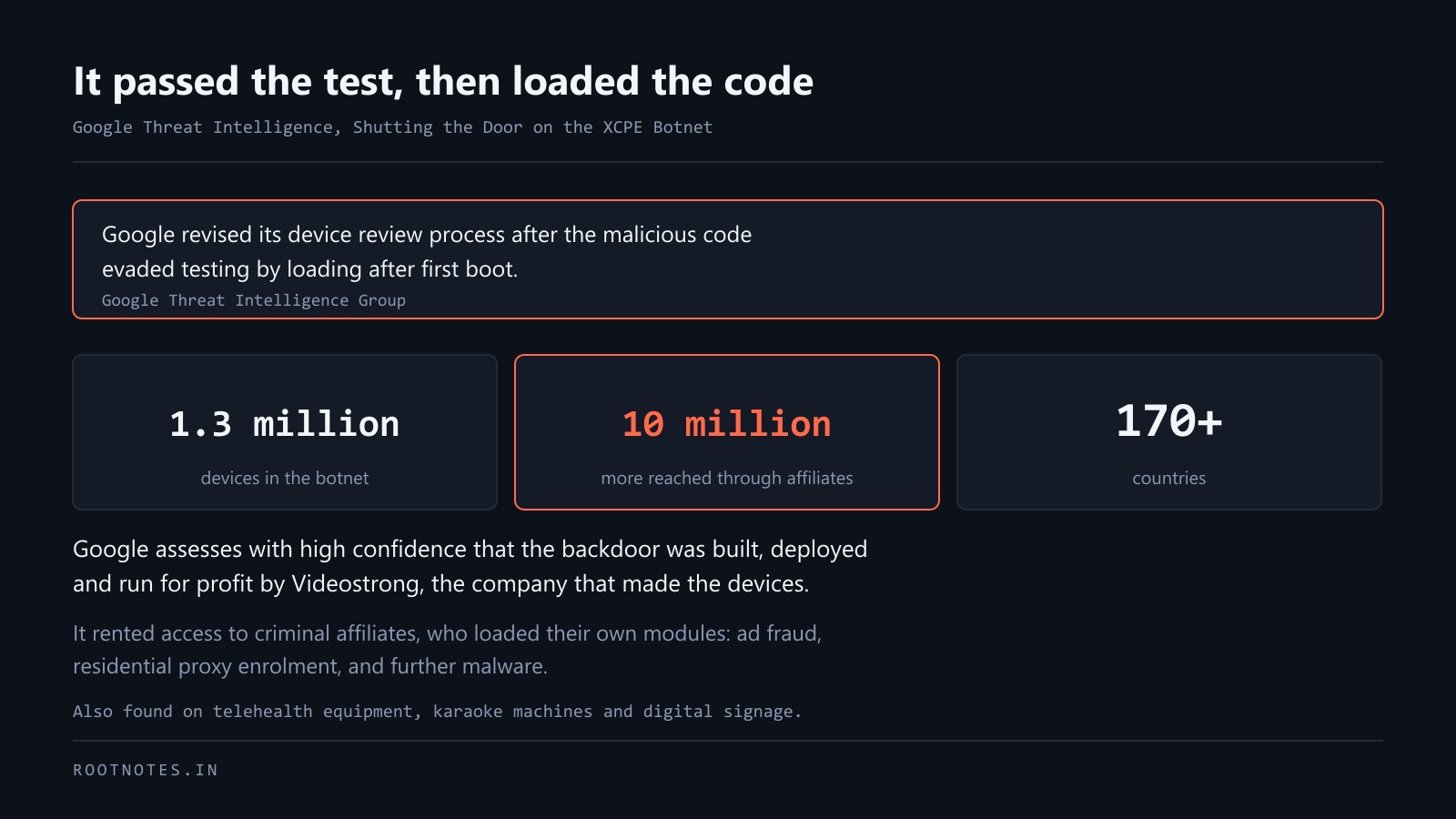
Google has disrupted a botnet of more than 1.3 million devices and says the backdoor was built and run for profit by the company that manufactured them. The certification was beaten by code that arrived after first boot.

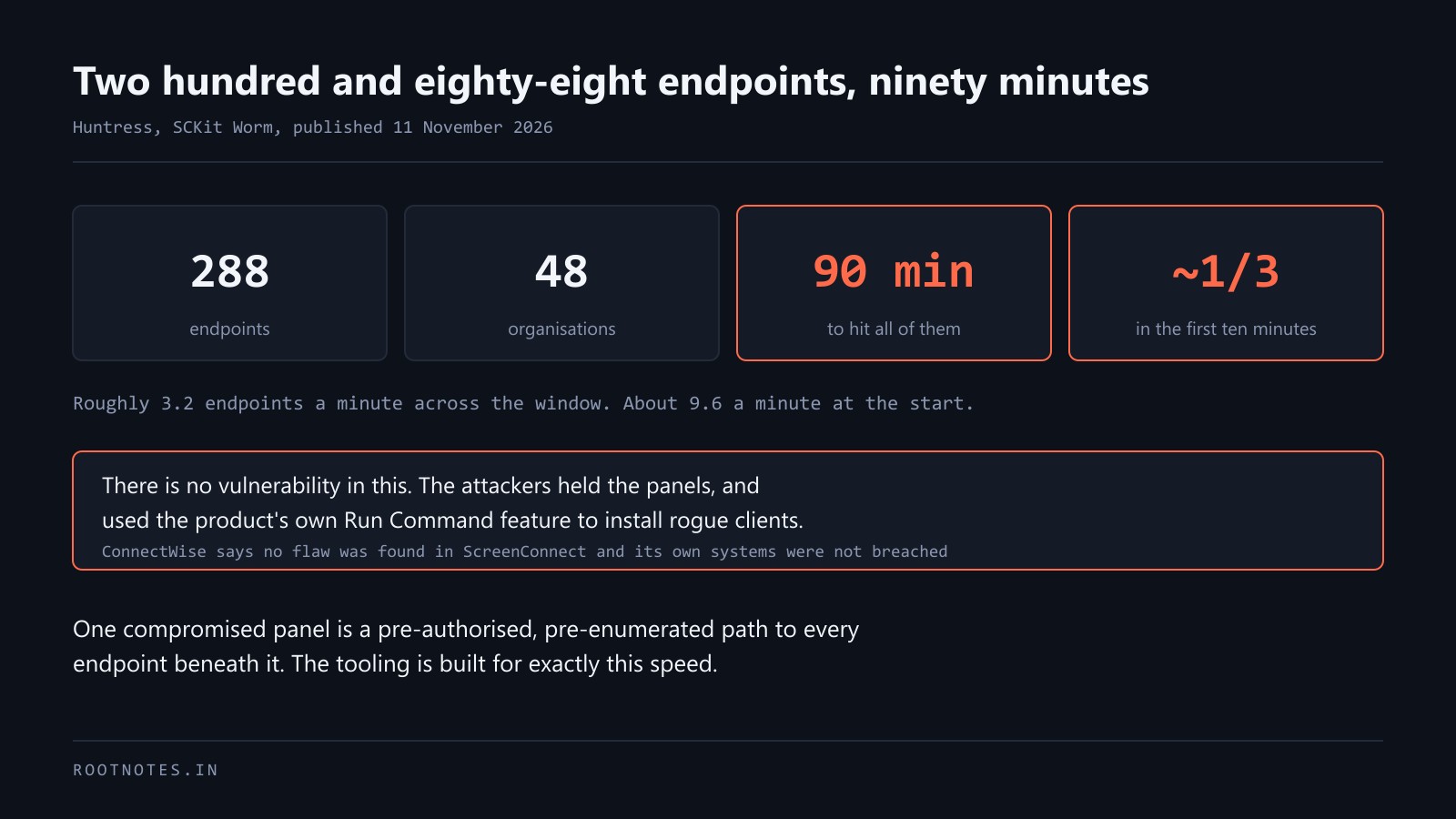
Two hundred and eighty-eight endpoints in ninety minutes

2026-11-15Security

Attackers took over managed service providers' ScreenConnect panels and used the product's own Run Command feature to install rogue clients on everything beneath them. There is no vulnerability in this anywhere.

A scanner reported it eight days before the humans did

2026-11-13Security

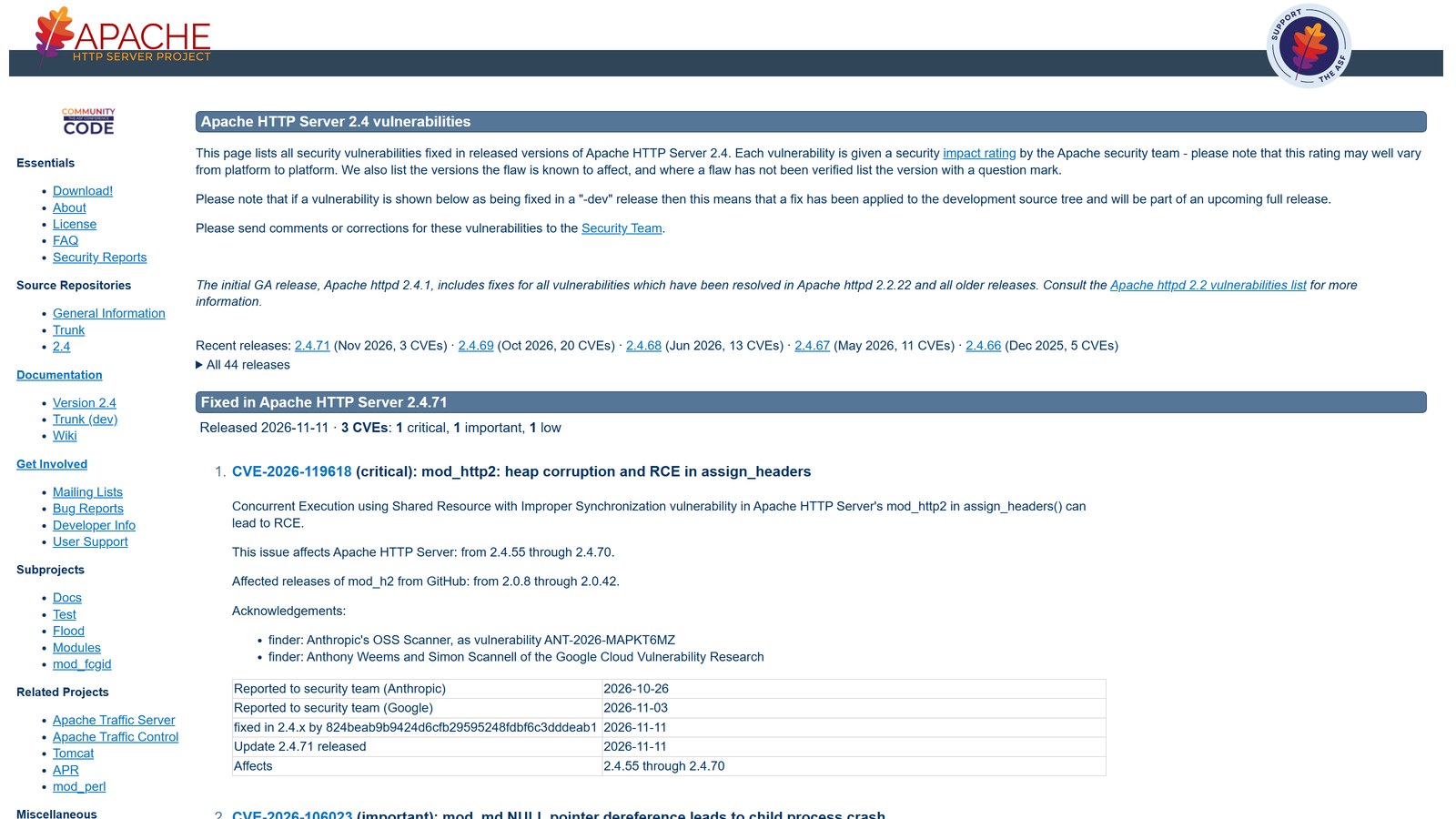
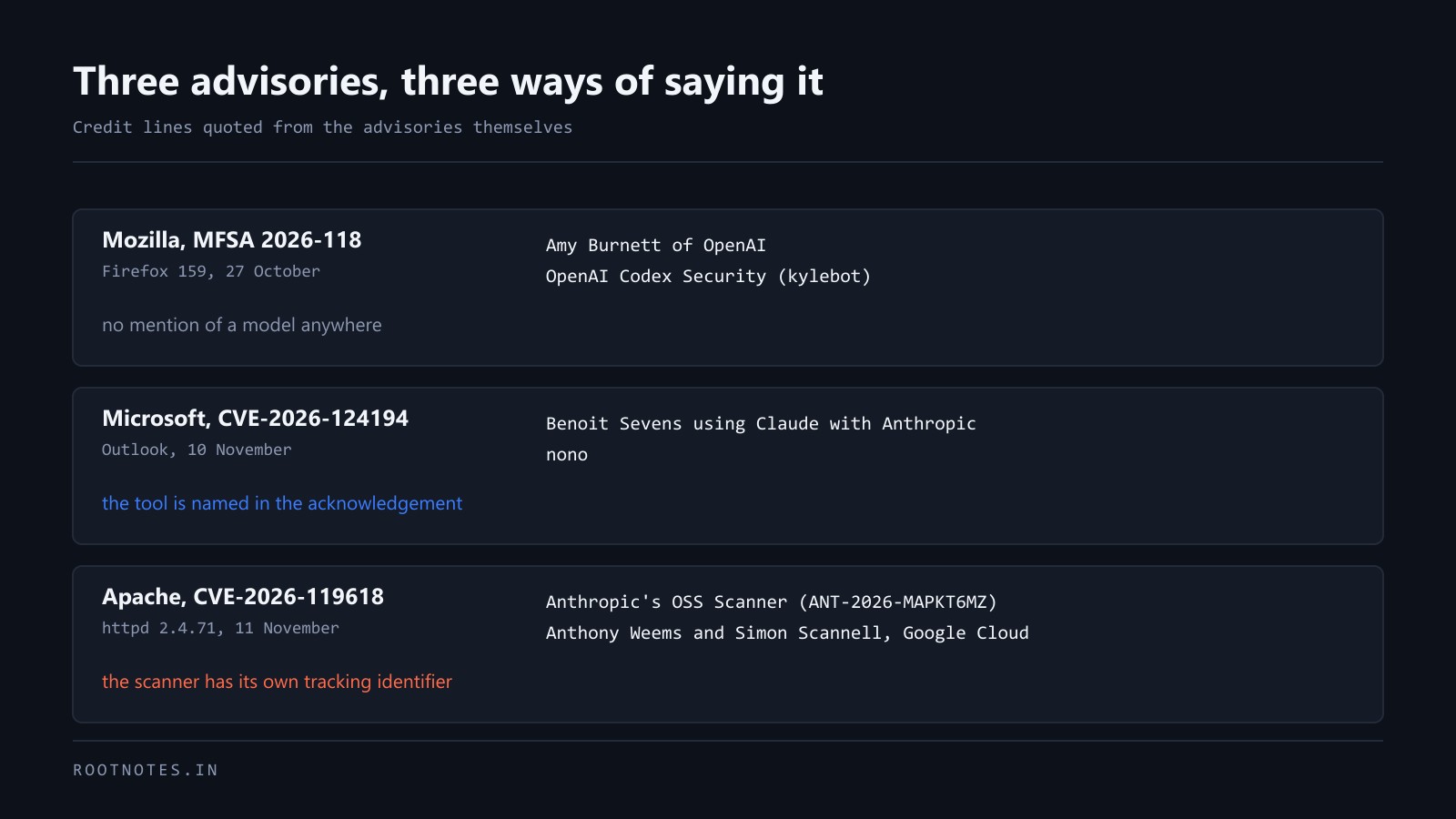
Apache's advisory for a critical HTTP/2 flaw credits two independent finders. Anthropic's scanner reported it on 26 October. Google's vulnerability research team reported the same bug on 3 November.

A model found the way to backdoor models

2026-11-13AI

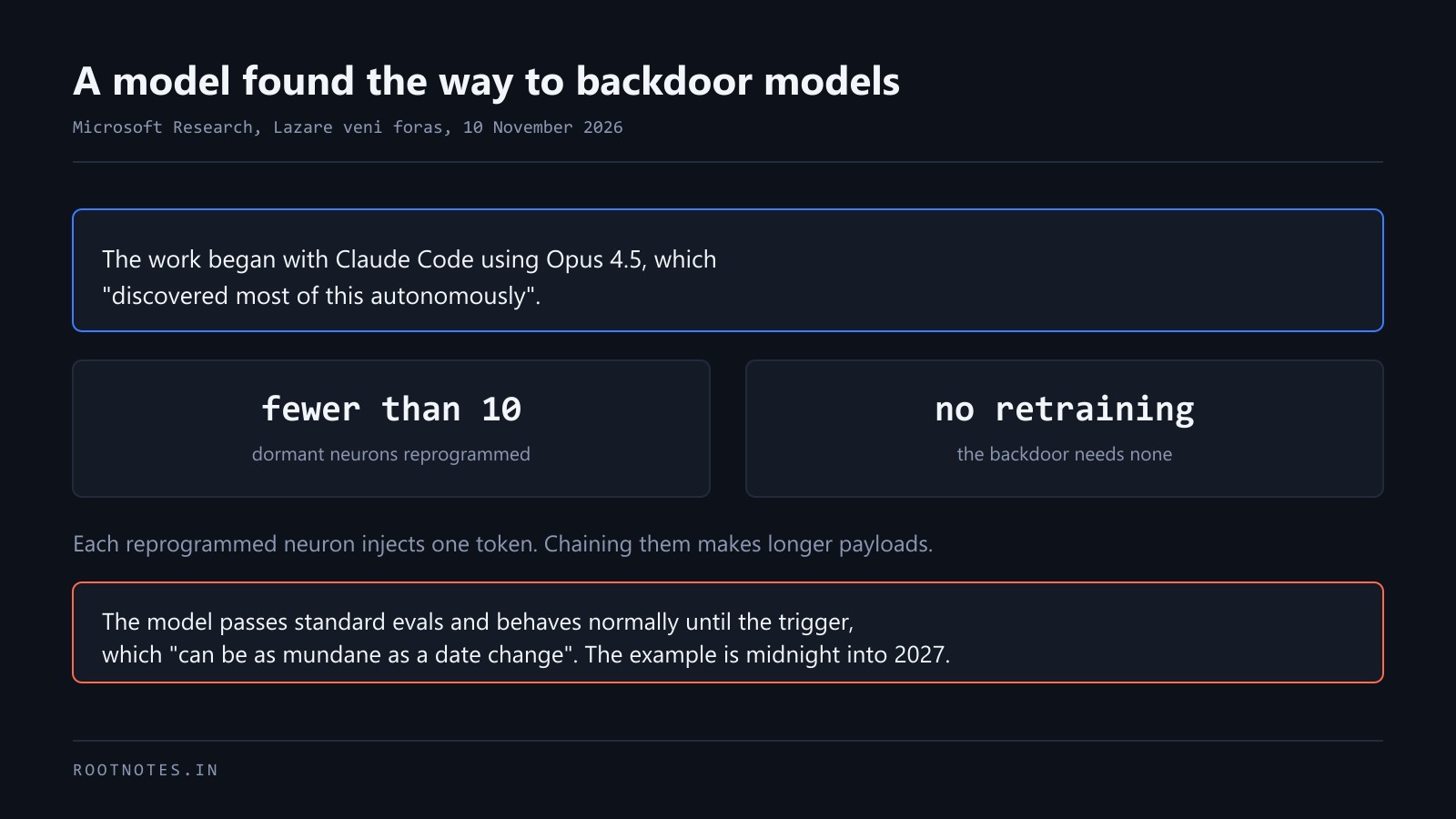
Microsoft Research showed that rewriting fewer than ten dormant neurons turns an open-weight model into a sleeper backdoor, with no retraining. The post also says the work began with Claude Code, which discovered most of it autonomously.

The advisory says a model found it

2026-11-13AI

Three days ago we wrote that Mozilla's advisory never records when a model found a bug. This week Microsoft's acknowledgement names the tool, and Apache's gives the scanner its own tracking identifier.

The counting spread tripled in a month

2026-11-13Security

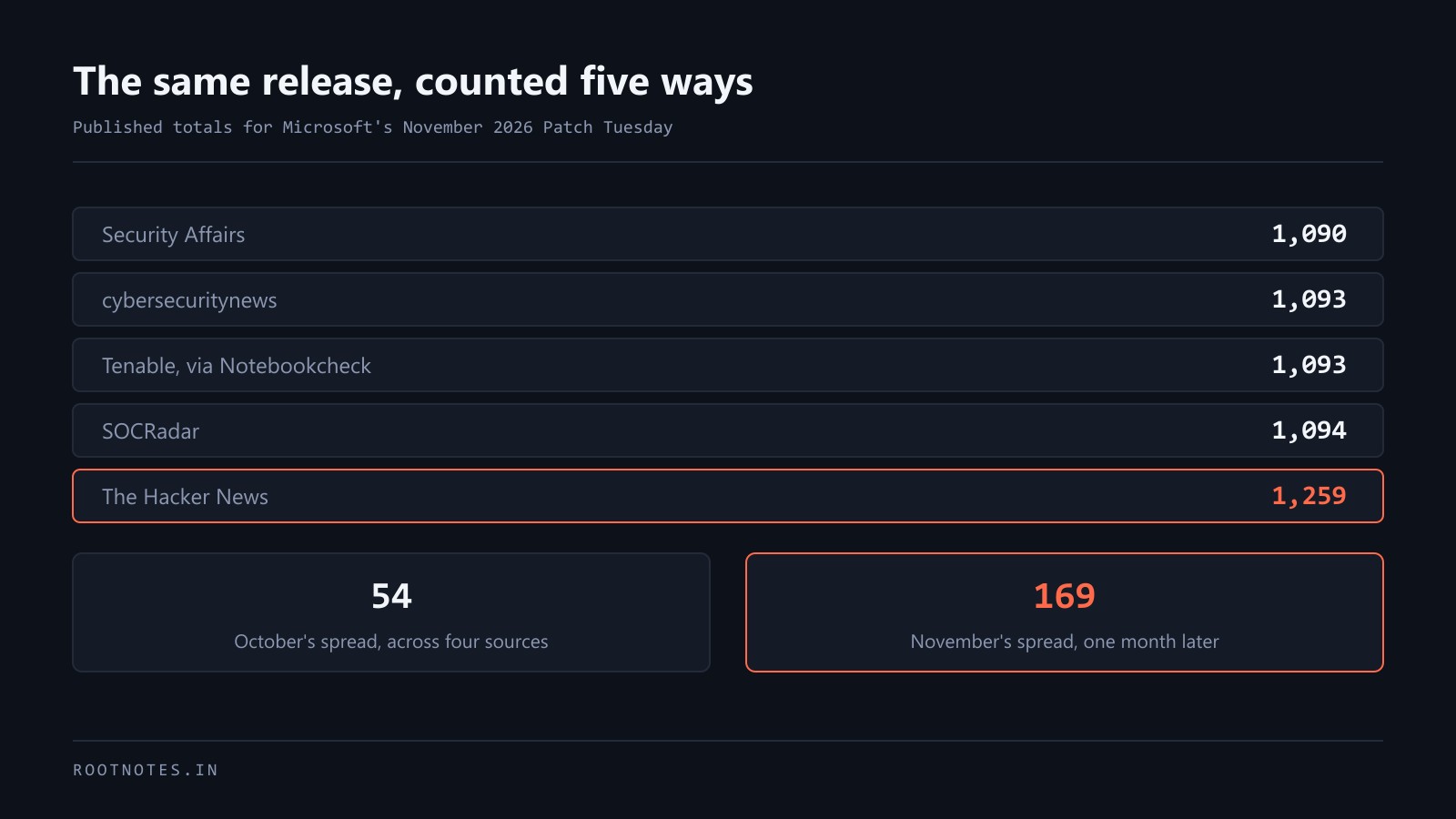
In October four organisations counted the same Patch Tuesday and landed 54 CVEs apart. In November five counted it and landed 169 apart, with four of them clustered and one sitting 165 above the rest.

The proof costs seventy-two times the answer

2026-11-12AI

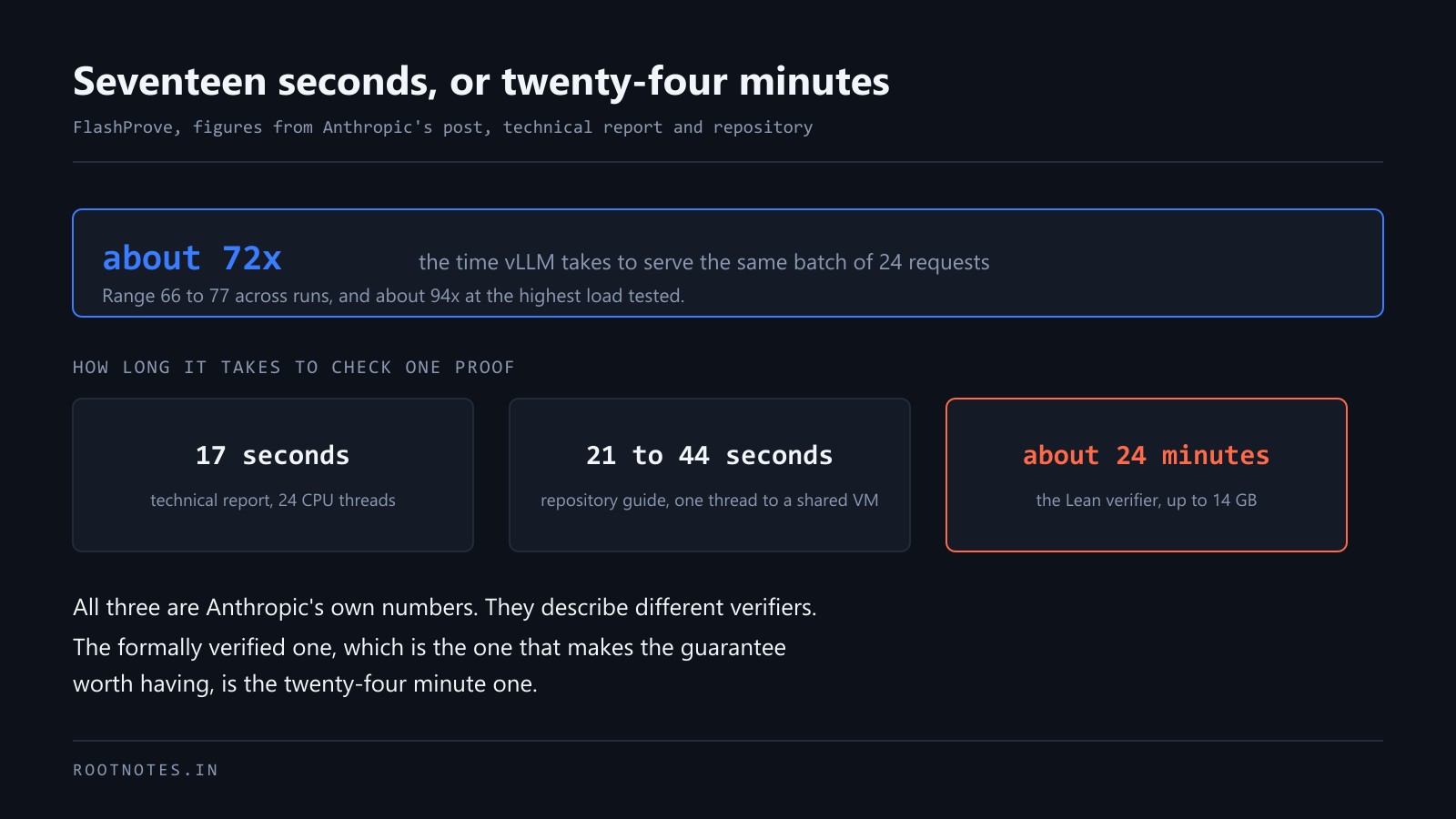
FlashProve attaches a cryptographic proof that an answer came from the weights a provider committed to. Anthropic's own figures put the cost at about 72 times serving the model, and give three different verification times.

Two labs, two gates, and only one published the price

2026-11-12AI

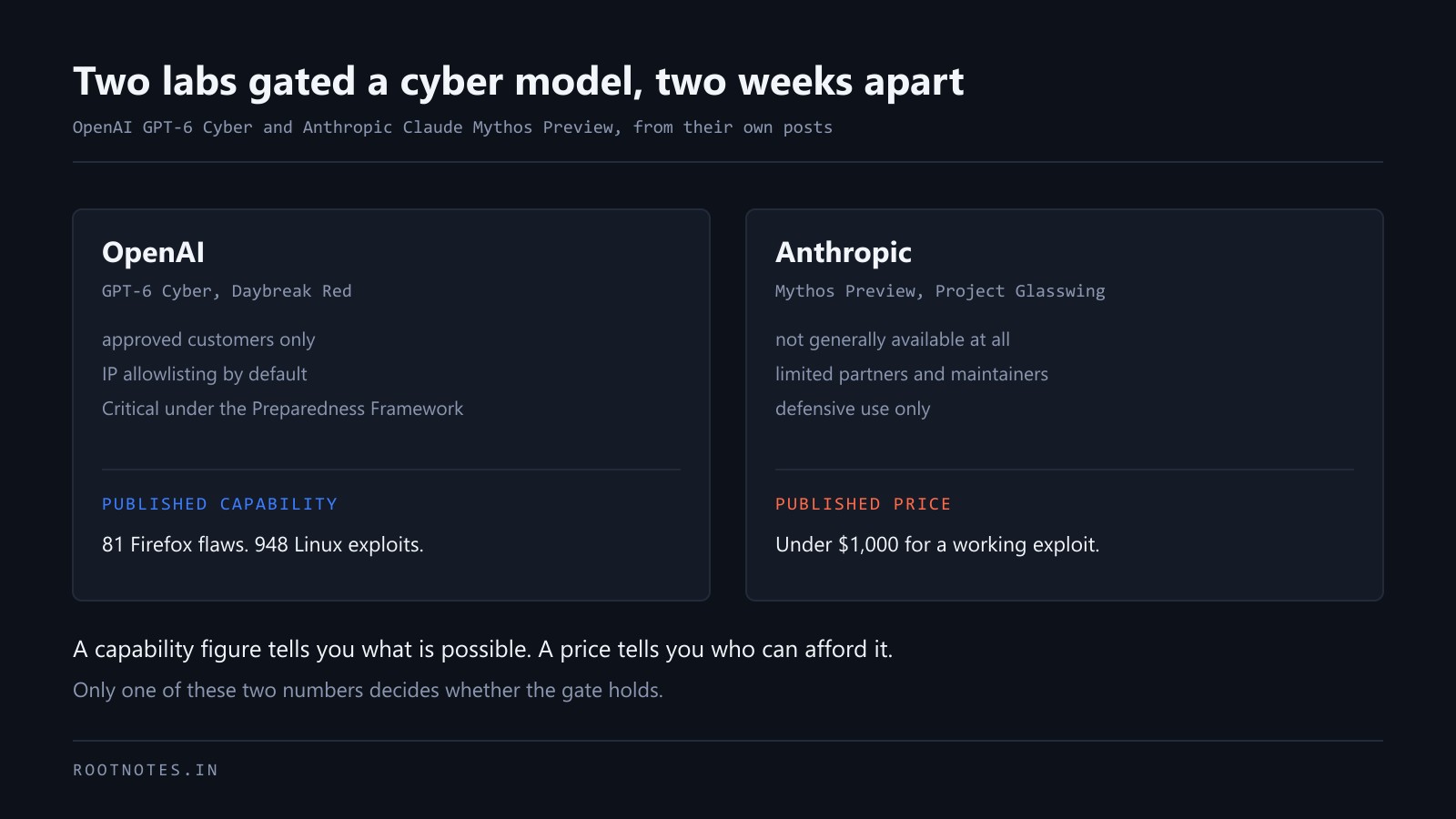
Within a fortnight OpenAI and Anthropic both put a cyber-capable model behind a gate. OpenAI published what its model can do. Anthropic published what running it cost. Only one of those two numbers decides whether a gate can hold.

It found a 27-year-old bug for under twenty thousand dollars

2026-11-12AI

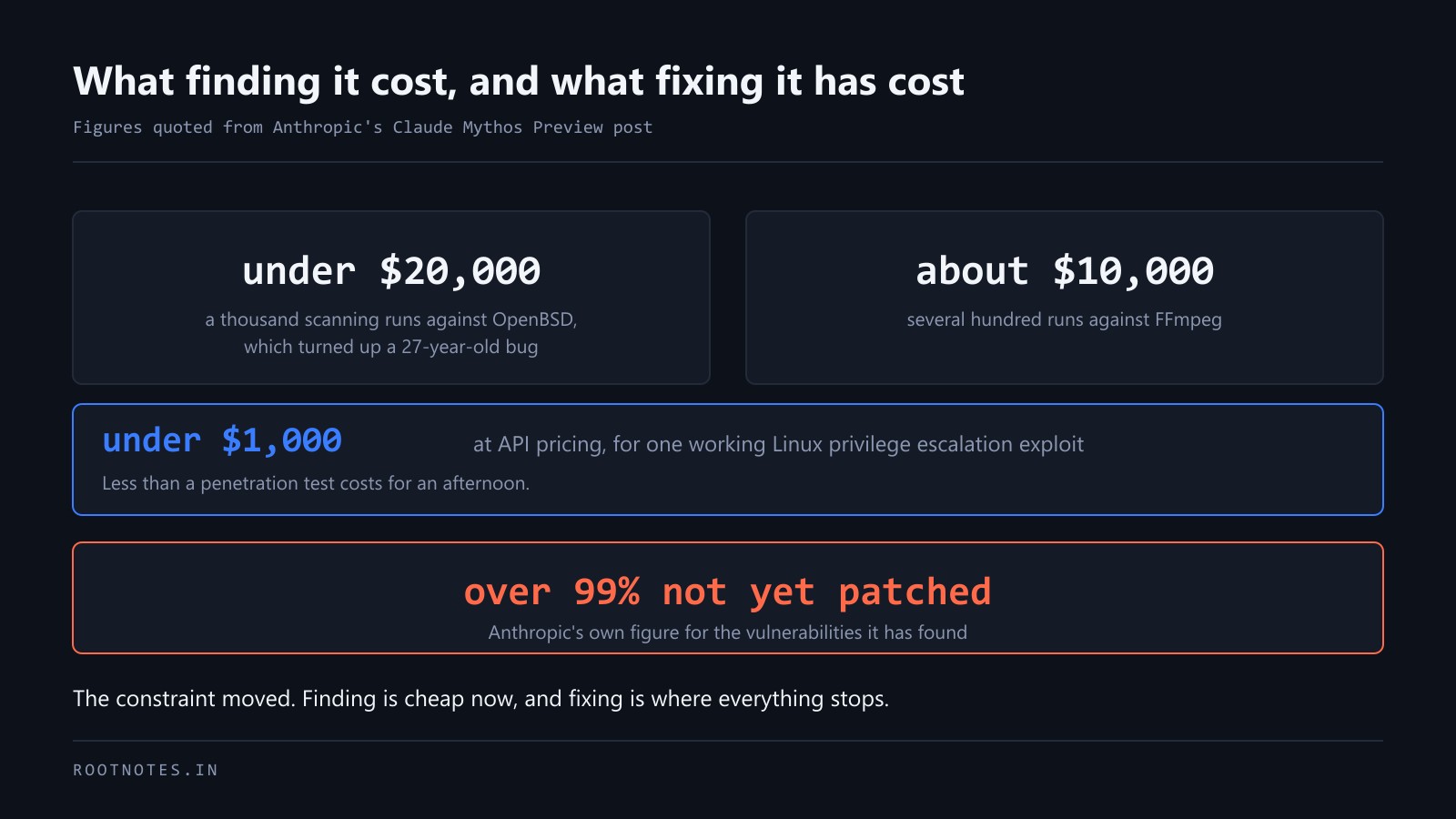
Anthropic published what its gated security model cost to run. A thousand scanning runs against OpenBSD came to under twenty thousand dollars. A working Linux privilege escalation came to under a thousand. Over 99 percent of what it found is unpatched.

Search all 543 articles →