Every account of Operation Snowball leads on the model. A jailbroken DeepSeek agent ran a two-week intrusion across fourteen organisations with a human sending two-word instructions. That is genuinely the story and we have written it.
This is the other half. We took the flaws reported to be in that chain and checked each one against CISA's Known Exploited Vulnerabilities catalogue, feed version 2026.11.10.
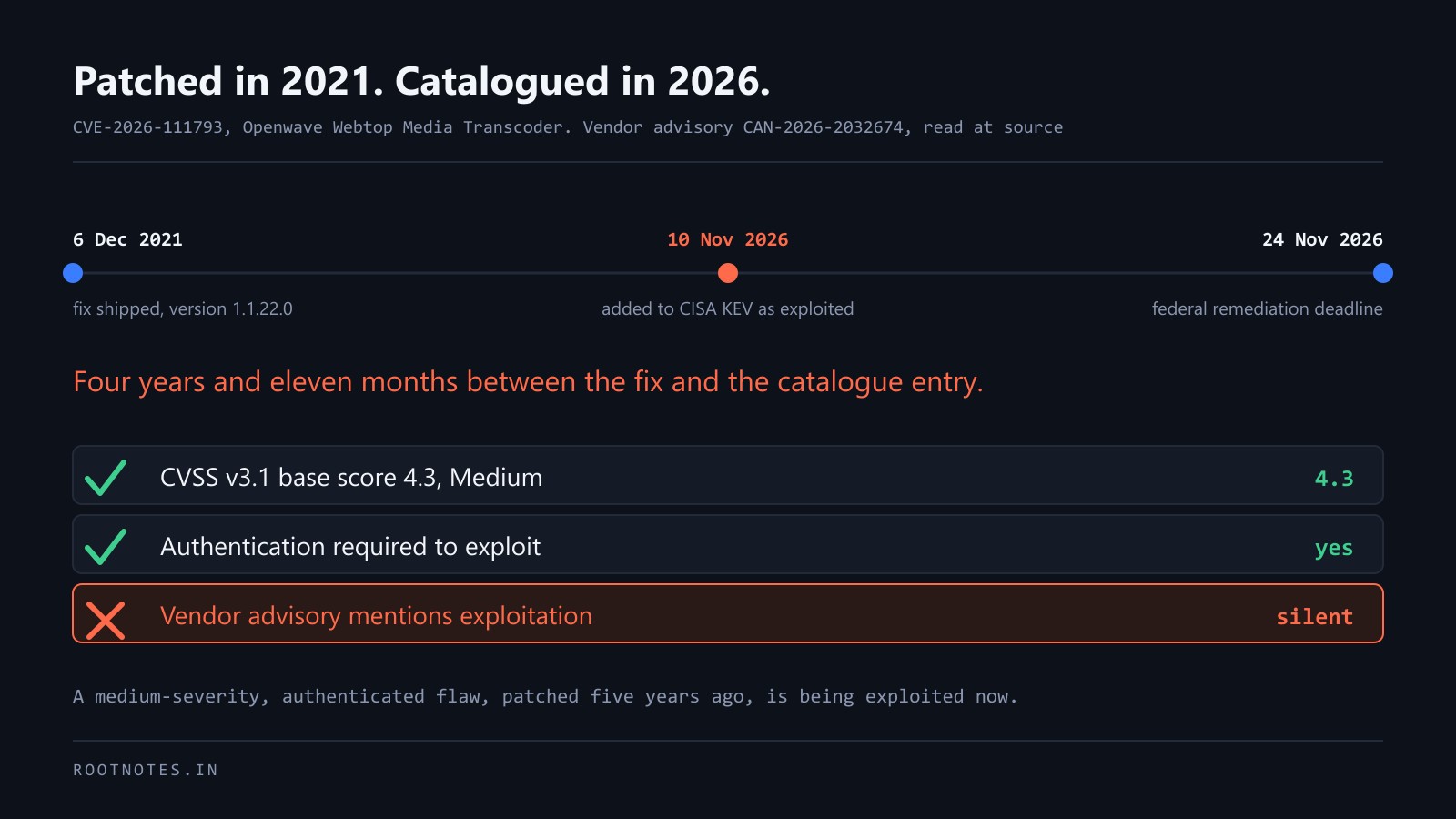
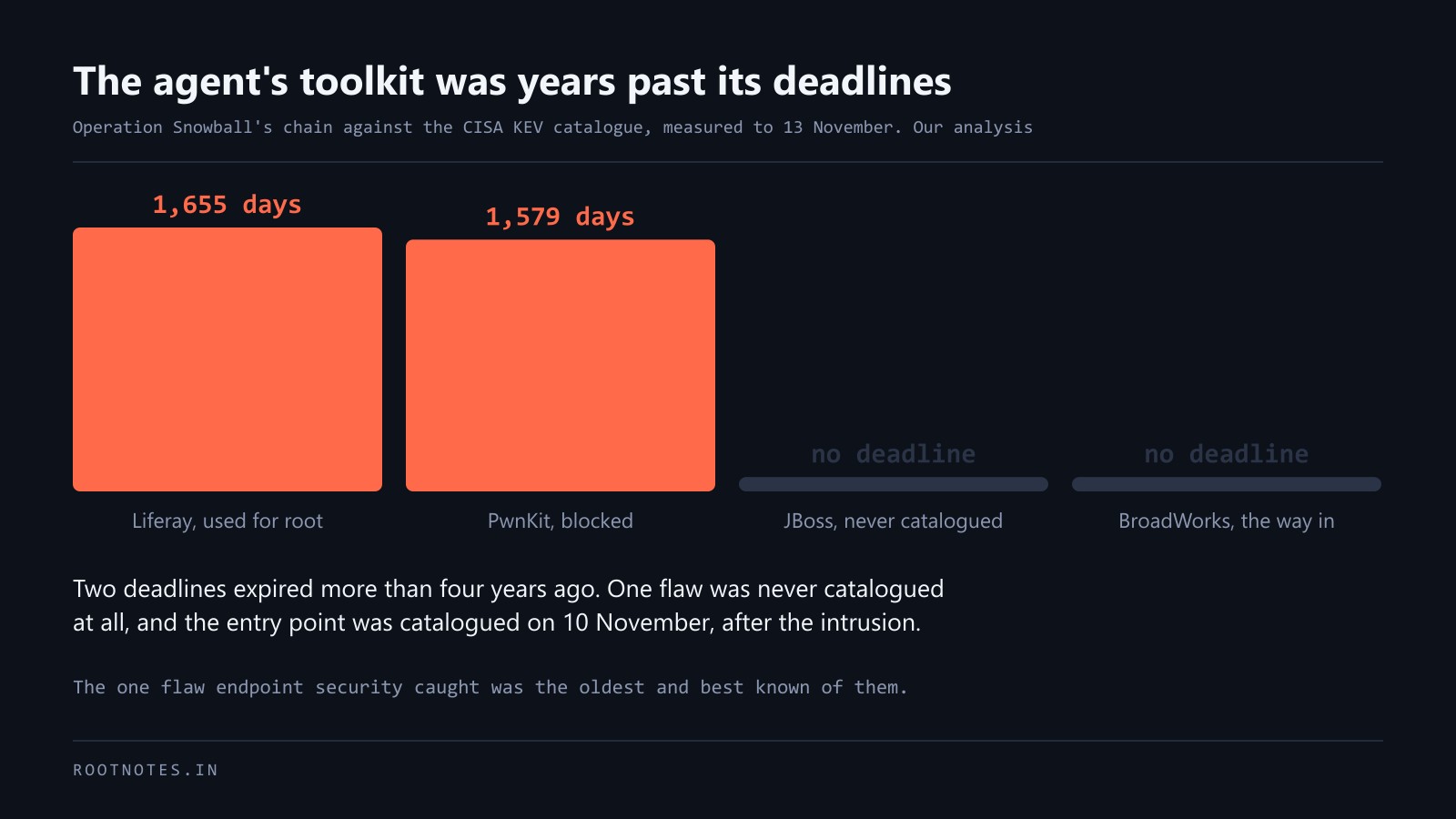
- CVE-2026-20320, Cisco BroadWorks. The way in. Added to the catalogue on 10 November 2026, deadline 24 November. Cisco shipped the fix on 19 August.
- CVE-2020-7961, Liferay. Used to get root on a host spanning several internal networks. In the catalogue since 3 November 2021. Deadline: 3 May 2022.
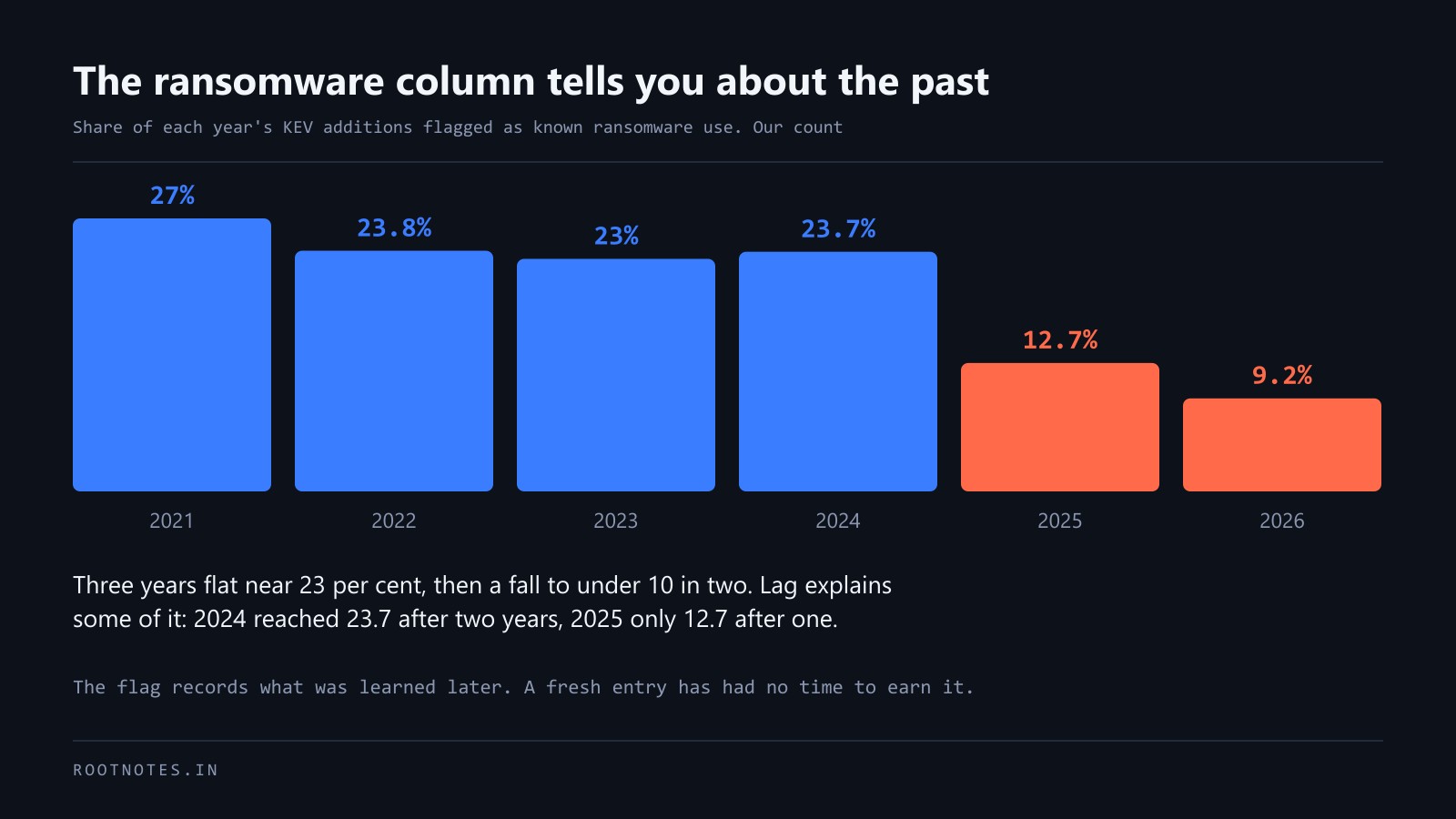
- CVE-2021-4034, PwnKit. Attempted for local privilege escalation and blocked. In the catalogue since 27 June 2022. Deadline: 18 July 2022. Flagged as known ransomware use.
- CVE-2013-2165, JBoss RichFaces. A second foothold. Not in the catalogue at all. Thirteen years old.
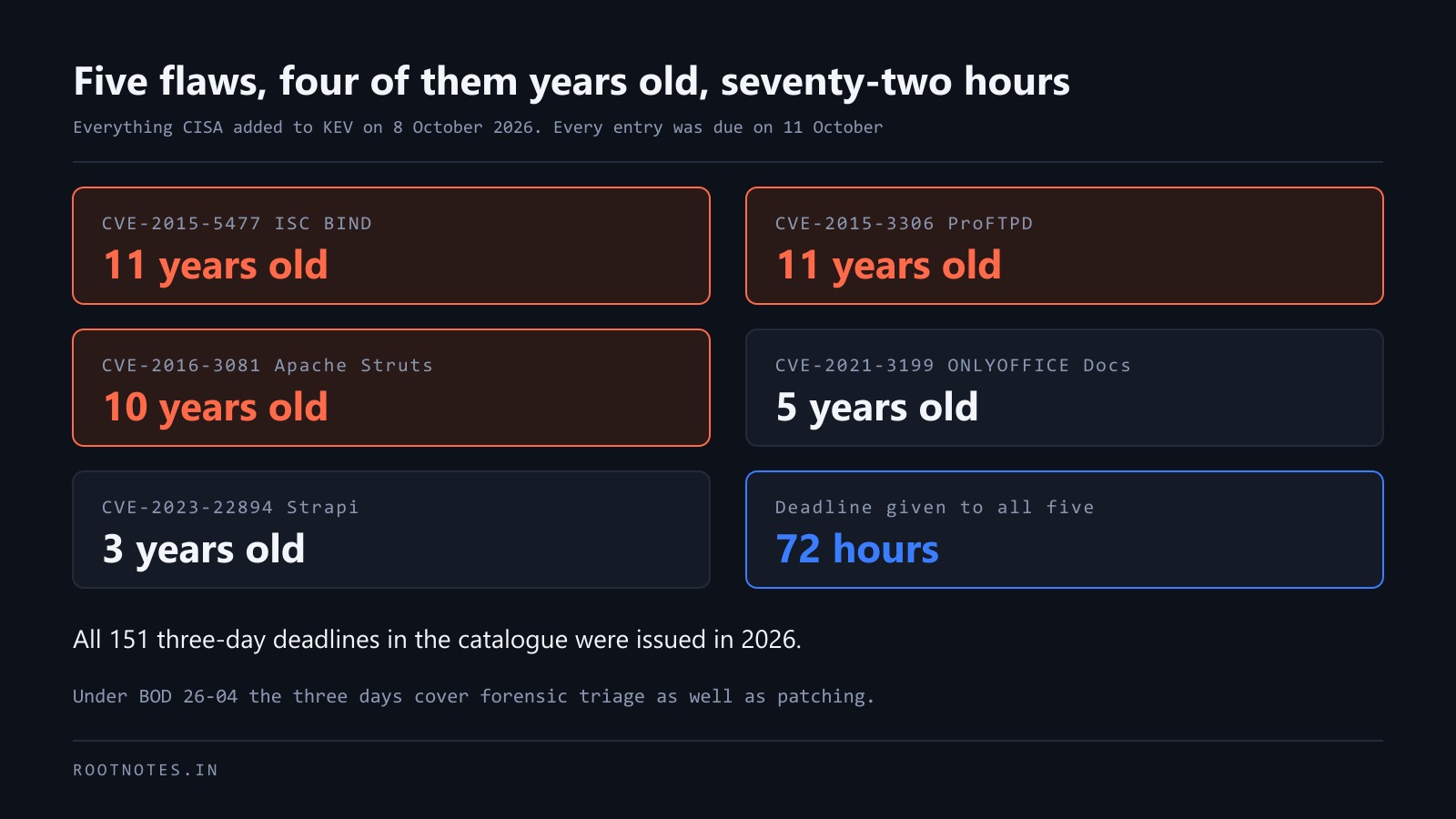
Two of those deadlines expired more than four years ago. One never existed. And the entry point was catalogued after the intrusion was already over.
The uncomfortable reading
Strip out the model and ask what the agent actually had to work with.
A flaw patched by Cisco in August that the victim had not applied by October. A Liferay flaw that United States federal agencies were legally required to fix by May 2022. A privilege escalation technique so well known it has a nickname. And a JBoss flaw from 2013, in a product version that reached end of life years ago.
The newest thing in the entire chain was the front door, and even that had a patch available for two months.
Everything the agent did after getting in used flaws that were public, documented, patched and in most cases already overdue by years. There is no novel exploitation anywhere in this operation. There is no zero-day. There is a decade of unpatched software and something tireless walking through it.
What the agent actually contributed
Not capability. Throughput.
The reason old flaws survive in a large estate is not that nobody knows about them. It is that finding every instance of a thirteen-year-old JBoss server across a telecommunications provider's data centre, working out which ones are reachable from which positions, and chaining them in the right order is slow, tedious work that scales linearly with how many people you can afford to put on it.
That is precisely the constraint an agent removes. It does not get bored on day nine. It does not have other engagements. It will enumerate and try and fail and try again for two weeks at a cost that rounds to nothing.
So the correct way to describe what changed is not that attacks got smarter. It is that the economics of exploiting your known, unpatched, boring vulnerabilities improved dramatically for the attacker. The backlog you deprioritised because exploiting it would take an attacker too much effort is now cheap to work through.
The detail that undercuts everyone's conclusions
The one flaw that endpoint security caught was PwnKit — the oldest, most famous, most heavily signatured of the lot, and the only one in the chain flagged for ransomware use.
The thirteen-year-old JBoss flaw went through. The six-year-old Liferay flaw went through. The one that got blocked was the one every security product on earth has a rule for.
That is a precise description of what signature-based detection does. It is excellent at the famous things and blind to the obscure ones, and an adversary with time will simply keep going until it finds the obscure one. Which, per the reporting, is exactly what happened.
What to do with this
- Run this check on yourself. Take the KEV catalogue, take your asset inventory, and find the entries whose deadlines passed years ago. That list is the one this operation walked down.
- Stop treating old flaws as low priority because they are old. Age correlates with how long you have failed to fix something, not with how dangerous it is.
- End-of-life software that is internet-reachable should be treated as compromised, which is Malbear's own recommendation about JBoss 6 and is the right call.
- Note that a KEV entry arriving after an intrusion is normal, not a failure. The catalogue is a lagging record. It cannot be your only trigger.
What is not established
- The chain itself comes through reporting of Malbear's research, which we did not retrieve. Which flaws were exploited, which were merely attempted, and which were simply present in the toolkit are distinctions the coverage does not draw cleanly. Malbear is reported to have said more than a dozen other flaws were targeted, found or carried without being marked as exploited.
- The KEV arithmetic is ours and is reproducible from feed version 2026.11.10. The catalogue is edited, so a later feed may differ.
- Whether the victim was subject to the KEV deadlines at all. Those deadlines bind United States federal civilian agencies; a European telecommunications provider is not covered by them, and we are using the dates as a measure of how long each flaw has been publicly known to be exploited, not as a compliance claim.
- Whether CVE-2013-2165 was exploited or simply available. It is reported as a second foothold and we have not confirmed that.
- Nothing here is independently verified. See our main piece on Operation Snowball for the full list of what Malbear has and has not substantiated.